Skip to content

Victorinox Swiss Classic 17 cm (6.7 in) santoku vs ZWILLING Vier Sterne 20 cm (7.9 in)

Santoku or chef’s knife as the main kitchen blade?

A chef’s knife has a curved belly and is used with a rocking motion. A santoku is shorter and flatter and is used with straight downward cuts. Neither is better; they suit different techniques, and most people already prefer one without knowing why.

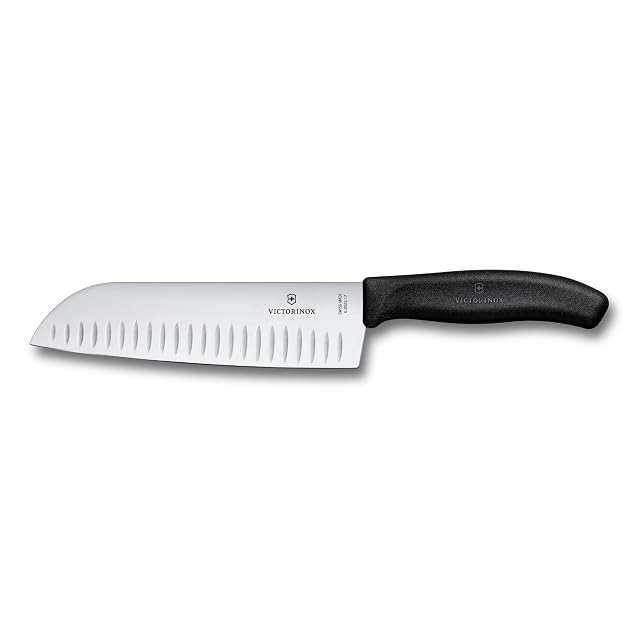
Victorinox Swiss Classic 17 cm santoku knife

Victorinox Swiss Classic 17 cm (6.7 in) santoku

7.8/10

Wins 2 of 9

Check price

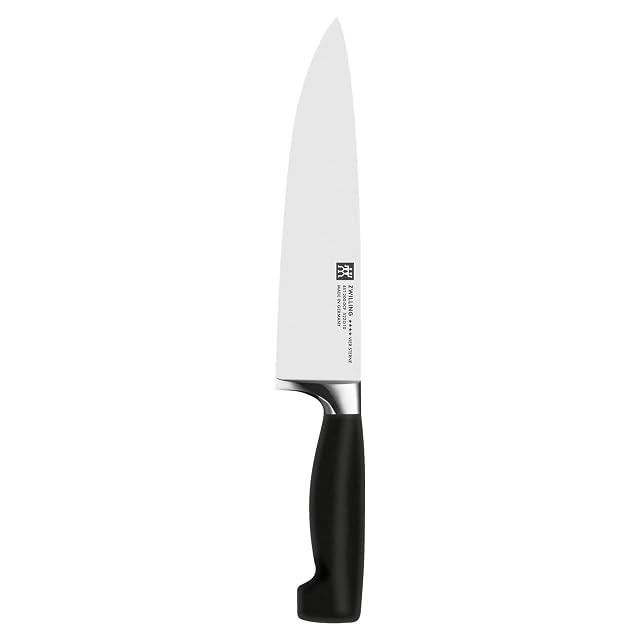
Zwilling Vier Sterne 20 cm chef’s knife

ZWILLING Vier Sterne 20 cm (7.9 in)

8.1/10

Wins 5 of 9

Check price

≈ $93

Spec against spec

Compared on Swiss Classic 17 cm (6.7 in) santoku Vier Sterne 20 cm (7.9 in)
Blade length 17 cm (6.7 in) 20 cm (7.9 in)
Cutting motion Straight downward, flat profile Rocking, curved belly
Edge feature Granton hollow edge (Kullenschliff) Not published
Steel Not published as a named steel FRIODUR ice-hardened special steel
Bolster Not published Deep bolster
Handle Ergonomic, stated light and balanced Seamless, non-slip
Origin Not published Made in Germany
Weight Stated light Not published
Handling a whole chicken 17 cm (6.7 in) is short for it 20 cm (7.9 in) handles it
Listed on amazon.com Yes Yes

A tick marks the better answer on that line only. Counting ticks does not decide the page — the two verdicts below do, because these products answer different questions.

Which of the two suits your cooking

Buy the Victorinox Swiss Classic 17 cm (6.7 in) santoku

Buy the Victorinox santoku if you cut straight down and value a light knife. The granton hollow edge creates air pockets that help slices fall away rather than clinging, and a light blade is less tiring over an hour of prep. Seventeen centimeters is short for a chicken and ideal for everything smaller.

Buy the ZWILLING Vier Sterne 20 cm (7.9 in)

Buy the Zwilling chef’s knife if you rock a blade through herbs and want one knife that handles everything up to a chicken. FRIODUR ice-hardened steel, a deep bolster and German manufacture — it is heavier and longer, and 20 cm (7.9 in) is the length that makes large jobs easy rather than awkward.

The questions that come in

What is a granton edge?

A row of hollow ovals ground into the blade face. They create small air gaps so wet slices — potato, cucumber, cheese — fall away instead of sticking to the steel.

Is a shorter knife safer?

Not necessarily. A blade too short for the job makes you use force and awkward angles, which is where accidents come from. Twenty centimeters feels big and makes large tasks easier.

Do I need both?

No. Buy the shape that matches how you already cut, sharpen it, and buy a paring knife with the money saved.

The long version of each