Skip to content

The best honing steels for 2026

A honing steel is the most misunderstood object in the kitchen: it does not remove metal to make a new edge, it pushes a rolled edge back into line, which restores cutting on a knife that is not yet blunt. Used weekly it postpones sharpening for months; used on a genuinely dull knife it does nothing. Surface decides behavior — a smooth steel realigns only, a ribbed one bites slightly, a ceramic rod hones very hard blades a steel cannot touch, and a diamond rod actually abrades and belongs with the sharpeners. Length should exceed the longest blade. We compare surfaces, length, hardness limits and handle guards.

The models we recommend

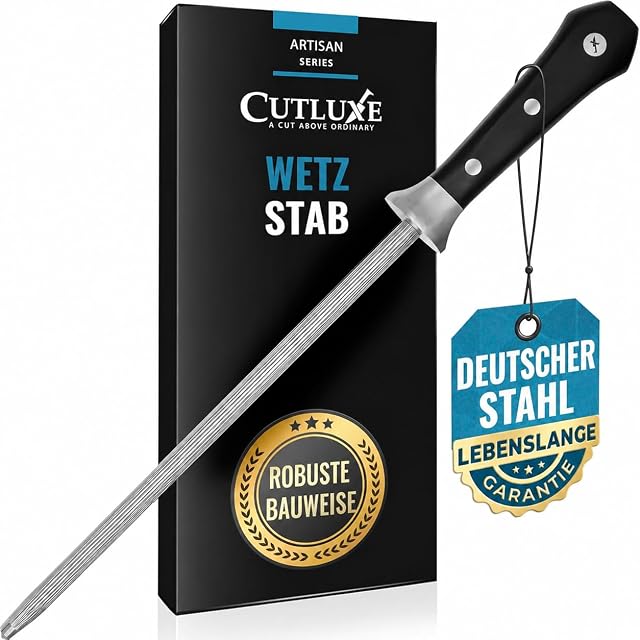
  1. Cutluxe 25 cm (9.8 in) German steel

    25 cm (9.8 in) · German quality steel · stated for regular maintenance between sharpenings

    A 25 cm (9.8 in) honing rod in German steel — the length that clears a 20 cm (7.9 in) chef’s knife properly, which the shorter rods in this hub do not.

    Best for: A 20 cm (7.9 in) chef’s knife, honed weekly.

    7.8/10

    ≈ $30

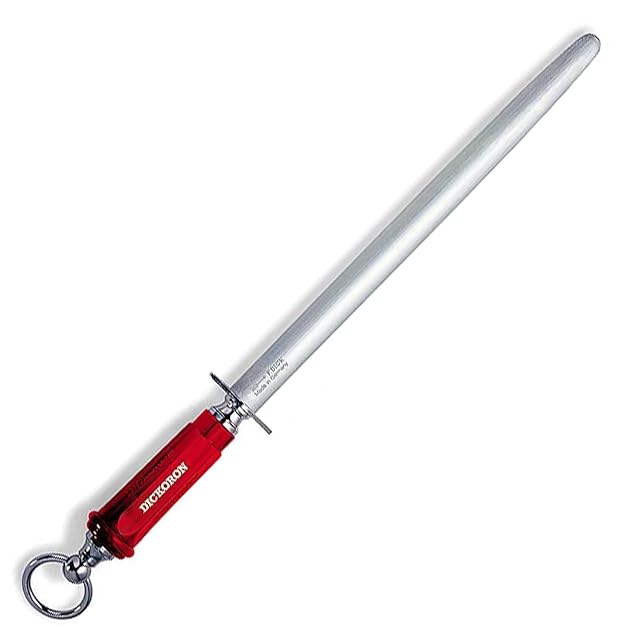
  2. F. Dick DICKORON Classic 30 cm (11.8 in)

    30 cm (11.8 in) blade length · sapphire cut · stated 65 HRC surface · oval section · plastic handle

    The top of this hub: a 30 cm (11.8 in) oval rod with a sapphire cut and a surface stated at 65 HRC — hard enough to hone the blades a conventional steel cannot.

    Best for: A kitchen with good European knives, honed properly.

    8.4/10

    ≈ $115

By need, across honing steels

Maintaining long blades

The steel has to be longer than the blade to take it in a single stroke. Too short, the movement becomes jerky and the angle varies.

F. Dick DL335

Straightening without removing metal

A diamond steel abrades the blade where a smooth steel only realigns the edge. The stated surface type decides what the daily gesture costs the knife.

F. Dick DL335

Protecting the hand that holds it

A small guard lets the blade run onto the fingers when the stroke slips. The stated guard size is a safety figure, rarely put forward.

Cutluxe ART-HON-10-1

Across honing steels, who each type suits

A steel out at every service
A few passes before cooking keep a knife sharp for months between two sharpenings. It is the most profitable gesture in cutlery.
Hard steels
A steel rod has little effect on very hard Japanese steels. The ceramic rod, more abrasive, suits them better.
Beginner
The gesture is learnt in a few minutes and forgives a great deal, unlike the stone. An approximate angle is still useful.

The trade-offs to weigh on honing steels

Steel against ceramic
The steel rod straightens the edge without removing metal; ceramic removes a little steel and works on hard blades. The latter breaks if dropped.
Steel against stone
The steel maintains and does not restore. When the edge has gone, no number of passes brings it back: it takes a stone.
Length against bulk
A long steel takes a chef’s blade in one stroke and stores badly. A short steel slips in anywhere and forces you to break up the movement.

What gets asked about honing steels

Does a honing steel really sharpen?

No, it straightens the folded edge without removing metal. It is upkeep, not sharpening.

How often should I use it?

Before each cutting session, a few passes. That is what spaces real sharpenings out by several months.

What angle should I hold?

About fifteen to twenty degrees for a European knife, less for a Japanese one. Consistency counts more than the exact value.

How many passes?

Three to six on each side, without pressing. The gesture should be light and steady, not energetic.

Do I need a ceramic steel?

On very hard steels, yes: a steel rod has practically no purchase. It is more abrasive and breaks when dropped.

Does a honing steel work on a serrated blade?

No, it does not follow the serration. Those blades are replaced more than they are maintained.

Does a ridged steel damage the blade?

It removes a little more metal than a smooth or polished one. With daily use over years, the difference becomes visible.

Does a steel replace sharpening?

No: it realigns a folded edge, it does not recreate a lost one. When the steel stops helping, the stone is what is needed, not more passes.

The essentials of honing steels

The honing steel straightens the edge, it does not recreate it: a few light passes before each session space sharpenings out by months. Ceramic for hard steels, steel for European blades, and a rod longer than the blade.

Overview: honing steels

    The whole set of honing steels, as a table

    We show a column only when four utensils in five publish its value. The rest would stay empty and settle nothing.

    ModelPriceHandle
    Cutluxe ART-HON-10-1$30—
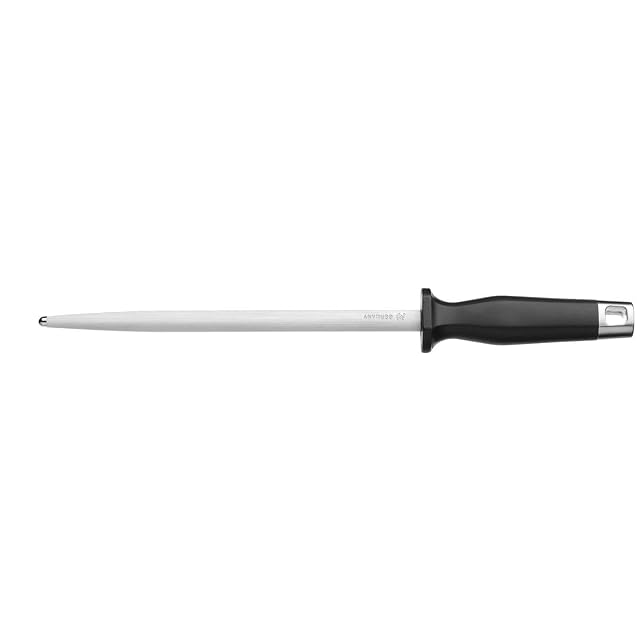
    WMF 1895946030$60Softer, ergonomic grip stated
    F. Dick DL335$115Plastic
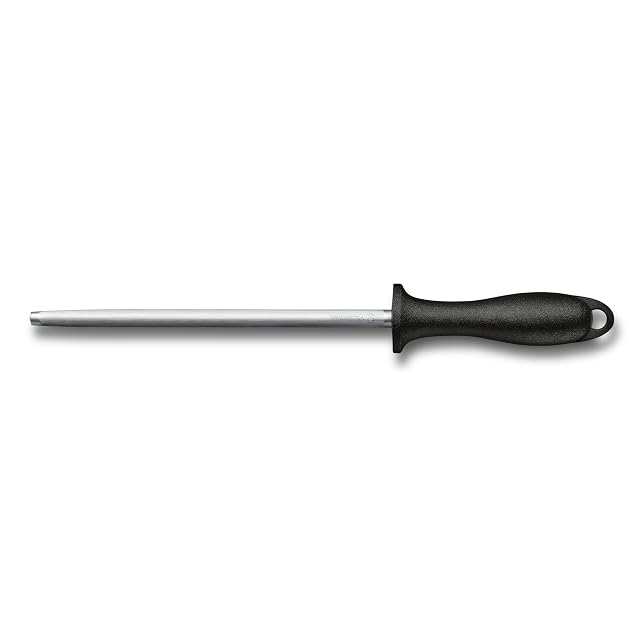
    Victorinox 7.8014—Smooth plastic
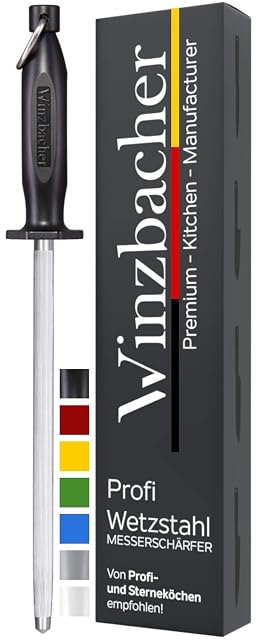
    Winzbacher X3-K9UH-98AT—Non-slip soft-touch with a finger guard

    Guides covering honing steels

    Where this comes from

    Specifications: manufacturer sheets for cookware and kitchen knives and the matching Amazon product pages. Prices and availability: Keepa. Every figure in this table names its source.

    Most recent revision in this category: September 3, 2026.

    What we judge honing steels on

    Prices quoted in these summaries are dated readings. The live price is shown next to each product.