Skip to content

Sharpening: one stone, one angle, one afternoon

Sharpening removes metal to make a new edge. Honing pushes a rolled edge back into line and removes almost none. Most kitchens need honing weekly and sharpening two or three times a year, and confusing the two is why people believe their knives will not take an edge.

Two different operations, and the equipment for each.

Start with a combination stone

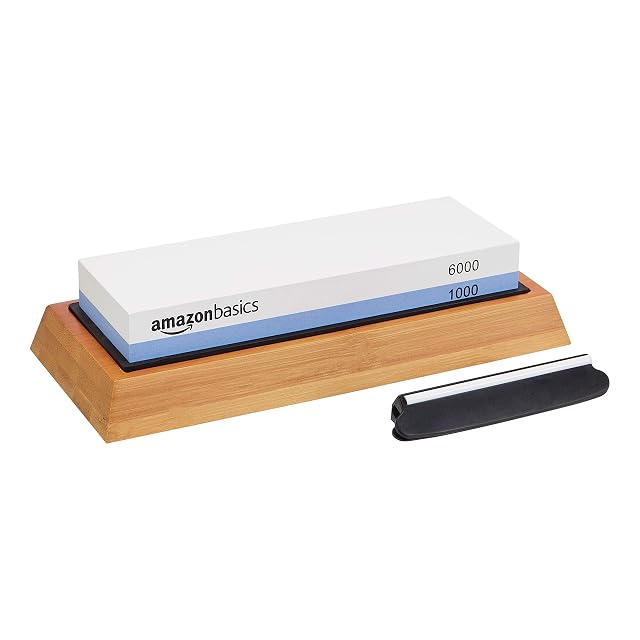
The Amazon Basics 1000/6000 double-sided with an angle guide and a non-slip bamboo base. That is the complete beginner’s kit: 1000 to cut a new edge, 6000 to refine it, and a guide to hold an angle while your hands learn one.

Then learn the angle

Most European kitchen knives are ground around 20° per side and most Japanese ones around 15°, and some listings publish it — the Paudin santoku states 13°, the Sanmeiho states 12°. Match what the knife was ground at, or you are reshaping the bevel rather than sharpening it.

Hone between sharpenings

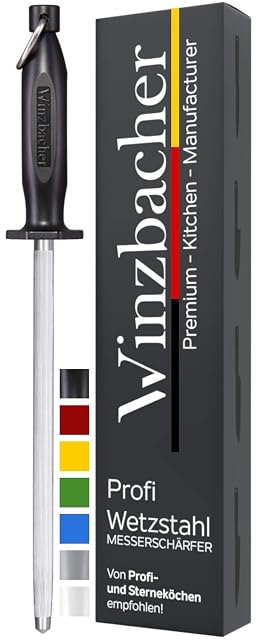
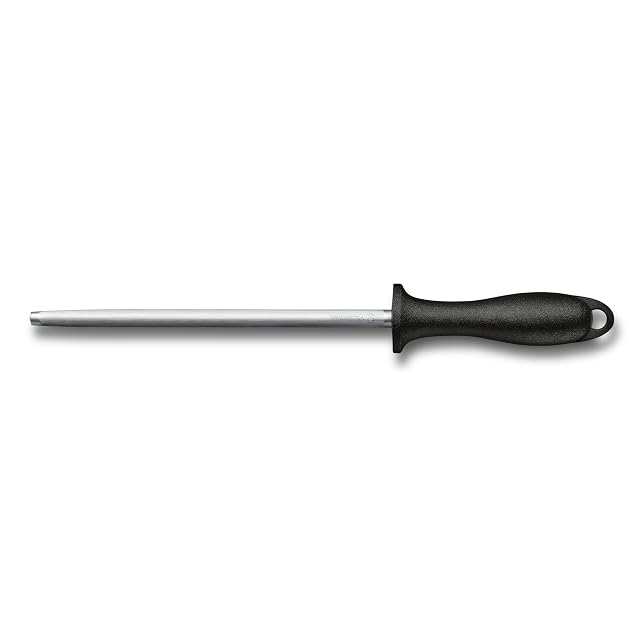
The Victorinox 20 cm (7.9 in) chromed steel with a medium-fine cut is the cheapest honing steel here. The Winzbacher is 39 cm (15.4 in) overall with a non-slip soft-touch handle and — the feature worth paying for — a finger guard. Honing is a repetitive stroke towards your own hand.

If you want more grits

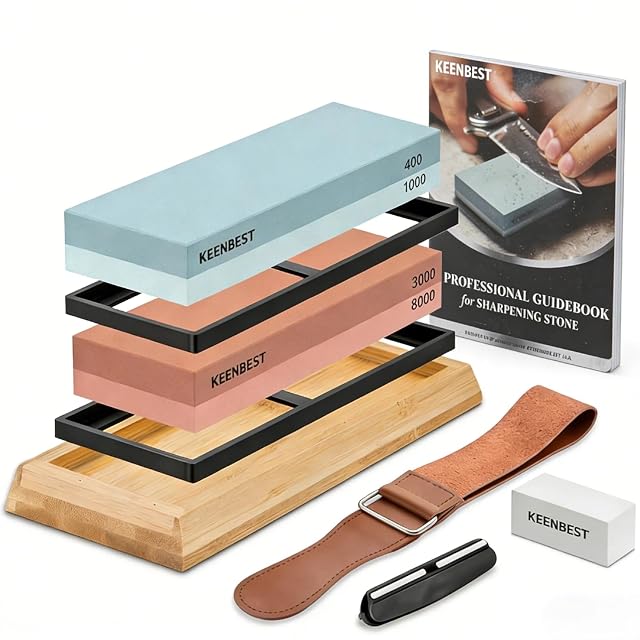
The Keenbest is two stones at 17.8 × 5.6 × 2.8 cm (7 × 2.2 × 1.1 in) with four grits on a bamboo base with rubber feet.

If you will not use a stone

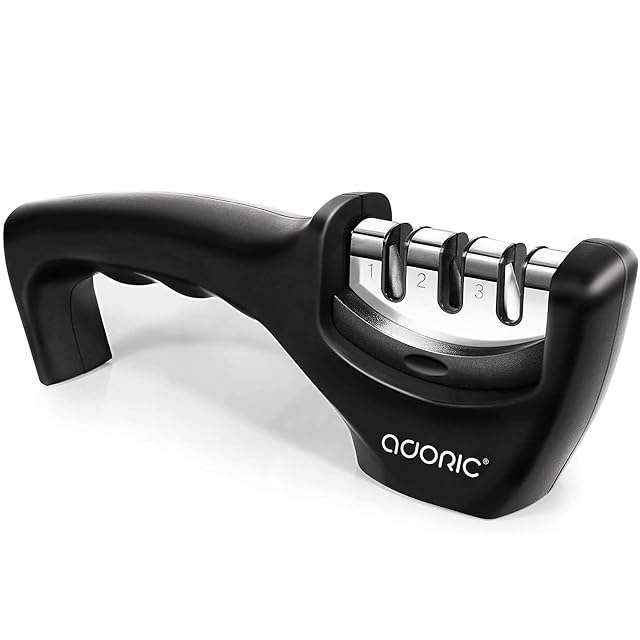
The Adoric three-stage — diamond rod, tungsten carbide, ceramic, with a removable sharpening head. It is not as good as a stone and it is far better than a blunt knife.

The one thing to remember

A honing steel does not sharpen. If a knife will not cut after honing, it needs a stone.

Which pan does your cooking want?

Your knife still cuts but drags
Honing may be all it needs.
Honing no longer helps
It needs actual sharpening, which removes metal.
You want the cheapest route
A single medium stone and a little practice.
You are nervous about ruining a knife
Practice on a cheap knife first, which is what everyone should do.

Picking by what you cook

Honing

Straightening an edge that has rolled. Frequent, quick, and removes almost no metal.

Sharpening

Removing metal to create a new edge. Occasional, slower, and what a honing rod cannot do.

Repair

Grinding out chips, which is a bigger job and often worth taking to someone else.

Maintenance

Where a strop or a fine stone keeps a good edge going for a long time.

What makes the difference in use

Knowing which you need
Honing and sharpening are different operations. Most people who say sharpening mean honing.
Angle consistency
This, not the stone, is what beginners get wrong. Holding a steady angle is the whole skill.
One stone or several
A single medium stone sharpens most kitchen knives adequately. Multiple grits refine further.
Guided systems
They hold the angle for you, which removes the hardest part at some cost in flexibility.
The steel you are sharpening
Hard steels need appropriate abrasives. A basic pull-through is not the tool for them.

Which figure for which dish

The symptomWhat it needsThe tool
Drags slightlyHoningA rod
Will not biteSharpeningA stone
Visible chipRepairCoarse stone or a professional
Good edge, keeping itMaintenanceFine stone or strop

Where it usually goes wrong

Changing the angle mid-stroke
It rounds the edge instead of sharpening it. Consistency matters more than the stone or the technique.
Starting on your best knife
Learn on something cheap. Everyone’s first attempts remove metal in the wrong places.
Confusing honing with sharpening
A rod straightens an edge; it does not create one. If honing stops working, the knife needs a stone.
Using a pull-through on hard steel
It is too aggressive and poorly matched, and it can leave the edge worse than it was.

By the cook you are

The beginner
One medium stone, a cheap knife to practice on, and patience with the angle.
The one who wants it done
A guided system, which holds the angle and removes the hardest part of learning.
The owner of hard steel
Needs proper stones, since basic devices are not suited to that steel.

Care, seasoning and how long it lasts

Sharpening equipment needs its own care, which beginners rarely expect. Stones dish in the middle with use and then sharpen unevenly, and a clogged stone stops cutting altogether while feeling as though it still works.

  • Flatten stones periodically; they wear hollow in the middle.
  • Keep water stones properly soaked as the maker directs.
  • Clean swarf off the surface during use.
  • Store stones dry to prevent them cracking or growing mold.

Safety

A freshly sharpened knife is sharper than you expect.

  • Wipe the blade away from the edge, never along it.
  • Test sharpness on paper, never on your thumb.
  • Work on a stable surface with the stone held firm.
  • Take care with the first cuts after sharpening; the knife bites differently.

Our choices, and the reasons

The questions that come in

Whetstone or pull-through?

A stone gives the best edge and takes practice. A pull-through is faster, removes metal at a fixed angle regardless of how your knife was ground, and is a perfectly reasonable choice if you will not otherwise sharpen at all. A blunt knife is more dangerous than either.

What grit do I need?

A 1000 grit does the sharpening; anything above 3000 polishes. A 1000/6000 combination stone covers a domestic kitchen completely, and the cheapest one on this site costs about eight euros.

How often should I hone?

Every few uses, and always before a big job. It takes ten seconds and it is what keeps a knife feeling sharp between actual sharpenings.

Honing or sharpening?

Honing straightens a rolled edge and should be frequent. Sharpening removes metal and is what you need when honing no longer restores the bite.

What should I buy first?

A single medium stone will sharpen most kitchen knives adequately. The technique matters far more than owning several grits.

What do beginners get wrong?

The angle. Changing it mid-stroke rounds the edge, and holding it steady is essentially the whole skill.

Are guided systems any good?

They hold the angle for you, which removes the hardest part of learning. You trade some flexibility for consistency.

Can I ruin a knife?

You can remove metal in the wrong places, which is why everyone should practice on a cheap knife first.

How often should I sharpen?

Hone often and sharpen when honing stops working. The interval depends entirely on the steel, the board and how much you cut.
Each pan, and the cooking it rewards

Amazon Basics DS-WSTAMZ003 · $28

Good for: A first stone, for knives that are dull but undamaged.

What it does best: 1000/6000 is the combination that covers nearly every home kitchen

What it does badly: No stone dimensions published — length matters against blade length

Read the full review →

Victorinox 7.8014

Good for: European kitchen knives, honed weekly.

What it does best: The cheapest way to double the interval between sharpenings

What it does badly: 20 cm (7.9 in) is shorter than a 20 cm (7.9 in) chef’s knife — the last part of the blade is awkward

Read the full review →

KEENBEST FD-ZJ-221105-093

Good for: Someone who intends to keep sharpening for years rather than once.

What it does best: Includes a flattening stone, which every other set here omits

What it does badly: 17.8 cm (7 in) is shorter than a 20 cm (7.9 in) chef’s knife

Read the full review →

Winzbacher X3-K9UH-98AT

Good for: Long blades, and anyone whose steel keeps running short.

What it does best: 39 cm (15.4 in) overall means the working length clears any kitchen blade

What it does badly: Overall length is published rather than rod length

Read the full review →

Adoric 3-stage

Good for: Soft European kitchen knives that need bringing back quickly.

What it does best: Three distinct abrasives rather than one carbide slot

What it does badly: Tungsten carbide removes a great deal of steel

Read the full review →

Where the money goes, band by band

Mid range

$30 – $60

3 models

Upper range

$70 – $180

3 models

Short answer first

Comparisons that settle it

Comparisons already online between two pans from this guide or this aisle.

What is behind this list

The pans here are drawn from the catalog of this site. Specifications come from the maker and from the Amazon product page; prices are what Keepa recorded on the date below, and both move. Order is set by declared specifications, by stated strengths against stated limits, and by price. Nothing here has been cooked with by us, and no claim to the contrary is made.

Last checked on

Prices quoted in these summaries are dated readings. The live price is shown next to each product.

The tool we use ourselves

Chosen your tool? Now buy it at the right price.

Cookware sets, knife blocks and cast iron swing by thirty dollars or more across the year, and the biggest "discounts" often land at prices the same model sold for six weeks earlier. UniverTrack tracks the real price history across retailers, spots fake reductions, and alerts you when it is genuinely the moment to buy.

Real price historyBuy-now alertsAI buying assistant
Try free for 14 days →
No commitment · Cancel in one click · 5 languages