A single pan has to fry, sear, sauté and — ideally — go in the oven. That rules out anything with a plastic handle and anything too shallow to hold a sauce. Depth, oven safety and a handle that survives heat are the three specifications that matter, and they narrow the field fast.
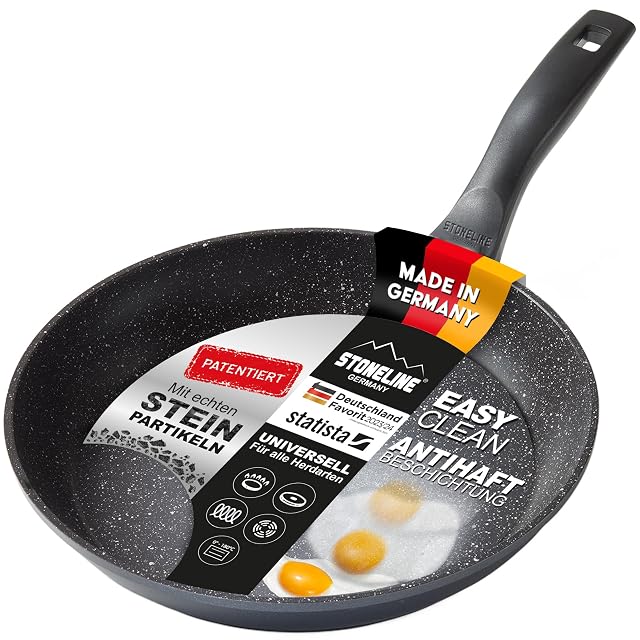
The Stoneline 28 cm (11 in) publishes 4.7 cm (1.9 in) of depth and 2.3 liters of capacity. Depth is what lets one pan hold a sauce as well as fry, and almost no other coated pan publishes it.
The one that never wears out
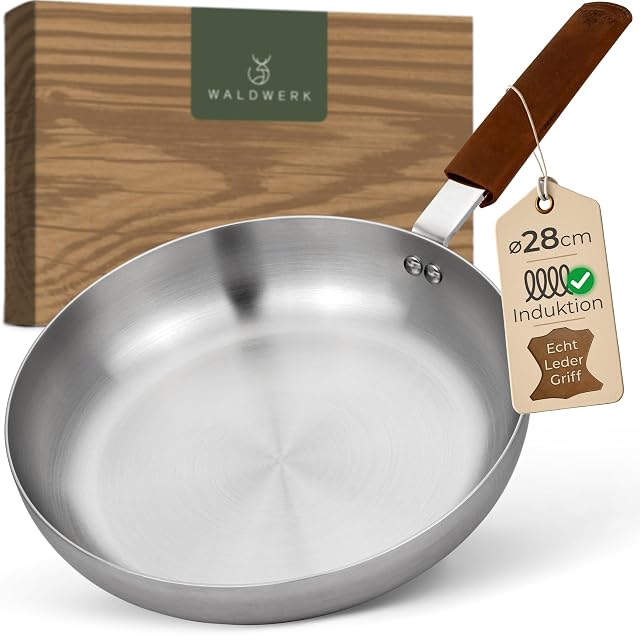
The Waldwerk 28 cm (11 in), 100% uncoated stainless with a removable leather handle sleeve. The sleeve comes off for the oven and goes on for the hob, which solves the single-pan handle problem directly.
The one that also grills
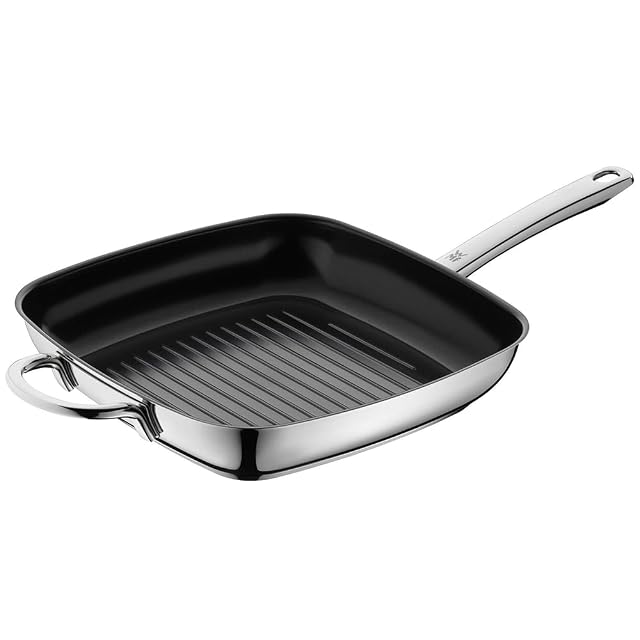
The WMF 28 × 28 cm (11 × 11 in) grill pan, 5.3 cm (2.1 in) deep, Cromargan 18/10 with a ceramic coating and stated to 400 °C (752 °F) in the pan. Ribs give you griddle marks; 5.3 cm (2.1 in) of depth means it still holds a stew.
The lightest iron
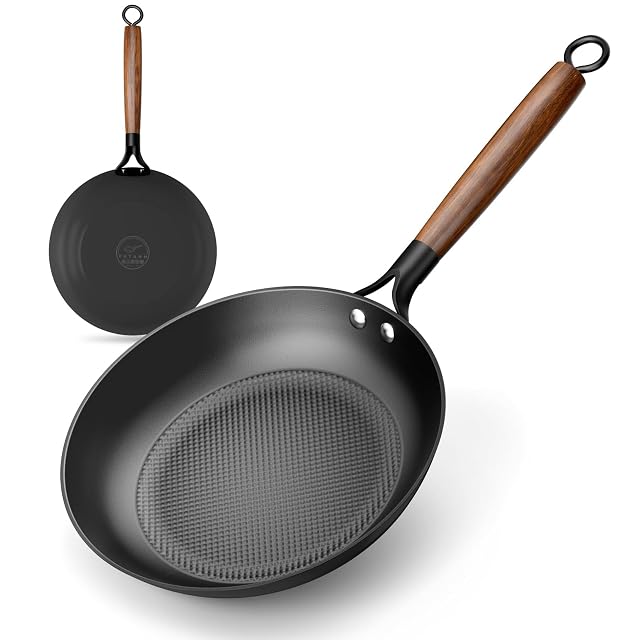
The Yutann 20 cm (7.9 in), stated 30% lighter than conventional cast iron, with a thick base and thinner walls and a hardwood handle. Twenty centimeters is small for a single pan; the weight saving is what makes it a real option for some hands.
The one that does volume
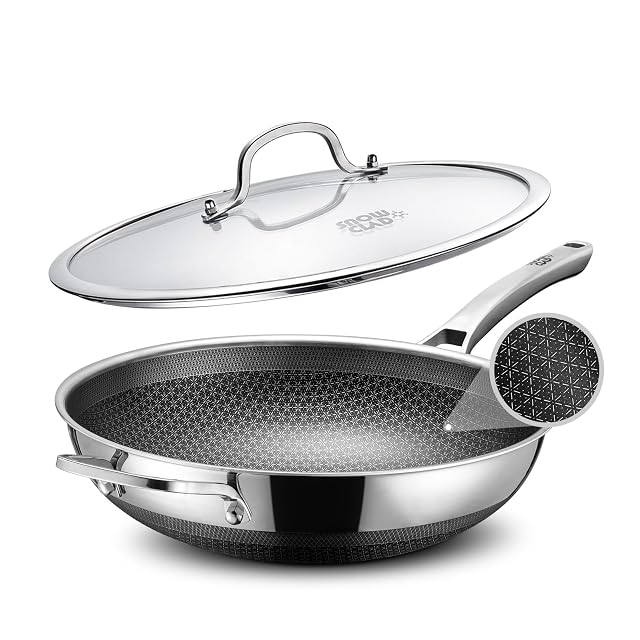
The Snowclad 32 cm (12.6 in) wok, tri-ply stainless with a nonstick coating, a lid included and oven safe to 250 °C (482 °F). A lid changes what a single pan can do: it steams, braises and holds heat.
If you buy one thing from this list
The Waldwerk, if you are willing to learn stainless. The Stoneline, if you are not.
Which pan does your cooking want?
You have two burners
One pan that does several jobs beats three that each do one.
Storage is the constraint
A removable handle or a stackable shape changes what is possible.
You cook for one or two
A medium pan is used constantly; a large one rarely.
You want to finish in the oven
The handle material decides that.
Picking by what you cook
Frying and sautéing
The core job, and what the pan will do most evenings.
Shallow braising
Where deeper sides and a lid turn a frying pan into something more.
Oven finishing
Where an ovenproof handle doubles the pan’s usefulness in a small kitchen.
One-pan meals
Where the fewer burners you have, the more valuable this becomes.
What makes the difference in use
Depth and sides
Slightly deeper sloped sides let one pan fry, sauté and braise. Shallow pans do only one of those.
A lid
It converts a frying pan into a braising pan. A pan without a matching lid is much less versatile.
Ovenproof handle
In a small kitchen, hob-to-oven means one pan instead of two.
Storage shape
Removable handles and nesting shapes exist precisely for kitchens without cupboard space.
Weight
On a small hob you move the pan more, not less. A pan you can lift comfortably gets used.
Which figure for which dish
The constraint
The feature
What it gains
Two burners
Deeper sides and a lid
Fry, sauté and braise in one
No cupboard space
Removable handle
Stores flat
Small oven
Ovenproof handle
One pan, two appliances
Cooking for one
Medium size
Used daily
Where it usually goes wrong
Buying the biggest pan that fits
A large pan on a small hob overhangs the burner and heats unevenly. Match the pan to the burner, not the worktop.
Buying without a lid
It halves what the pan can do. A lid is what turns frying into braising.
Ignoring the handle
A plastic handle keeps the pan out of the oven, which in a small kitchen is a real loss.
Choosing something too heavy
In a cramped kitchen you manoeuvre pans constantly. Weight you cannot manage becomes a pan you avoid.
By the cook you are
The studio kitchen
One deeper pan with a lid and an ovenproof handle covers nearly everything.
The two-burner household
Values a pan that can braise, so one burner does two jobs.
The tight cupboard
Looks at removable handles and nesting shapes before anything else.
Care, seasoning and how long it lasts
In a small kitchen cookware is stacked, and stacking is what wears surfaces. Pans nested directly inside each other scratch, and a coating damaged by storage rather than cooking is the most avoidable failure there is.
Put a cloth or liner between stacked pans.
Check removable handle mechanisms regularly; they loosen with use.
Let pans cool before washing to protect the base.
Store lids separately rather than clamped onto pans.
Safety
Cramped kitchens raise the stakes.
Keep handles turned in; a small kitchen means more passing traffic.
Never carry a heavy pan across a cluttered space.
Keep textiles well clear of the hob.
Check that a removable handle is fully locked before lifting.
28 cm (11 in) · 4.7 cm (1.9 in) deep · 2.3 L · induction base 22.8 cm (9 in) · cast aluminum · dishwasher safe
The only pan in this hub that publishes its own dimensions in full: 28 cm (11 in) across, 4.7 cm (1.9 in) deep, 2.3 liters, and an induction contact area of 22.8 cm (9 in) — which is the figure that actually decides how it heats.
Best for: Anyone who wants to know the actual dimensions before buying, and cooks on induction.
An uncoated stainless pan with a short metal handle and a removable real-leather sleeve, sold on the absence of coatings and plastics rather than on the presence of anything.
Best for: Someone who wants an oven-to-table pan and will remember to take the sleeve off.
28 × 28 cm (11 × 11 in), 5.3 cm deep · Cromargan 18/10 with ceramic coating · stated to 400 °C (752 °F) · optimal for 22 cm (8.7 in) rings
A square coated grill pan in Cromargan 18/10 stainless with a ceramic coating, stated heat resistant to 400 °C (752 °F) and oven safe, and explicitly matched to a 22 cm (8.7 in) hob ring.
Best for: Induction kitchens with a 22 cm (8.7 in) ring, where a stainless-handled coated pan can also go in the oven.
A cast iron skillet built deliberately light — the maker states about 30% lighter than conventional cast iron, with a thick base and thinner walls, and a hardwood handle rather than bare metal.
Best for: One or two eggs, a single steak, and anyone who has found a full-size skillet too heavy.
32 cm (12.6 in) · tri-ply stainless · nonstick coating · lid included · oven safe to 250 °C (482 °F) · dishwasher safe
The largest wok here at 32 cm (12.6 in), built as tri-ply stainless with a nonstick surface, supplied with a lid, and stated oven safe to 250 °C (482 °F).
Best for: A large household cooking one-pan meals, on a hob with a big ring.
Twenty-eight centimeters. It cooks for one as easily as a smaller pan and it still handles four portions, which a 20 cm (7.9 in) pan cannot.
Does it need to be oven safe?
If it is your only pan, yes. Finishing a thick piece of meat in the oven, or baking anything, needs a pan that survives it — which means no plastic handle.
Is cast iron too heavy for a single pan?
For some people, yes. The Yutann here is 20 cm (7.9 in) and stated 30% lighter than conventional cast iron, with a thick base and thinner walls — which is the compromise for anyone who finds a full-weight skillet unmanageable.
Which single pan should I buy?
A medium pan with slightly deeper sloped sides, a matching lid and an ovenproof handle. That combination fries, sautés, braises and finishes in the oven.
How big should it be?
Match it to your burner rather than your ambition. A pan that overhangs a small burner heats unevenly around the edge.
Do I really need a lid?
It roughly doubles what the pan can do. Without one you cannot braise, steam or hold anything warm properly.
Are removable handles any good?
In a kitchen short of storage they are genuinely useful. Check the locking mechanism regularly, since it is the part that wears.
Should I choose something heavy?
Heavy cooks better and gets used less if you struggle with it. In a cramped kitchen you move pans more, so weight matters more.
How do I store pans without damaging them?
Put a cloth between stacked pans. Storage scratches are the most avoidable damage cookware suffers.
Lids, handles and spares from the same aisle, at the price we read. Confirm they match the pan you choose before ordering: it turns on the diameter and the part number, which the product page gives.
AOTHOD 446 °F Set · Silicone utensils — Food-grade silicone cooking utensil set rated to 446 °F with stainless steel reinforcement, a thickened soft silicone head for non-stick pans and a seamless one-piece design, dishwasher safe · $20
BESTZMWK 33-Piece 304 Stainless · Silicone utensils — 33-piece utensil set with thick top-grade 304 stainless steel handles and durable silicone heads, stated free of any plastic and of BPA, dishwasher safe with hanging holes · $40
The pans here are drawn from the catalog of this site. Specifications come from the maker and from the Amazon product page; prices are what Keepa recorded on the date below, and both move. Order is set by declared specifications, by stated strengths against stated limits, and by price. Nothing here has been cooked with by us, and no claim to the contrary is made.
Last checked on
Prices quoted in these summaries are dated readings. The live price is shown next to each product.
The tool we use ourselves
Chosen your tool? Now buy it at the right price.
Cookware sets, knife blocks and cast iron swing by thirty dollars or more across the year, and the biggest "discounts" often land at prices the same model sold for six weeks
earlier.
UniverTrack tracks the real price history across retailers, spots fake
reductions, and alerts you when it is genuinely the moment to buy.
Real price historyBuy-now alertsAI buying assistant