Cooking for one or two: the small pans that actually get used
A 16 cm (6.3 in) saucepan is the most-used pot in most kitchens and the least considered. At small volumes the details are everything: a wide pouring rim, a straining lid, and marks inside so a quantity can be poured rather than measured elsewhere. Those three features separate five pans that otherwise look identical.
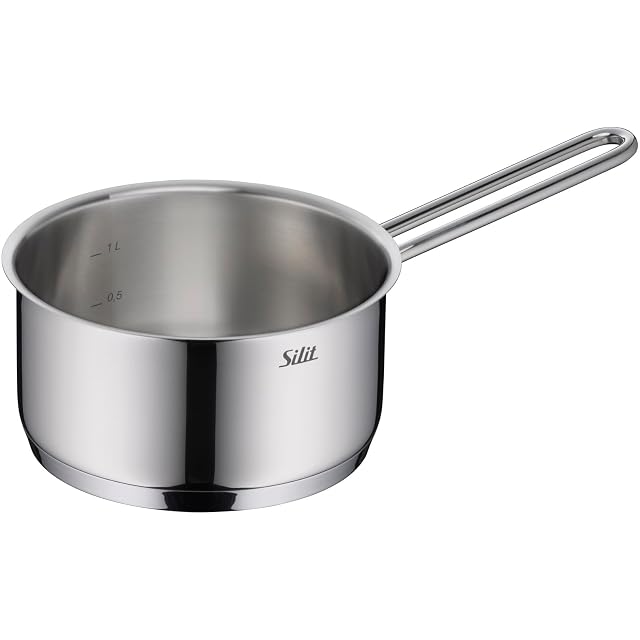
The Silit 16 cm (6.3 in) in Crominox 18/10, with interior measuring marks and a wide pouring rim, dishwasher safe. Marks inside mean 300 ml is poured to a line rather than measured in a jug and transferred.
The one that strains
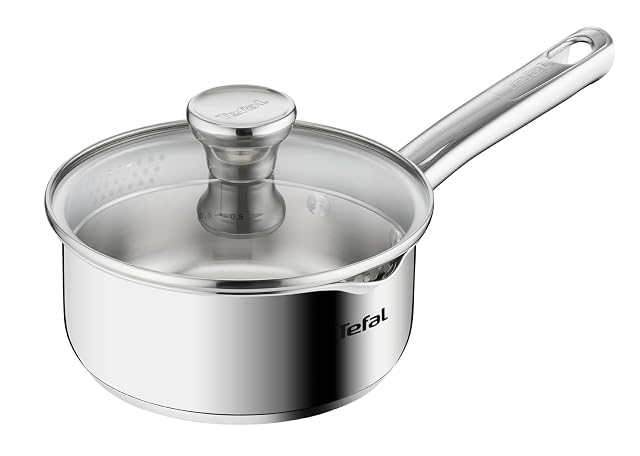
The Tefal 16 cm (6.3 in) has a glass straining lid with a steam vent and pouring spouts on both sides, with a strong induction base. For one or two portions of pasta or rice, that is a colander you do not have to wash.
The one that goes in the oven
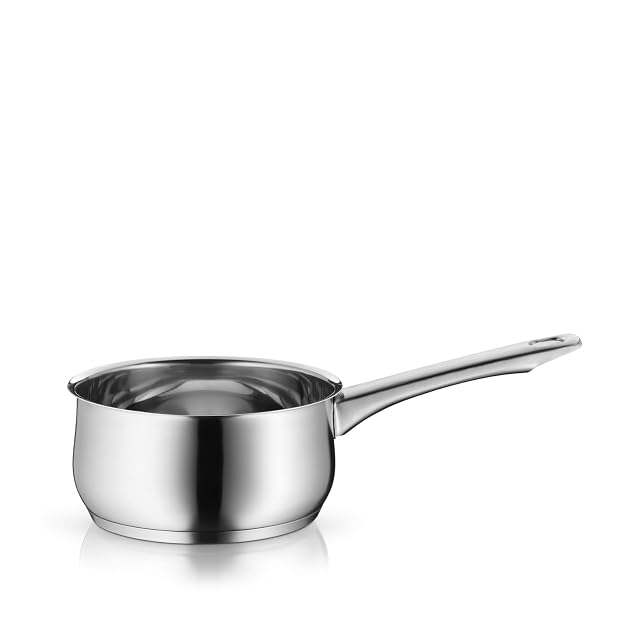
The WMF 16 cm (6.3 in), 1.5 liters and 7.5 cm (3 in) high, uncoated Cromargan 18/10, oven safe to 250 °C (482 °F). It publishes its capacity and height, which the others largely do not.
The one for milk
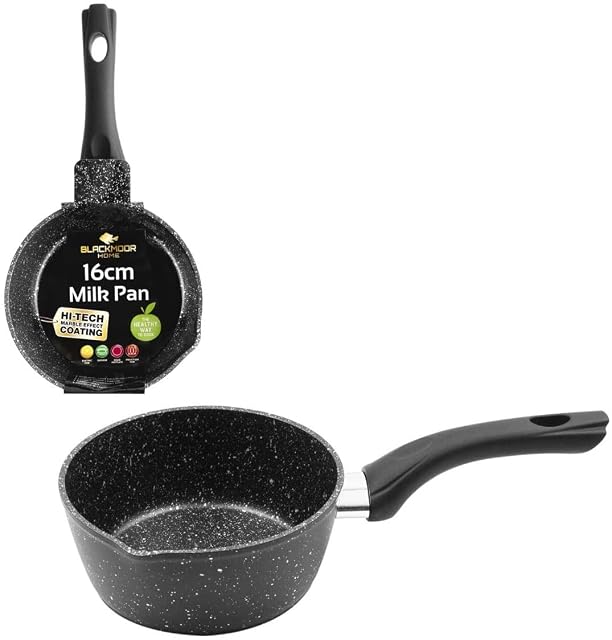
The Blackmoor 16 cm (6.3 in) milk pan on a 3 mm (0.12 in) cast aluminum base with a stone-effect nonstick, a pouring rim and a cool-touch handle. Three millimeters of base is what stops milk catching, and the coating is what makes the catching cleanable.
The one you buy once
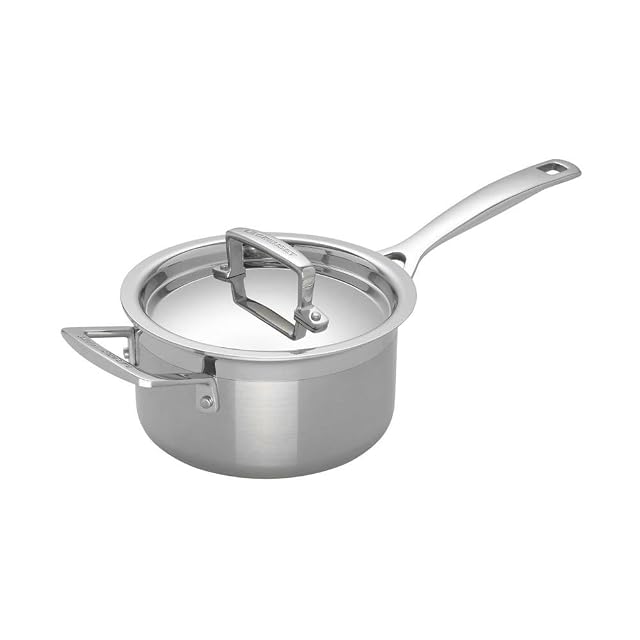
The Le Creuset 20 cm (7.9 in), 3.8 liters, fully clad three-ply stainless and aluminum with riveted handles. Fully clad means the aluminum runs up the walls rather than sitting only in the base — the whole pan heats, not just the bottom.
The one to buy first
The Silit, for the marks. It is the feature you use every single time.
Which pan does your cooking want?
You cook for one
Two small saucepans get used far more than one large one.
You reheat often
A small pan with a lid is the piece you reach for daily.
Storage is short
Nesting sizes matter more than the number of pieces.
You have induction
Check the base diameter against the smallest zone.
Picking by what you cook
Sauces and reheating
The everyday job, and where a small pan earns its cupboard space.
Rice and grains
Where a well-fitting lid does most of the work.
Boiling
Where a slightly larger pan avoids boiling over on a small hob.
Milk and delicate sauces
Where a heavier base prevents catching, which is the classic small-pan failure.
What makes the difference in use
Size against reality
For one or two people, small sizes are used daily and large ones sit unused. Buy for the normal meal.
Base thickness
Thin bases catch milk and sauces. A heavier base is the difference between a usable small pan and a frustrating one.
A well-fitting lid
It affects simmering, rice and energy use. A loose lid is a genuine handicap.
Pouring
A lip and a comfortable handle matter more on small pans, which are poured from constantly.
Induction diameter
Very small pans may fall below the hob’s minimum detected size, which is worth checking first.
Which figure for which dish
The job
The pan
The detail
Reheating
Small, with a lid
Used daily
Milk and sauces
Thicker base
Prevents catching
Rice
Well-fitting lid
Does most of the work
Boiling
Slightly larger
Avoids boiling over
Where it usually goes wrong
Buying a large set
For one or two people most of a set goes unused while filling the cupboard. Two sizes cover almost everything.
Choosing thin-based pans
They catch milk and sauces at the smallest sizes, which is exactly where you use them.
Accepting a poor lid
A lid that rattles or sits loose undermines simmering and rice. It is not a detail.
Forgetting the induction minimum
A very small pan may simply not be detected, which is a surprising discovery after purchase.
By the cook you are
The single household
Two small saucepans with good lids, and nothing more until a gap appears.
The couple
Adds one medium pan for pasta and vegetables.
The small hob
Checks minimum detected diameter and burner size before buying anything.
Care, seasoning and how long it lasts
Small pans take the worst of the abuse: they are used most, heated fastest and scorched most often. Milk caught on a thin base, then scrubbed off with something abrasive, is how a small saucepan ages in months rather than years.
Soak scorched pans rather than scouring them.
Let pans cool before washing to avoid warping the base.
Check handle fixings, which loosen on frequently used pans.
Keep lids clean around the rim so they seat properly.
Safety
Small pans boil over fast.
Do not fill above the maker’s guidance; small pans overflow quickly.
Turn handles away from the front of the hob.
Lift lids away from you to let steam escape.
Use dry cloths; small pan handles heat up quickly.
16 cm (6.3 in) · Crominox 18/10 · interior measuring marks · wide pouring rim · dishwasher safe · no lid
An uncoated 16 cm (6.3 in) stainless saucepan with measuring marks inside and a wide pouring rim — the two features that make a small pan pleasant rather than merely adequate.
Best for: Sauces, custards and anything measured by volume.
16 cm (6.3 in) · glass straining lid with steam vent · pouring spouts both sides · strong induction base · 10-year guarantee stated
The only saucepan here that arrives with a lid, and the lid strains: a glass straining lid with a steam vent, over a pan with pouring spouts on both sides.
Best for: A small pan that will be used for grains and pasta as well as sauces.
16 cm (6.3 in) milk pan · 3 mm (0.12 in) cast aluminum base · stone-effect nonstick · pouring rim · cool-touch handle
The cheapest pan in this hub and the only one that publishes its base thickness: a stated 3 mm (0.12 in) cast aluminum base, with a drip-free pouring rim.
Best for: Milk, sauces and single portions, where scorching is the enemy.
It holds a portion of rice, a sauce, warmed milk or two eggs, and it heats fast because there is little metal to warm. Anything larger is slower for the same job.
Straining lid or colander?
For one or two portions, a straining lid removes a washing-up item every time. For a family quantity of pasta, a colander is still better.
Coated or uncoated for a saucepan?
Uncoated, in almost every case. A saucepan mostly holds liquid, which does not stick, and an uncoated pan lasts indefinitely. The exception is milk, where a coated milk pan genuinely helps.
How many saucepans do I need?
For one or two people, two small ones cover most cooking, with a medium one added for pasta and vegetables.
Why does milk catch in my pan?
Almost always a thin base creating a hot spot. A heavier base is the single change that fixes it.
Does the lid matter?
Considerably. It controls simmering, cooks rice properly and saves energy. A loose lid undermines all three.
Is a set worth buying?
For a small household, usually not. Most of it sits unused while filling a cupboard you probably need.
Will a small pan work on induction?
Only above the hob’s minimum detected diameter, which varies. It is worth checking before buying the smallest sizes.
How do I clean a scorched pan?
Soak it rather than scouring. Abrasives take the surface off and make the next burn stick even harder.
Lids, handles and spares from the same aisle, at the price we read. Confirm they match the pan you choose before ordering: it turns on the diameter and the part number, which the product page gives.
AOTHOD 446 °F Set · Silicone utensils — Food-grade silicone cooking utensil set rated to 446 °F with stainless steel reinforcement, a thickened soft silicone head for non-stick pans and a seamless one-piece design, dishwasher safe · $20
BESTZMWK 33-Piece 304 Stainless · Silicone utensils — 33-piece utensil set with thick top-grade 304 stainless steel handles and durable silicone heads, stated free of any plastic and of BPA, dishwasher safe with hanging holes · $40
The pans here are drawn from the catalog of this site. Specifications come from the maker and from the Amazon product page; prices are what Keepa recorded on the date below, and both move. Order is set by declared specifications, by stated strengths against stated limits, and by price. Nothing here has been cooked with by us, and no claim to the contrary is made.
Last checked on
Prices quoted in these summaries are dated readings. The live price is shown next to each product.
The tool we use ourselves
Chosen your tool? Now buy it at the right price.
Cookware sets, knife blocks and cast iron swing by thirty dollars or more across the year, and the biggest "discounts" often land at prices the same model sold for six weeks
earlier.
UniverTrack tracks the real price history across retailers, spots fake
reductions, and alerts you when it is genuinely the moment to buy.
Real price historyBuy-now alertsAI buying assistant