Skip to content

Above 60 HRC: why your stone stopped working

A 62 HRC blade is harder than many natural and cheap synthetic abrasives can cut efficiently. The stone glazes, the edge barely changes, and it looks like a technique problem. It is a materials problem, and the answer is diamond or a good high-grit ceramic — plus the discipline to reproduce a 12° to 15° bevel rather than a 20° one.

Hard steel needs a harder abrasive. Here is what cuts it.

The diamond plate

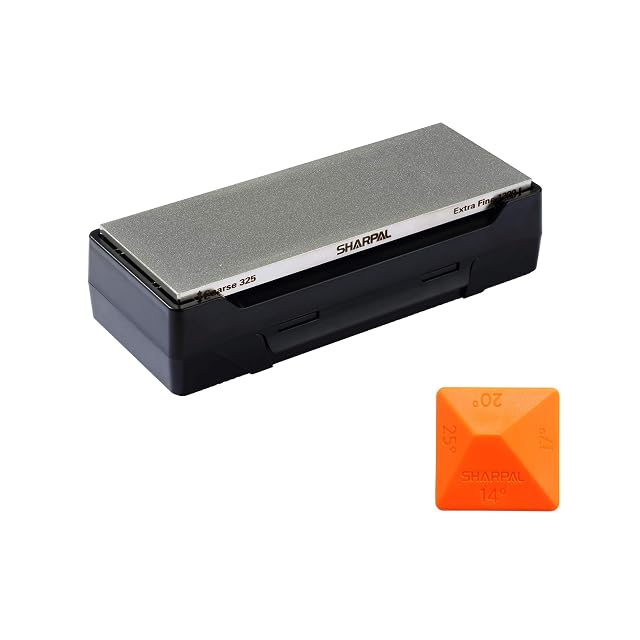
The Sharpal dual grit at 325/1200, monocrystalline diamond on a 0.9 cm (0.4 in) steel base with a non-slip storage base. Diamond cuts any steel, and the thick steel substrate is what keeps the plate flat — a bowed plate puts a curve in an edge that no technique removes.

The three-sided option

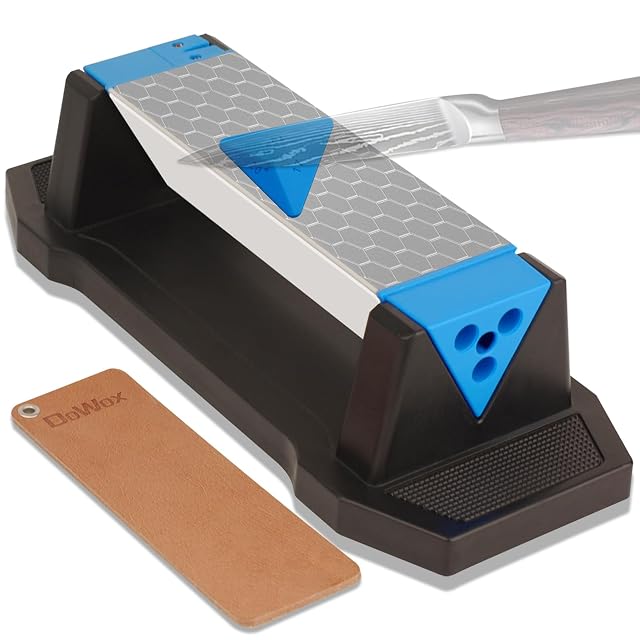
The Dowox: 400 diamond, 1000 and 8000 ceramic on three sides, with an angle guide, and no soaking required. Diamond to cut, ceramic to refine, and nothing to prepare before you start.

The guided system

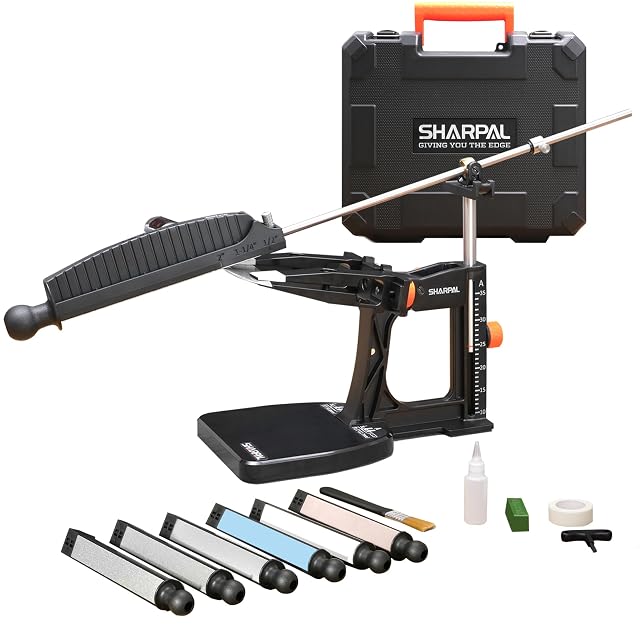
The Sharpal seven-piece, adjustable from 10° to 35°, with monocrystalline diamond plates at 220, 325, 600 and 1000. A published angle range is what lets one jig handle a 12° Japanese bevel and a 20° European one, which is the whole argument for a guided system on mixed knives.

Finishing

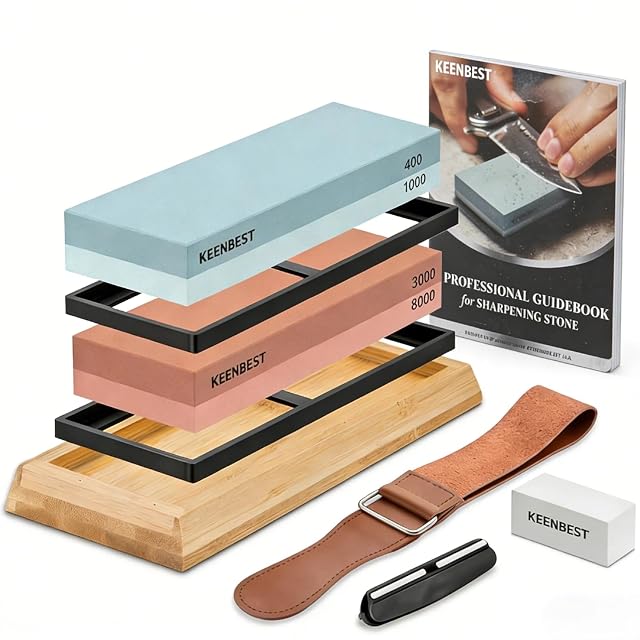
The Keenbest two stones with four grits on a bamboo base. High grits polish an already-cut edge; they will not rescue a blade that a coarse abrasive has not reached.

Honing, carefully

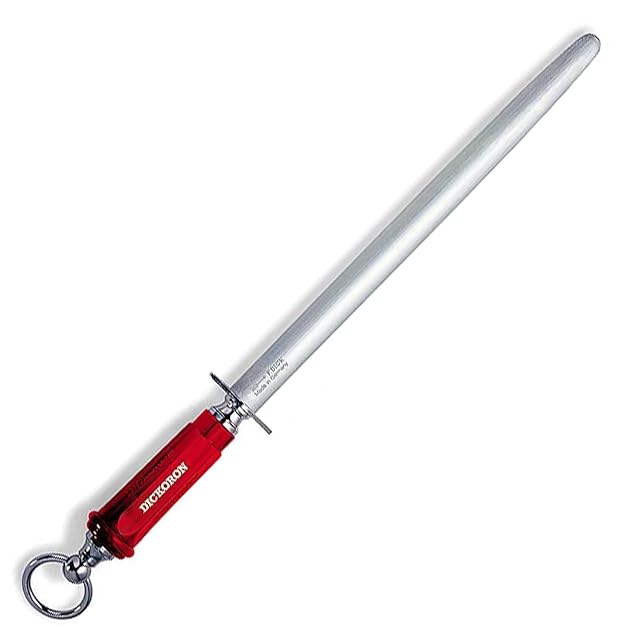
The F. Dick 30 cm (11.8 in) with a sapphire cut and a stated 65 HRC surface. The surface must be harder than the blade or nothing happens; 65 against a 62 HRC knife is right, and a coarse steel on a thin hard edge chips it.

The rule that beats the equipment

Find the knife’s angle and keep it. Several listings publish theirs — 12°, 13°, 15°. Sharpening at 20° on a 13° knife is not sharpening; it is regrinding.

Which pan does your cooking want?

Your knife is hard steel
Use proper stones, not a pull-through device.
The edge has chipped
That needs grinding out, which is a bigger job than sharpening.
The blade is asymmetric
The two sides are not sharpened equally, and that matters.
You are unsure
A professional sharpening once will show you what the edge should feel like.

Picking by what you cook

Routine sharpening

Where a medium and a fine stone restore an edge that has simply worn.

Repairing chips

Where a coarse stone removes metal until the chip is gone. Slow and unavoidable.

Refining

Where finer stones or a strop take an edge beyond merely sharp.

Maintaining between sharpenings

Where a fine stone or strop does what a steel rod does for softer knives.

What makes the difference in use

Appropriate abrasives
Hard steel needs stones suited to it. Standard pull-throughs are too aggressive and poorly matched.
The angle
Hard steel usually takes a more acute angle, which is part of why it cuts as it does.
Symmetry
Some blades are ground asymmetrically. Sharpening them evenly changes how they cut.
Patience
Hard steel takes longer to sharpen. Forcing it with pressure damages both stone and edge.
Knowing when to stop
Removing more metal than needed shortens the knife’s usable life. A burr is the signal to move on.

Which figure for which dish

The jobThe stoneThe note
Routine sharpeningMedium then fineMost sessions
Chip removalCoarseSlow, removes real metal
RefiningFine or stropBeyond merely sharp
AnyConsistent angleStill the whole skill

Where it usually goes wrong

Using a pull-through sharpener
Too aggressive and poorly matched to hard steel. It can leave the edge in worse condition than before.
Pressing hard
Hard steel takes time, and pressure damages both the edge and the stone. Let the abrasive work.
Sharpening an asymmetric blade evenly
It changes how the knife cuts, sometimes permanently. Find out how the blade is ground before you start.
Removing more metal than necessary
Every sharpening shortens the knife. Stop when the burr tells you the edge has met.

By the cook you are

The careful owner
Sharpens on proper stones and keeps sessions short and frequent.
The one with a chipped blade
Faces a coarse-stone job, or a trip to someone who does it professionally.
The beginner with an expensive knife
Should have it done professionally once, to learn what the result should be.

Care, seasoning and how long it lasts

Hard steel punishes the wrong equipment more than soft steel does. It also punishes the wrong storage: a hard thin edge in a drawer chips against other cutlery, and no amount of careful sharpening survives that habit.

  • Store hard blades protected, never loose among other utensils.
  • Flatten stones regularly; hard steel shows an uneven stone immediately.
  • Dry the blade at once, particularly with less stainless steels.
  • Use a board that gives; hard surfaces chip acute edges.

Safety

A properly sharpened hard blade is extremely sharp.

  • Handle with care immediately after sharpening; it cuts far more readily.
  • Wipe away from the edge, never along it.
  • Inspect for chips before use; fragments can enter food.
  • Never use these knives on bone or frozen food.

Our choices, and the reasons

  1. SHARPAL Diamond 325/1200 with storage base

    Dual grit 325/1200 · monocrystalline diamond on a 0.9 cm (0.4 in) steel base · non-slip storage base

    The top of this hub: industrial monocrystalline diamond bonded to a 9 mm (0.35 in) steel plate, in two grits, with a storage base — built to sharpen anything hard.

    Best for: A workshop as much as a kitchen, and any blade a conventional stone struggles with.

    8.7/10

    ≈ $70

  2. SHARPAL Angle-adjustable system, 10°–35°

    Adjustable 10° to 35° · 7-piece set · monocrystalline diamond plates 220/325/600/1000 · whetstone included

    A guided system with a genuinely adjustable angle from 10° to 35°, four diamond plates and a whetstone — the only sharpener here that can match a Japanese 15° edge.

    Best for: Someone with Japanese knives who wants repeatable results without freehand practice.

    8.4/10

    ≈ $180

The questions that come in

Why does diamond work where a stone does not?

Diamond is harder than any steel, so it cuts rather than burnishing. On a 60+ HRC blade that is the difference between removing metal and polishing it.

Does a diamond plate need flattening?

No. That is its second advantage: a bonded diamond surface stays flat, where a water stone dishes and has to be trued. The Sharpal plate here is bonded to a 0.9 cm (0.4 in) steel base, which keeps it flat.

Can I hone a hard Japanese knife on a steel?

Carefully, and with a fine one. A coarse steel can chip a hard, thin edge. The F. Dick here is sapphire cut with a stated 65 HRC surface — harder than the blade, which is the requirement.

Can I use a pull-through sharpener?

It is not appropriate for hard steel. Too aggressive and poorly matched, it can leave the edge worse than it was.

What stones do I need?

A medium and a fine stone cover routine sharpening. Chips need a coarse stone and considerably more time.

Why does it take so long?

Hard steel resists abrasion, which is exactly why it holds an edge. Pressing harder damages the edge and the stone rather than speeding it up.

Is my blade symmetric?

Not necessarily; some are ground asymmetrically. Sharpening such a blade evenly changes how it cuts, so find out first.

My knife chipped. What now?

The chip has to be ground out on a coarse stone, which removes real metal. For a valued knife it is often worth having done professionally.

How do I know when to stop?

When a burr forms along the edge, the two sides have met. More, if you want it on cookware and knives only shortens the life of the knife.
Each pan, and the cooking it rewards

SHARPAL 162N · $70

Good for: A workshop as much as a kitchen, and any blade a conventional stone struggles with.

What it does best: Publishes the micron sizes as well as the grit numbers

What it does badly: The most expensive stone here, and the finest grit is only 1200

Read the full review →

DOWOX SD1 Pro · $39

Good for: Hard Japanese blades, and anyone who will not soak a stone.

What it does best: Diamond cuts hard steel where corundum struggles — useful on 60+ HRC blades

What it does badly: Diamond plates lose their initial aggression as the exposed diamonds wear

Read the full review →

SHARPAL 202H · $180

Good for: Someone with Japanese knives who wants repeatable results without freehand practice.

What it does best: Adjustable 10° to 35°, so it fits Japanese and European blades alike

What it does badly: By far the most expensive sharpener in this hub — several times the others

Read the full review →

KEENBEST FD-ZJ-221105-093

Good for: Someone who intends to keep sharpening for years rather than once.

What it does best: Includes a flattening stone, which every other set here omits

What it does badly: 17.8 cm (7 in) is shorter than a 20 cm (7.9 in) chef’s knife

Read the full review →

F. Dick DL335 · $115

Good for: A kitchen with good European knives, honed properly.

What it does best: Publishes a surface hardness — 65 HRC — which nothing else here does

What it does badly: The most expensive steel in this hub by a wide margin

Read the full review →

Where the money goes, band by band

Mid range

$30 – $60

3 models

Upper range

$70 – $180

3 models

Short answer first

Comparisons that settle it

Comparisons already online between two pans from this guide or this aisle.

What is behind this list

The pans here are drawn from the catalog of this site. Specifications come from the maker and from the Amazon product page; prices are what Keepa recorded on the date below, and both move. Order is set by declared specifications, by stated strengths against stated limits, and by price. Nothing here has been cooked with by us, and no claim to the contrary is made.

Last checked on

Prices quoted in these summaries are dated readings. The live price is shown next to each product.

The tool we use ourselves

Chosen your tool? Now buy it at the right price.

Cookware sets, knife blocks and cast iron swing by thirty dollars or more across the year, and the biggest "discounts" often land at prices the same model sold for six weeks earlier. UniverTrack tracks the real price history across retailers, spots fake reductions, and alerts you when it is genuinely the moment to buy.

Real price historyBuy-now alertsAI buying assistant
Try free for 14 days →
No commitment · Cancel in one click · 5 languages