Under twenty-five euros: where cheap costs you nothing
Some kitchen tools have no expensive version worth buying. A whetstone is abrasive on a base; a grater is stainless with teeth; a steamer insert is a folding stainless flower. In those families the cheapest listing that publishes its specification is the correct answer, and paying more buys a brand rather than a property.
Five families where the entry price is the right answer.
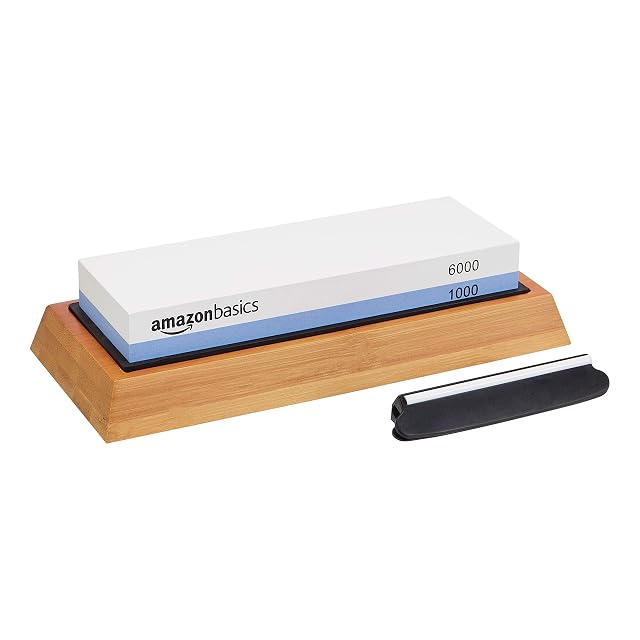
The whetstone
1000/6000 double-sided, with an angle guide and a non-slip bamboo base. That is the whole specification a first stone needs. 1000 removes metal, 6000 polishes, and the guide holds an angle while your hands learn one.
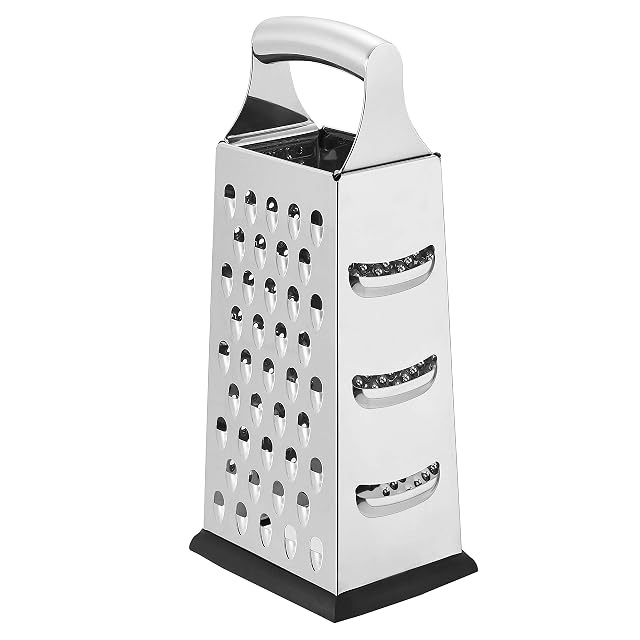
The grater
22.9 cm (9 in), 18/0 stainless stated at 95%, four cutting faces, non-slip base, stainless handle. Nothing about a box grater rewards a premium except etched rather than punched teeth.
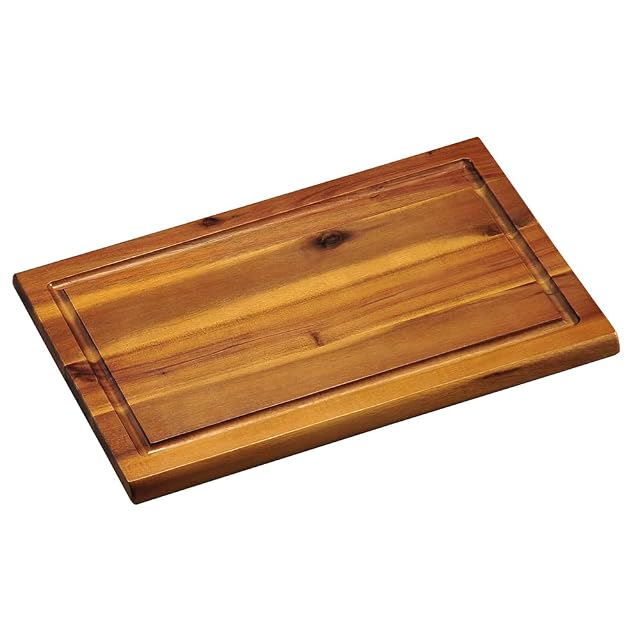
The board
32 × 21 × 1.5 cm (12.6 × 8.3 × 0.6 in) of FSC-certified acacia with a juice groove. FSC is a chain-of-custody certification — a documented claim rather than a general one — and acacia is a hard, close-grained wood that treats an edge well.
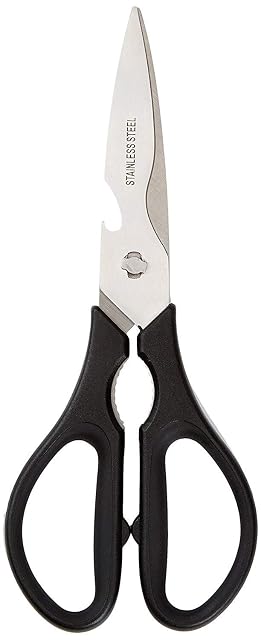
The shears
Stainless, take-apart, for scaling, peeling, opening lids and cracking nuts. Take-apart is the feature that matters: shears used on raw chicken have to come apart to be cleaned.
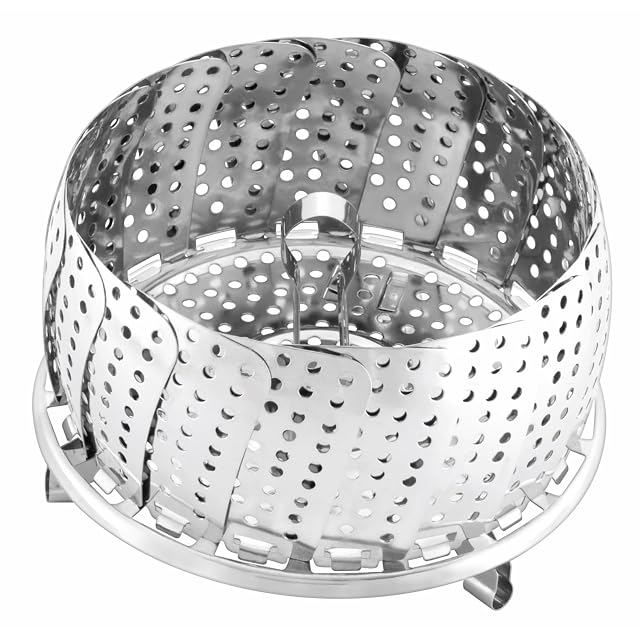
The steamer insert
Folds from 14 to 23.5 cm (5.5 to 9.3 in), 10 cm high on 2.5 cm (1 in) feet, and fits pressure cookers. It turns any pan you already own into a steamer, which is why buying an electric steamer first is usually a mistake.
The rule behind the list
Where the product is a shape in metal, buy the cheap one. Where it is a coating or a mechanism, do not.
Which pan does your cooking want?
You are starting out
Small inexpensive tools change more than one expensive purchase.
Your knife feels blunt
A honing rod is the highest-value small purchase in a kitchen.
Your board slides
A cloth underneath costs nothing and fixes it.
You are buying gadgets
Single-purpose tools are what fill drawers and go unused.
Picking by what you cook
Keeping knives working
Where a honing rod outperforms almost any other small purchase.
Measuring
Where scales change baking completely and cost very little.
Handling heat
Where a decent pair of tongs replaces several improvised solutions.
Preparation
Where a good peeler, a bench scraper and a fish slice each earn their place.
What makes the difference in use
How often you will use it
The only real test. A tool used daily justifies itself; a clever one used twice does not.
Whether it replaces improvising
Tongs, a scraper and a thermometer each replace something you were doing badly.
Multi-purpose over single-purpose
Single-purpose gadgets are the drawer-fillers. Something that does three jobs earns its space.
Build quality at low prices
Below a certain point the difference is real: hinges, blades and handles fail quickly.
Storage cost
Even cheap tools occupy space. In a small kitchen that is part of the price.
Which figure for which dish
The tool
What it replaces
How often used
Honing rod
Buying new knives
Weekly
Digital scales
Guesswork in baking
Every bake
Tongs
Two forks and hope
Daily
Bench scraper
Scooping with a knife
Daily
Where it usually goes wrong
Buying single-purpose gadgets
They are cheap individually and fill a drawer collectively. Most are used once and then forgotten.
Skipping the honing rod
It is the small purchase that changes daily cooking most, and it is routinely overlooked.
Buying the very cheapest peeler or tongs
Below a certain point blades blunt immediately and hinges fail. The middle of this bracket is better value.
Ignoring storage
In a small kitchen every tool has a space cost, and cheap tools accumulate faster than expensive ones.
By the cook you are
The first kitchen
Honing rod, scales, tongs and a decent peeler cover an enormous amount.
The baker
Scales first, since baking without them is guesswork.
The small kitchen
Buys fewer, multi-purpose tools and resists the single-use gadget entirely.
Care, seasoning and how long it lasts
Inexpensive tools are the ones nobody maintains, which is why they seem to fail quickly. Peeler blades dull, tong hinges seize with grease, and scales fail from a battery nobody thought to change rather than from anything breaking.
Dry small tools properly; hinges and blades rust fastest.
Replace peeler blades or the peeler when it starts tearing rather than cutting.
Keep scale batteries in mind before a big bake.
Wash tongs open so the hinge actually gets clean.
Safety
Small tools, real edges.
Peelers and scrapers are sharp; store them so you do not reach onto a blade.
Keep peelers sharp, since a blunt one needs force.
Check that tongs lock properly before lifting anything hot.
Folds 14 to 23.5 cm (5.5 to 9.3 in) · 10 cm high · 2.5 cm (1 in) feet · fits pressure cookers · stainless · dishwasher safe
The only folding basket here that publishes its height and its foot clearance — 10 cm (3.9 in) and 2.5 cm (1 in) — and states that it fits pressure cookers as well as pots.
Best for: A kitchen with a pressure cooker as well as pots.
For a 1000/6000 combination stone, largely yes. What separates stones is grit, flatness and a base that does not slide, and this one publishes 1000/6000, includes an angle guide and sits on non-slip bamboo. A diamond plate is a different tool, not a better stone.
Where does cheap genuinely cost you?
Coatings and mechanisms. A cheap coated pan is a coating that fails early; a cheap mandoline is a mechanism that flexes. Neither appears on this list.
What about the grater?
22.9 cm (9 in), 18/0 stainless at 95%, four faces and a non-slip base. The one genuine upgrade in that hub is photo-etched teeth, which stay sharper — that is a real property, and it costs five times as much.
What is the best small purchase?
A honing rod. It keeps your knives working, and it changes daily cooking more than almost anything else at this price.
Are scales worth it?
For baking they change everything, replacing guesswork with repeatable results. They cost very little and last for years.
Which gadgets should I avoid?
Single-purpose ones. They are cheap individually and fill a drawer collectively, and most are used once.
Is the cheapest option fine?
Not always. Below a certain point peeler blades and tong hinges fail quickly. The middle of this bracket is usually better value.
What else earns its place?
Tongs and a bench scraper, both used daily and both replacing something you were doing awkwardly with other tools.
Do cheap tools last?
As long as you maintain them, which people rarely do because they were inexpensive. Drying them properly is most of it.
Lids, handles and spares from the same aisle, at the price we read. Confirm they match the pan you choose before ordering: it turns on the diameter and the part number, which the product page gives.
Boskermeal 8-Piece with Grater Attachments · Mixing bowls — An 8-piece set of five nesting stainless steel mixing bowls with three grater attachments for grating, slicing and shredding, plus lids, in thicker stainless steel with a mirrored interior, 100 per cent dishwasher safe · $22
COOK WITH COLOR 12-Piece with TPR Lids · Mixing bowls — A 12-piece set of six plastic nesting bowls with six TPR lids, in capacities of 0.32, 0.74, 1.37, 3.69 and 5.8 quarts, in BPA-free polypropylene, top-rack dishwasher, microwave and freezer safe · $27
The pans here are drawn from the catalog of this site. Specifications come from the maker and from the Amazon product page; prices are what Keepa recorded on the date below, and both move. Order is set by declared specifications, by stated strengths against stated limits, and by price. Nothing here has been cooked with by us, and no claim to the contrary is made.
Last checked on
Prices quoted in these summaries are dated readings. The live price is shown next to each product.
The tool we use ourselves
Chosen your tool? Now buy it at the right price.
Cookware sets, knife blocks and cast iron swing by thirty dollars or more across the year, and the biggest "discounts" often land at prices the same model sold for six weeks
earlier.
UniverTrack tracks the real price history across retailers, spots fake
reductions, and alerts you when it is genuinely the moment to buy.
Real price historyBuy-now alertsAI buying assistant