The first five pieces: what to buy, and in what order
A kitchen needs far less than the sets suggest. Five pieces cook almost everything: a coated frying pan for eggs and fish, a saucepan for the small jobs, a stockpot for pasta and soup, one knife, and a board to use it on. The order matters more than the brands — buy the frying pan first because it is used daily, and the knife before anything else that cuts.
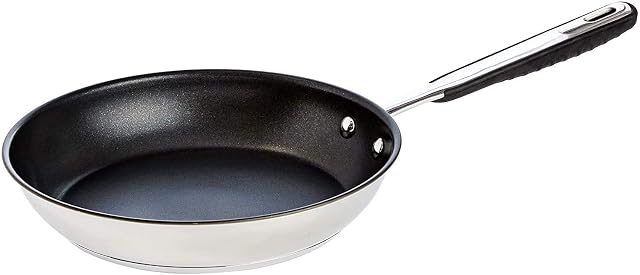
1. A coated frying pan, because it is used every day
Eggs, fish and anything delicate need a surface that lets go. The 28 cm (11 in) Amazon Basics pan is nonstick over stainless with an aluminum core, oven safe and dishwasher safe — the cheapest complete specification in that hub. It will not last forever; no coated pan does.
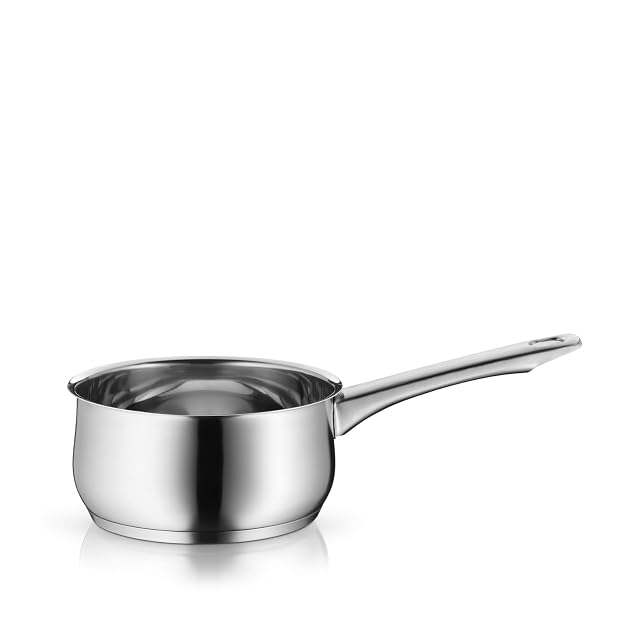
2. A saucepan, because most cooking is small
Sixteen centimeters, 1.5 liters and 7.5 cm (3 in) high, in uncoated Cromargan 18/10 and oven safe to 250 °C (482 °F). It is the pan for a sauce, a portion of rice, warmed milk and a boiled egg, and being uncoated it will outlive everything else on this list.
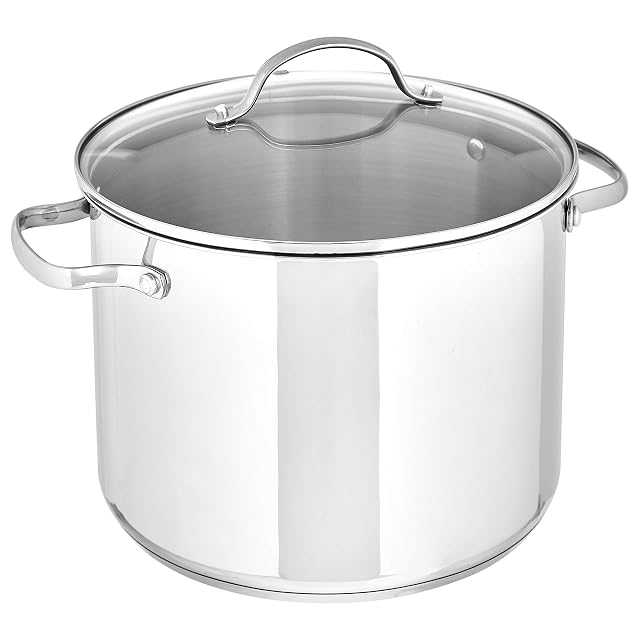
3. A stockpot, because pasta needs volume
7.6 liters in heavy stainless with an aluminum-core base and a glass lid. Anything smaller boils pasta badly, and the same pot does soup, stock and a large batch of anything.
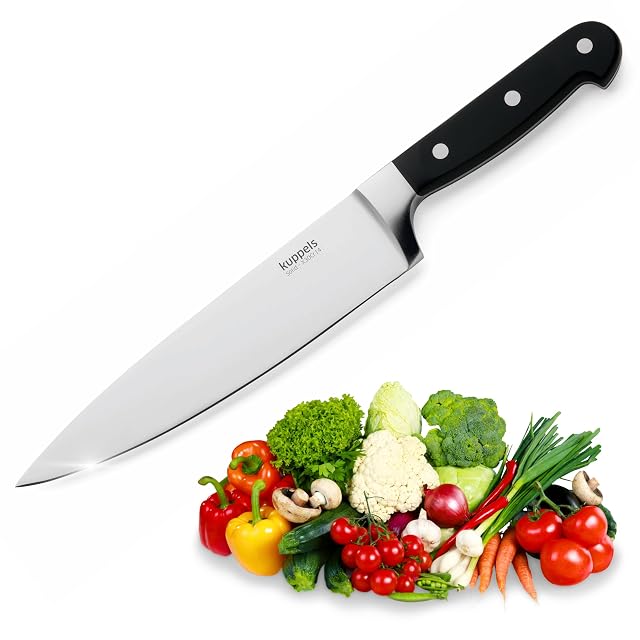
4. One knife, before anything else that cuts
A 20 cm (7.9 in) chef’s knife in X30Cr14 chrome-vanadium hardened steel, full tang and balanced. Twenty centimeters is the length that handles an onion and a chicken; a shorter knife makes both harder.
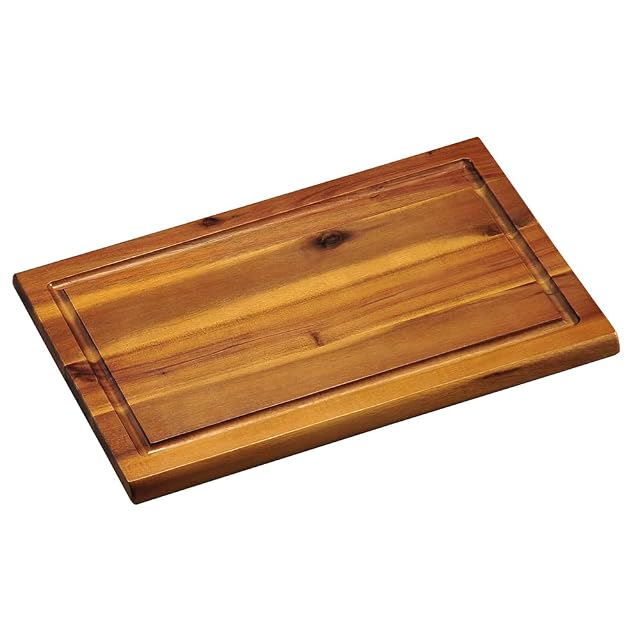
5. A board, because a knife on a worktop ruins both
32 × 21 × 1.5 cm (12.6 × 8.3 × 0.6 in) in FSC-certified acacia with a juice groove. Wood is kinder to an edge than plastic and the groove keeps meat juice off the worktop.
What deliberately is not here
A wok, a grill pan, a Dutch oven and a knife block. All are good; none is needed to cook dinner, and buying them first is how a cupboard fills before a kitchen works.
Which pan does your cooking want?
You are equipping from scratch
A frying pan, a saucepan, a large pot, a baking tray and a board cover most cooking.
You cook for one
Smaller sizes are used more, and a huge pot is a storage problem.
You have induction
That rules out some materials entirely and needs checking first.
You are tempted by a set
Sets fill cupboards; five chosen pieces fill plates.
Picking by what you cook
Frying and searing
The frying pan, used more than anything else in most kitchens.
Boiling and simmering
A saucepan for sauces and small quantities, a larger pot for pasta and stock.
The oven
A sturdy baking tray, which does far more than baking.
Preparation
A board, which is quietly the most used object in any kitchen.
What makes the difference in use
Your hob
Induction requires magnetic bases. Gas is forgiving. This decides what is even possible before anything else.
Size against household
The pot you use every week matters more than the one you use at Christmas. Buy for the normal week.
Weight
Heavy pans cook better and get used less if you struggle to lift them. That trade-off is personal.
Oven safety
A pan that goes from hob to oven doubles its usefulness, and handle material decides that.
Storage
Cookware you cannot store easily is cookware you avoid. Small kitchens should count cupboards before buying.
Which figure for which dish
The piece
What it is for
The check
Frying pan
The daily workhorse
Hob compatibility
Saucepan
Sauces and small quantities
A lid that fits
Large pot
Pasta, stock, batches
Fits your storage
Baking tray
Oven work
Thick enough not to warp
Where it usually goes wrong
Buying a large set
Sets are priced to look generous and usually include pieces nobody uses. Five deliberate choices go further.
Ignoring the hob
Buying cookware that will not work on induction is an expensive and entirely avoidable mistake.
Buying for the biggest occasion
The enormous pot is used twice a year and is in the way for the other fifty weeks.
Choosing a thin baking tray
It warps in the oven, tips its contents and never recovers. Thickness is what matters here.
By the cook you are
The first kitchen
Five pieces, chosen for the hob, and nothing else until a gap makes itself obvious.
The single cook
Buys smaller and uses everything, rather than owning pots that sit unused.
The family cook
Needs the larger pot early, because batch cooking starts immediately.
Care, seasoning and how long it lasts
Most cookware is retired for reasons that have nothing to do with cooking: a warped base that no longer sits flat, a loose handle, a coating scratched by a metal utensil. All three are habits rather than wear.
Let pans cool before washing; thermal shock warps bases.
Check and tighten handle fixings occasionally.
Match utensils to the surface: nothing metal on a coating.
Dry cast iron and carbon steel immediately and oil them lightly.
Safety
Heat and weight are the two risks.
Turn pan handles inwards on the hob, especially with children about.
Never move a large pot of boiling water across a kitchen; drain it in place if you can.
Use dry cloths: a damp cloth conducts heat instantly.
Do not overheat empty coated pans; follow the maker’s temperature guidance.
28 cm (11 in) · nonstick over stainless with aluminum core · oven safe · dishwasher safe · pouring rim
Stainless steel outside, aluminum core inside, nonstick within — and unusually for this price, the maker states it is both oven safe and dishwasher safe, with a pouring rim right around.
Best for: A household that wants one coated pan that can follow a dish into the oven.
20 cm (7.9 in) blade · X30Cr14 chrome-vanadium hardened steel · full tang · balanced
A 20 cm (7.9 in) knife that names its steel — X30Cr14 chrome-vanadium — and states a full tang running to the end of the handle, which is more than most knives at this price publish.
Best for: Someone who wants a knife that is easy to bring back on a steel.
Because a set is priced on its piece count and used on three of them. Five chosen pieces cost less than an eleven-piece set and leave nothing in the back of a cupboard.
Coated or uncoated for the first pan?
Coated. An uncoated stainless pan is the better long-term tool and it needs technique — preheating properly, and accepting that food sticks until you learn. A coated pan works on the first day.
One knife or three?
One 20 cm (7.9 in) chef’s knife does ninety per cent of the cutting in a kitchen. Add a paring knife second and a bread knife third, and stop there.
Which five pieces?
A frying pan, a saucepan, a large pot, a sturdy baking tray and a chopping board. Between them they cover most home cooking.
Is a set cheaper?
It looks cheaper and usually includes pieces you will not use. Five chosen items generally serve better for the same money.
What size pot do I need?
Buy for your normal week, not for Christmas. A pot too big to store easily is a pot you learn to avoid.
Does the hob matter?
Very much. Induction requires magnetic bases, and buying incompatible cookware is an expensive and easily avoided error.
Should everything be oven safe?
Not everything, but a hob-to-oven pan doubles what one piece can do. Check what the handles tolerate.
What comes sixth?
Whatever gap you actually notice while cooking. Buying in response to a real frustration beats buying in anticipation of one.
Lids, handles and spares from the same aisle, at the price we read. Confirm they match the pan you choose before ordering: it turns on the diameter and the part number, which the product page gives.
AOTHOD 446 °F Set · Silicone utensils — Food-grade silicone cooking utensil set rated to 446 °F with stainless steel reinforcement, a thickened soft silicone head for non-stick pans and a seamless one-piece design, dishwasher safe · $20
BESTZMWK 33-Piece 304 Stainless · Silicone utensils — 33-piece utensil set with thick top-grade 304 stainless steel handles and durable silicone heads, stated free of any plastic and of BPA, dishwasher safe with hanging holes · $40
Short answer first
If your main concern is the price → look at Kesper 28180
The pans here are drawn from the catalog of this site. Specifications come from the maker and from the Amazon product page; prices are what Keepa recorded on the date below, and both move. Order is set by declared specifications, by stated strengths against stated limits, and by price. Nothing here has been cooked with by us, and no claim to the contrary is made.
Last checked on
Prices quoted in these summaries are dated readings. The live price is shown next to each product.
The tool we use ourselves
Chosen your tool? Now buy it at the right price.
Cookware sets, knife blocks and cast iron swing by thirty dollars or more across the year, and the biggest "discounts" often land at prices the same model sold for six weeks
earlier.
UniverTrack tracks the real price history across retailers, spots fake
reductions, and alerts you when it is genuinely the moment to buy.
Real price historyBuy-now alertsAI buying assistant