A first kitchen: everything that cooks, for less than one good pan
The cheapest option is not always the compromised one. In some families — graters, whetstones, shears, boards — the entry price buys a complete specification and nothing is missing. In others, a coating or a mechanism means the cheap listing goes quiet exactly where it matters. This guide takes the first kind.
Five purchases that make a kitchen work, chosen where cheap does not mean unspecified.
The pots
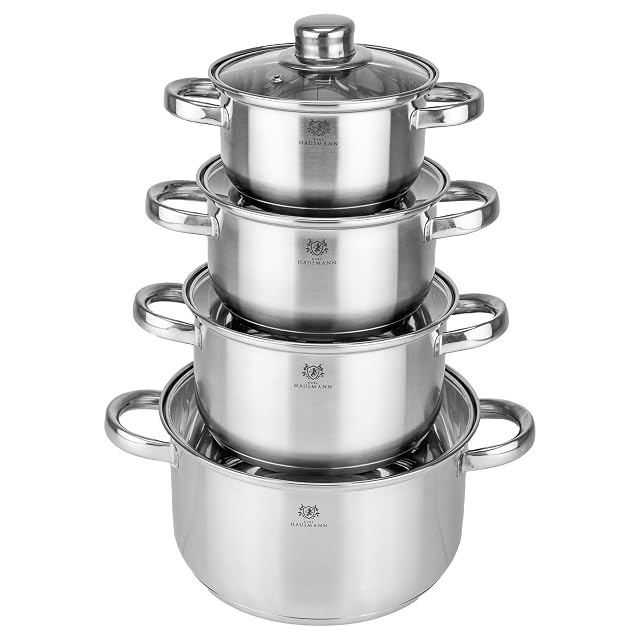
Four pots with four glass lids at 1.3, 1.9 and 2.6 liters and up, with thermometers in the lid knobs. Published capacities are what let you match a recipe; the thermometers are unusual at any price.
The pan
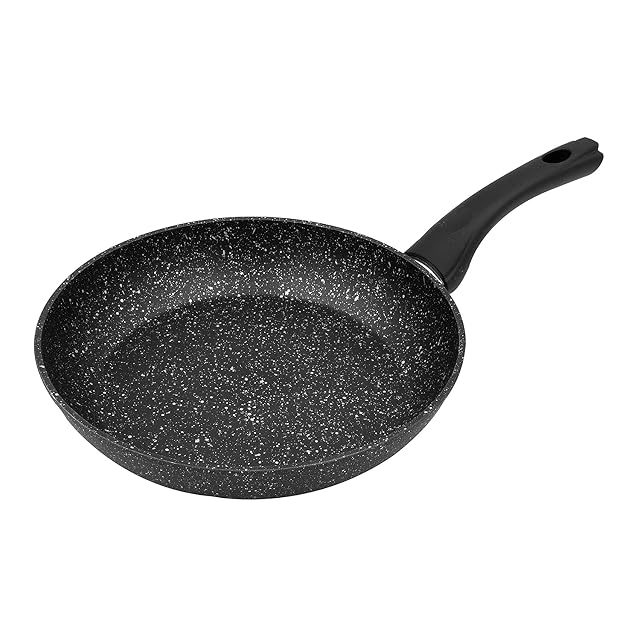
28 cm (11 in) ceramic nonstick, stated PFAS-free, induction compatible, and hand wash only. Read that last part as an instruction rather than a footnote: a dishwasher shortens a ceramic coating’s life measurably.
The knives
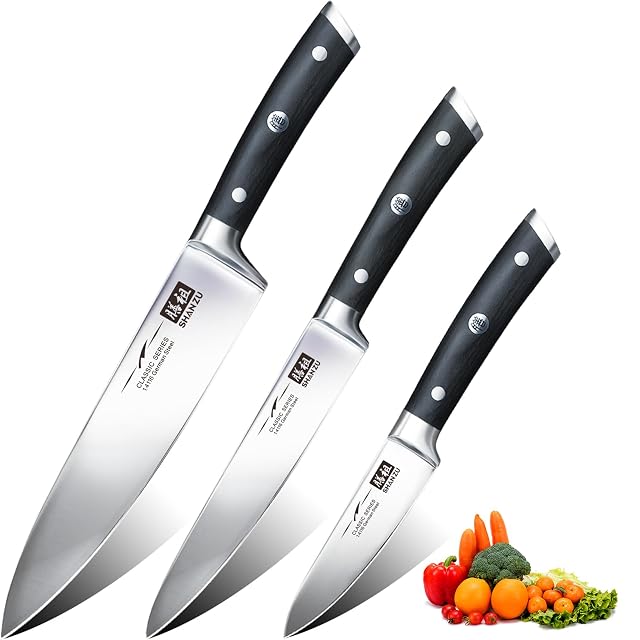
Three in German 1.4116 stainless at a stated 55+ HRC, full tang. A named alloy and a stated hardness at this price is unusual, and 1.4116 is a real German knife steel rather than a description.
The boards
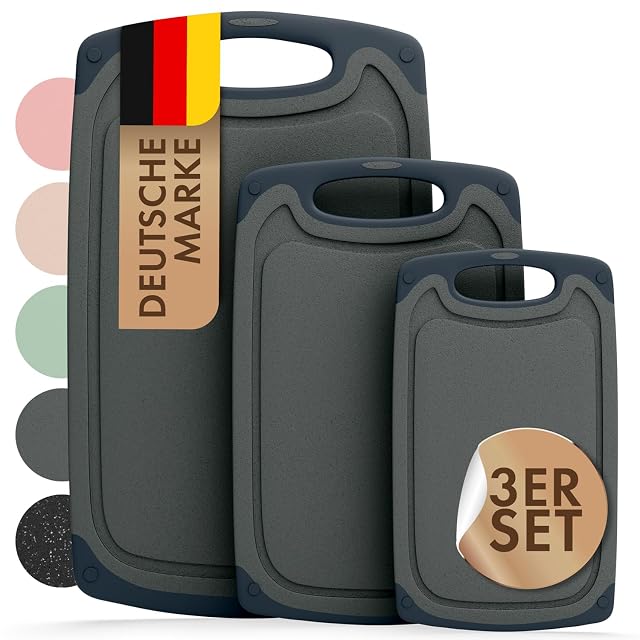
Three in S, M and L with TPR non-slip edges and juice grooves. The non-slip edge is the safety feature — a board that slides under a knife is how most home cooks get cut.
The shears
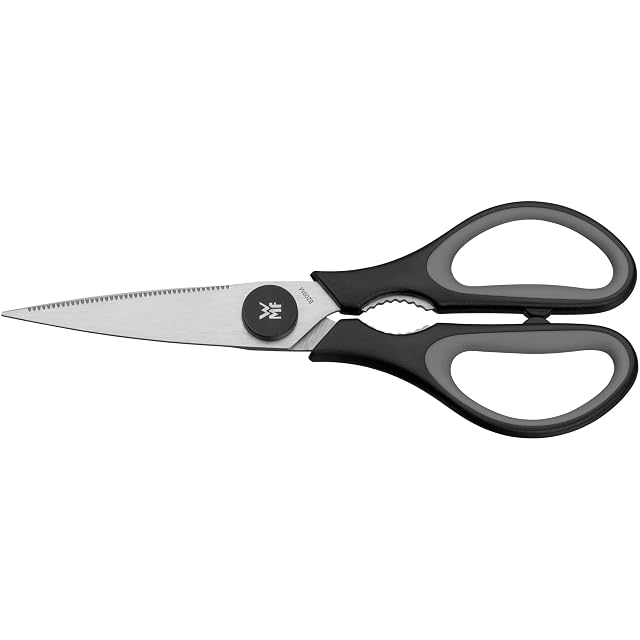
21 cm (8.3 in) in Cromargan 18/10 with a serrated grind on one blade. Shears do the jobs a knife does badly: spatchcocking, herbs, and opening everything.
What to add next, and when
An uncoated stainless pan when the coated one fails, and a whetstone when the knives dull. Not before.
Which pan does your cooking want?
You have nothing
Buy in the order you will actually cook, not all at once.
Money is tight
One good knife and one good pan beat a full cheap set.
You are moving soon
Buy what you will take with you.
You are tempted by a bundle
Bundles are where the compromises hide.
Picking by what you cook
Cooking anything at all
A pan, a pot, a knife, a board. Nothing else is needed to start.
Building outwards
Where each purchase answers a frustration you have actually met.
Second-hand
Where cast iron and stainless are genuinely worth buying used.
Avoiding replacement
Where spending slightly more on the two most used items saves money later.
What makes the difference in use
Order of purchase
Knife, board, frying pan, saucepan. Everything else can wait until you notice its absence.
Where to spend
The knife and the main pan are used daily. That is where a small extra outlay is felt.
Where to save
Utensils, bowls, baking trays and storage. These work perfectly well at low prices.
Second-hand potential
Cast iron and stainless survive anything and are excellent used. Coated pans are not.
Your hob
Buying incompatible cookware is the most expensive avoidable error at this stage.
Which figure for which dish
The item
Spend or save
Why
Chef’s knife
Spend a little more
Used every day
Frying pan
Spend a little more
Used every day
Utensils and bowls
Save
Cheap ones work fine
Cast iron
Buy second-hand
Survives anything
Where it usually goes wrong
Buying a full bundle
It looks like value and contains several things you will not use plus one you will replace within a year.
Spreading the budget evenly
The knife and the main pan are used daily and everything else occasionally. The money should reflect that.
Ignoring the hob
Cookware that will not work on induction is money entirely wasted, and it is the easiest check there is.
Buying for a kitchen you do not have yet
Equipment for future entertaining takes space now and stays unused.
By the cook you are
The student kitchen
One knife, one board, one pan, one pot. Add nothing until something is missing.
The first flat
Spends a little more on the knife and the pan, and saves everywhere else.
The frequent mover
Buys light, portable and few, and adds only what travels well.
Care, seasoning and how long it lasts
On a tight budget the cheapest strategy is making things last, and that is entirely about habits. Hand washing, a wooden board and letting pans cool before washing cost nothing and are the difference between replacing cookware in two years and in ten.
Hand wash knives and dry them immediately.
Let pans cool before washing to avoid warping.
Use the right utensils for the surface, particularly on coatings.
Season and dry cast iron properly if you buy it used.
Safety
A cheap kitchen has the same hazards.
Keep knives sharp; blunt ones slip and cause most kitchen cuts.
Put a damp cloth under any board that slides.
Turn pan handles inwards on the hob.
Check second-hand electrical items carefully before use.
4 pots + 4 glass lids · 1.3 / 1.9 / 2.6 L and up · thermometers in the lid knobs · induction
Four stainless pots with four tempered glass lids, and a thermometer built into each lid knob — the only set here that publishes both total and usable volume for every piece.
Best for: A first set for a kitchen with nothing in it.
28 cm (11 in) · ceramic nonstick · PFAS-free surface stated · induction · hand wash only
The cheapest pan in this hub and the one with the clearest instructions: Blackmoor states a ceramic, PFAS-free cooking surface and an aluminum body, and states plainly that the pan is neither dishwasher nor oven safe.
Best for: A first pan, a student kitchen, or a spare that will be replaced without regret.
Set of 3 · German 1.4116 stainless · stated 55+ HRC · full tang · ergonomic handles
Three knives in German 1.4116 stainless at a stated 55+ HRC, full tang — the only set in this hub that publishes both its steel designation and its hardness.
Best for: Someone who wants three knives that are specified rather than eleven that are not.
It depends on what it publishes. A set that names its capacities and its base construction is a real purchase; one that says "10 pieces, stainless" is a lottery. The set here publishes 1.3, 1.9 and 2.6 liters and puts thermometers in the lid knobs.
Where should the money go instead?
Into the knife and the board. A pot is a container; a knife is a tool you use with your hands for an hour a day, and a bad one is felt every time.
What will need replacing first?
The coated pan. Every coating wears, and a hand-wash-only ceramic pan washed in a machine wears faster.
What do I buy first?
A chef’s knife, a board, a frying pan and a saucepan. That is enough to cook almost anything, and everything else can wait.
Are bundles good value?
They look it. In practice they contain pieces you will not use and one you will replace quickly, which is where the saving goes.
Is second-hand worth considering?
For cast iron and stainless, very much: they survive anything. Coated pans are not worth buying used.
What is the most expensive mistake?
Buying cookware that does not work on your hob. Checking takes a second and the error is total.
How do I make it last?
Hand washing, a wooden board and letting pans cool before washing. All free, and worth more than the price difference between brands.
Lids, handles and spares from the same aisle, at the price we read. Confirm they match the pan you choose before ordering: it turns on the diameter and the part number, which the product page gives.
AOTHOD 446 °F Set · Silicone utensils — Food-grade silicone cooking utensil set rated to 446 °F with stainless steel reinforcement, a thickened soft silicone head for non-stick pans and a seamless one-piece design, dishwasher safe · $20
BESTZMWK 33-Piece 304 Stainless · Silicone utensils — 33-piece utensil set with thick top-grade 304 stainless steel handles and durable silicone heads, stated free of any plastic and of BPA, dishwasher safe with hanging holes · $40
Short answer first
If your main concern is the price → look at WMF 1879206100
The pans here are drawn from the catalog of this site. Specifications come from the maker and from the Amazon product page; prices are what Keepa recorded on the date below, and both move. Order is set by declared specifications, by stated strengths against stated limits, and by price. Nothing here has been cooked with by us, and no claim to the contrary is made.
Last checked on
Prices quoted in these summaries are dated readings. The live price is shown next to each product.
The tool we use ourselves
Chosen your tool? Now buy it at the right price.
Cookware sets, knife blocks and cast iron swing by thirty dollars or more across the year, and the biggest "discounts" often land at prices the same model sold for six weeks
earlier.
UniverTrack tracks the real price history across retailers, spots fake
reductions, and alerts you when it is genuinely the moment to buy.
Real price historyBuy-now alertsAI buying assistant