Some buyers want to avoid fluorinated coatings. There are two ways to do it: buy something that states a PFAS-free surface, or buy something with no coating at all. This guide lists both, and it reports what the makers state rather than making claims of our own about health.
Two routes, both listed here, with what each maker actually states.
Stated PFAS-free surfaces
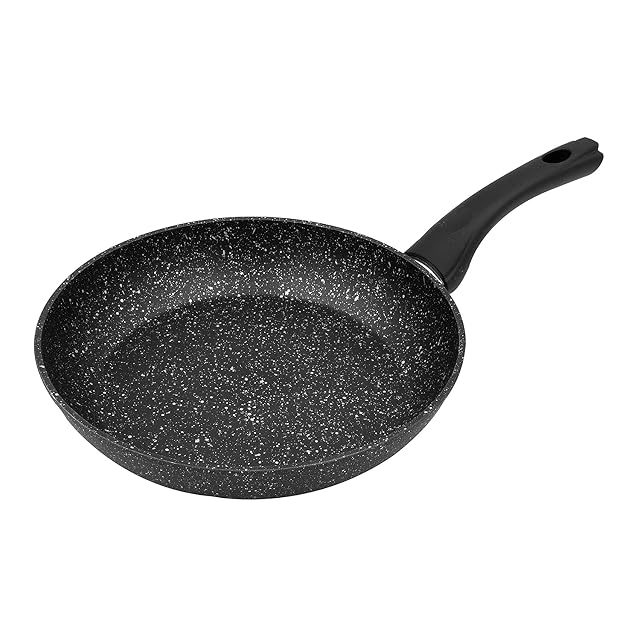
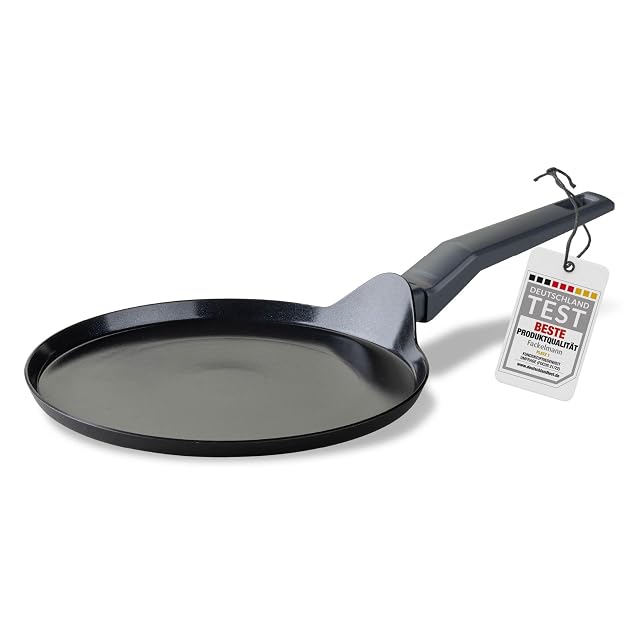
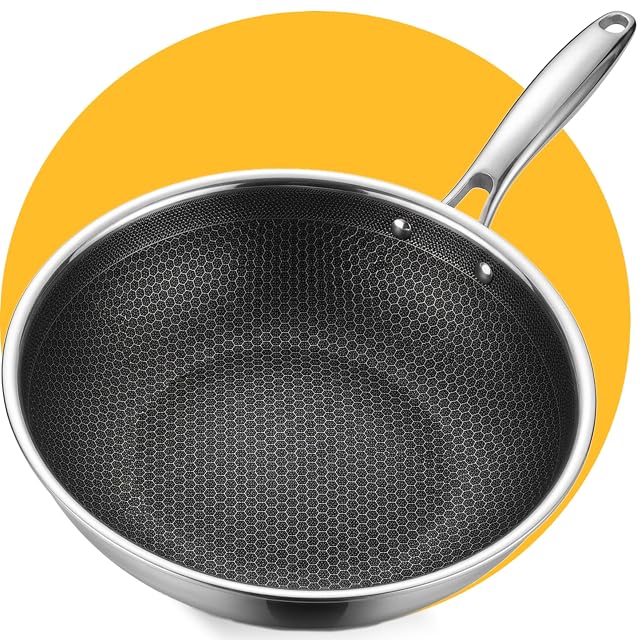
The Blackmoor 28 cm (11 in) ceramic nonstick states a PFAS-free surface and is hand wash only. The Fackelmann 25 cm (9.8 in) crêpe pan states a PFAS-free ceramic coating on recycled aluminum. The Pasper 28 cm (11 in) wok states a honeycomb-textured nonstick that is PFAS and PTFE free.
Those are the makers’ statements. We report them; we do not verify them.
No coating at all
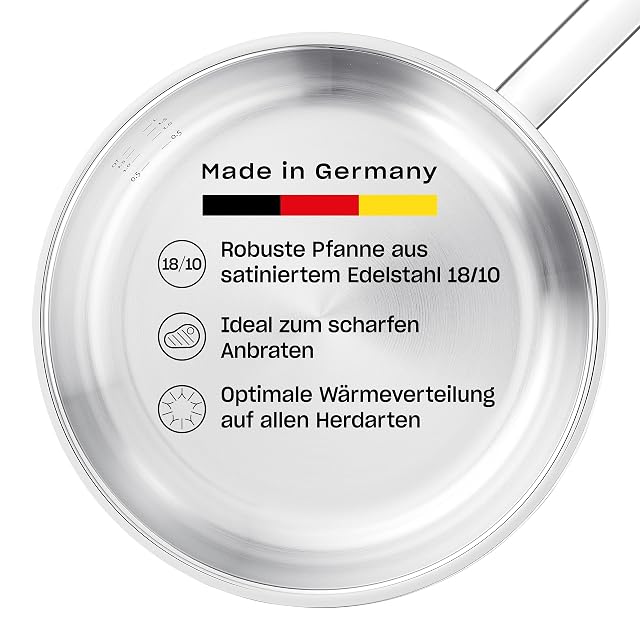
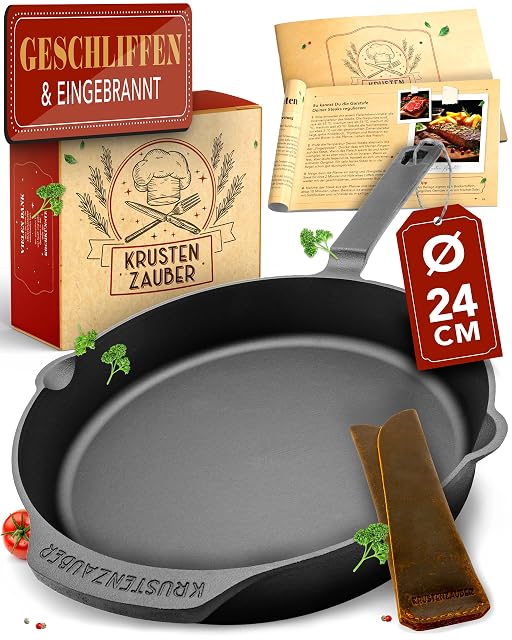
The Fissler 28 cm (11 in) is uncoated 18/10 stainless with an interior measuring scale, oven safe to 230 °C (446 °F), made in Germany. The Krustenzauber 24 cm (9.4 in) is ground-smooth bare cast iron for hob, oven, grill and open fire.
Neither has a surface that can wear through, because neither has a surface.
What changes in the kitchen
An uncoated pan needs a preheat and a film of fat, and it will stick until it gets both. A ground-smooth cast iron pan releases better than an unground one from the start, and both improve as seasoning builds.
What we will not tell you
Whether any of this matters for your health. That is a question for ECHA, EFSA and your own reading, not for a cookware site.
Which pan does your cooking want?
You want to avoid coatings entirely
Cast iron, carbon steel and stainless are the three uncoated families.
You still want easy release
Seasoned carbon steel is the closest uncoated equivalent.
You are reading marketing claims
Read what the maker actually states about the material, not the slogan.
You cook eggs daily
This is the switch that takes the most practice.
Picking by what you cook
Everyday frying
Where carbon steel does most of what a coated pan did, once seasoned.
Searing and roasting
Where cast iron’s heat retention is the reason to own it.
Sauces and boiling
Where stainless is the obvious uncoated answer and needs no maintenance.
Baking
Where uncoated trays exist and behave differently from coated ones.
What makes the difference in use
What the maker actually declares
Terms vary and marketing is loose. The material description and the maker’s own statements are what to read.
Seasoning
Carbon steel and cast iron build their own release layer. That is a routine, not a one-off.
Weight
Uncoated alternatives are generally heavier, cast iron markedly so. It is a daily consideration.
Reactivity
Bare iron reacts with acidic food. Long tomato cooking is better in stainless or enamel.
Realistic expectations
No uncoated pan releases like a new coating. Judging it by that standard guarantees disappointment.
Which figure for which dish
The material
Its strength
Its demand
Carbon steel
Closest to non-stick
Seasoning routine
Cast iron
Heat retention
Weight
Stainless
No maintenance
Nothing releases easily
Enamelled iron
Handles acidity
Can chip
Where it usually goes wrong
Expecting coated behavior
Uncoated pans need preheating and fat. Judged against a new coating they will always seem to fail.
Skipping the seasoning
Carbon steel and cast iron stick badly until the layer is built. That first stage is not optional.
Cooking acidic food in bare iron
Long tomato or wine cooking strips seasoning and picks up flavor. Stainless or enamel handles that.
Believing the marketing rather than the material
Terminology in this area is loose. What the pan is made of tells you more than what the box says.
By the cook you are
The cook avoiding coatings
Starts with carbon steel, which is the closest replacement in daily use.
The high-heat cook
Adds cast iron, which tolerates what a coating cannot.
The low-maintenance cook
Uses stainless and accepts that technique replaces release.
Care, seasoning and how long it lasts
Uncoated cookware asks for a small routine and gives back a surface that never needs replacing. The routine is not optional though: seasoning builds and is stripped away, and bare iron rusts within hours of being left wet in a sink.
Dry bare iron immediately and wipe with a thin film of oil.
Rebuild seasoning whenever food begins to stick.
Use stainless or enamel for long acidic cooking.
Avoid harsh abrasives that strip seasoning back to bare metal.
Safety
Heat and weight.
Cast iron handles get extremely hot; use dry cloths and both hands.
Ventilate when seasoning a pan, as it produces smoke.
28 cm (11 in) · ceramic nonstick · PFAS-free surface stated · induction · hand wash only
The cheapest pan in this hub and the one with the clearest instructions: Blackmoor states a ceramic, PFAS-free cooking surface and an aluminum body, and states plainly that the pan is neither dishwasher nor oven safe.
Best for: A first pan, a student kitchen, or a spare that will be replaced without regret.
25 cm (9.8 in) · recycled aluminum · PFAS-free ceramic coating stated · Bakelite handle to 150 °C (302 °F) · 3-year guarantee
A 25 cm (9.8 in) crêpe pan made from recycled aluminum with a ceramic coating the maker states is PFAS-free, a Bakelite handle rated to 150 °C (302 °F), and a stated three-year guarantee.
Best for: Someone who wants a PFAS-free surface and reads the small print.
28 cm (11 in) · 18/10 stainless, uncoated · interior measuring scale · oven safe to 230 °C (446 °F) · made in Germany
The pan at the top of this hub, and the only one with a measuring scale inside: uncoated 18/10 stainless, made in Germany, stated oven safe to 230 °C (446 °F), with cold metal handles and an extra-large pouring rim.
Best for: A pan bought once, for someone who reduces sauces and wants to see how far.
24 cm (9.4 in) · ground smooth cast iron · hob, oven, grill and open fire · recipe book included
A 24 cm (9.4 in) cast iron skillet with a ground-smooth interior rather than the usual sand-cast texture, sold with instructions and a recipe book — which is the part beginners actually need.
Best for: A first cast iron pan for someone who wants to learn it properly.
It is a statement by the maker that the surface does not contain per- and polyfluoroalkyl substances. We report what is stated, as stated. Regulation of these substances in the EU is handled by ECHA, and the position continues to develop.
Is uncoated safer than coated?
That is not a question this site answers, and we will not pretend otherwise. What we can say is factual: an uncoated stainless or cast iron pan has no coating to degrade, wear through or need replacing, which is a durability argument regardless of anything else.
Is ceramic the same as PFAS-free?
Not automatically. "Ceramic" describes a sol-gel surface rather than a regulatory status, and the two listings here that state PFAS-free say so explicitly rather than leaving it implied.
What are the uncoated options?
Cast iron, carbon steel, stainless steel and enamelled iron. Each behaves differently and none releases food like a new coating.
Which is closest to non-stick?
Seasoned carbon steel, once the layer is built up. It starts sticky and improves, which is the opposite of a coating.
How do I read the marketing?
Look at the material and what the maker actually states about it. Terminology in this area is loose and varies between brands.
Can I cook tomatoes in bare iron?
Briefly yes, at length no. Long acidic cooking strips seasoning, and stainless or enamel is the better vessel for it.
Is it a lot more work?
It is a short routine: dry immediately, oil lightly, rebuild the seasoning occasionally. In exchange the surface never needs replacing.
Is uncoated heavier?
Generally yes, and cast iron markedly so. That weight is worth testing before committing to it as your daily pan.
What separates one band from the next: Diameter — Entry level 25 · Mid range 28 · Upper range 28
What else you will want
Lids, handles and spares from the same aisle, at the price we read. Confirm they match the pan you choose before ordering: it turns on the diameter and the part number, which the product page gives.
AOTHOD 446 °F Set · Silicone utensils — Food-grade silicone cooking utensil set rated to 446 °F with stainless steel reinforcement, a thickened soft silicone head for non-stick pans and a seamless one-piece design, dishwasher safe · $20
BESTZMWK 33-Piece 304 Stainless · Silicone utensils — 33-piece utensil set with thick top-grade 304 stainless steel handles and durable silicone heads, stated free of any plastic and of BPA, dishwasher safe with hanging holes · $40
Boskermeal 8-Piece with Grater Attachments · Mixing bowls — An 8-piece set of five nesting stainless steel mixing bowls with three grater attachments for grating, slicing and shredding, plus lids, in thicker stainless steel with a mirrored interior, 100 per cent dishwasher safe · $22
COOK WITH COLOR 12-Piece with TPR Lids · Mixing bowls — A 12-piece set of six plastic nesting bowls with six TPR lids, in capacities of 0.32, 0.74, 1.37, 3.69 and 5.8 quarts, in BPA-free polypropylene, top-rack dishwasher, microwave and freezer safe · $27
The pans here are drawn from the catalog of this site. Specifications come from the maker and from the Amazon product page; prices are what Keepa recorded on the date below, and both move. Order is set by declared specifications, by stated strengths against stated limits, and by price. Nothing here has been cooked with by us, and no claim to the contrary is made.
Last checked on
Prices quoted in these summaries are dated readings. The live price is shown next to each product.
The tool we use ourselves
Chosen your tool? Now buy it at the right price.
Cookware sets, knife blocks and cast iron swing by thirty dollars or more across the year, and the biggest "discounts" often land at prices the same model sold for six weeks
earlier.
UniverTrack tracks the real price history across retailers, spots fake
reductions, and alerts you when it is genuinely the moment to buy.
Real price historyBuy-now alertsAI buying assistant