Skip to content

The best chef’s knives for 2026

The chef’s knife is the one that earns its place, and the figures that describe it are all stated by the maker rather than measured here. Hardness, quoted in HRC, is the trade at the heart of the category: a harder blade holds an edge longer and chips more readily, a softer one dulls sooner and is easier to bring back on a steel. Length is the second decision — 20 cm (7.9 in) suits most hands and most boards, 24 cm (9.4 in) rewards a large board and punishes a small one. Profile decides technique: a curved belly rocks, a flatter one chops. We compare stated steel and hardness, length and profile, edge angle, balance point and handle shape.

The models we recommend

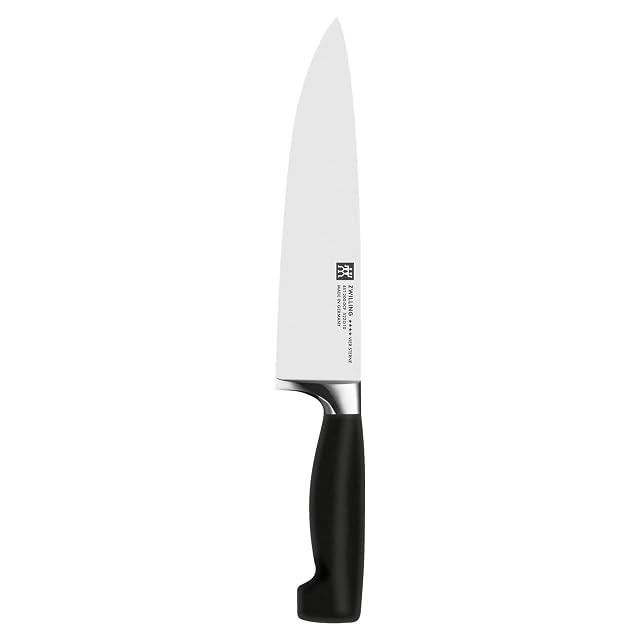
  1. ZWILLING Vier Sterne 20 cm (7.9 in)

    20 cm (7.9 in) blade · FRIODUR ice-hardened special steel · deep bolster · made in Germany · seamless handle

    A German-made 20 cm (7.9 in) knife with Zwilling’s FRIODUR ice-hardening, a deep bolster and a seamless handle join — the construction that keeps water out of the handle.

    Best for: A knife bought once, for a kitchen that cooks daily.

    8.1/10

    ≈ $93

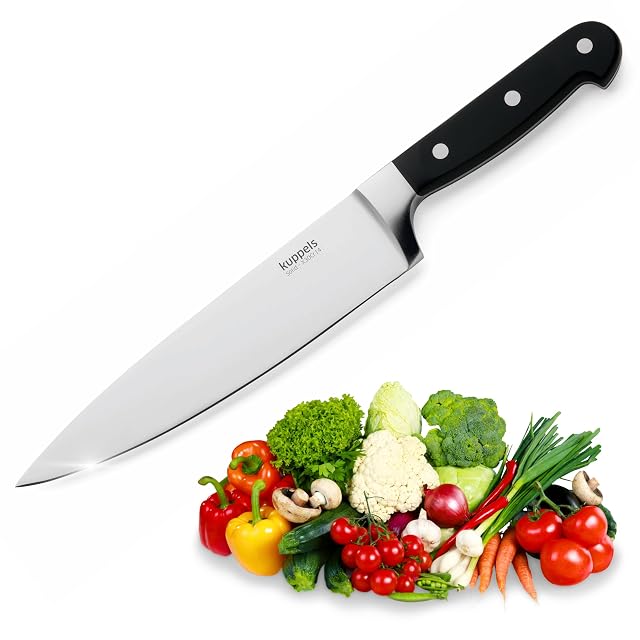
  2. Kuppels SOLID 20 cm (7.9 in)

    20 cm (7.9 in) blade · X30Cr14 chrome-vanadium hardened steel · full tang · balanced

    A 20 cm (7.9 in) knife that names its steel — X30Cr14 chrome-vanadium — and states a full tang running to the end of the handle, which is more than most knives at this price publish.

    Best for: Someone who wants a knife that is easy to bring back on a steel.

    7.5/10

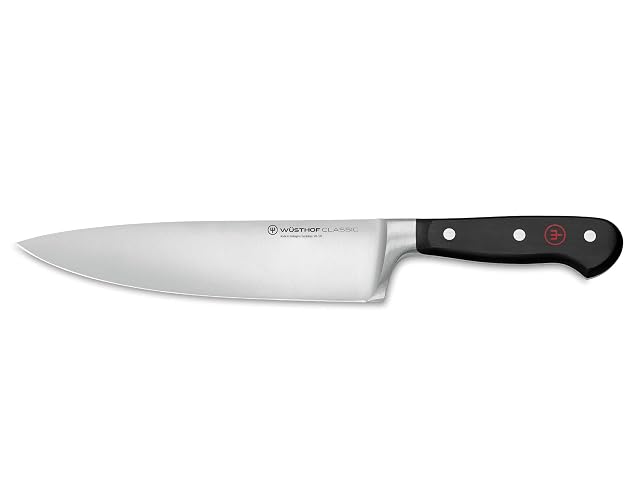
  3. WÜSTHOF Classic 20 cm (7.9 in)

    20 cm (7.9 in) blade · forged from one piece · stated 58 HRC · laser-measured edge · stainless

    The top of this hub and the only knife in it that publishes a hardness: forged from a single piece of Wüsthof steel, stated at 58 Rockwell, with a laser-measured cutting edge.

    Best for: The knife you sharpen for thirty years.

    8.7/10

    ≈ $170

By need, across chef's knives

Slicing large items

A long blade goes through a cabbage or a roast in a single pass. Going back over it in several strokes tears the fibers instead of cutting them.

WÜSTHOF 1040100120

Working on a small board

A short blade is better controlled in a confined space and tires the wrist less. Beyond the board, length becomes a nuisance.

WÜSTHOF 1040100120

A first serious knife

This is the knife that does 80% of the work in a kitchen. Putting the budget here rather than spreading it over a full set changes daily life.

WÜSTHOF 1040100120

Across chef's knives, who each type suits

Everyday cooking
A 20 cm (7.9 in) is the universal reference. It slices, carves, chops and replaces half a knife block.
Small hands, small board
An 18 cm (7.1 in) handles more easily and loses little capacity. Many people prefer it once they have tried it.
Large items and large volumes
A 24 cm (9.4 in) goes through in one pass what a 20 cm (7.9 in) starts in two. It calls for a board to match.

The trade-offs to weigh on chef's knives

Length against handling
A long blade cuts in one gesture and becomes unwieldy on a small board. It is the main trade-off in this range.
Hard steel against upkeep
A very hard steel holds its edge for a long time and chips on a bone or an impact. A softer steel is resharpened in a few passes and dulls faster.
Japanese profile against European
A Japanese profile is thinner, sharper and more fragile; a European profile is thicker, more forgiving and asks for more effort.

What gets asked about chef's knives

What blade length should I choose?

20 cm (7.9 in) is the reference for family cooking. 18 cm (7.1 in) for more handling ease, 24 cm (9.4 in) for large items and large volumes.

Does a chef’s knife replace the others?

It does most of the work. Still needed are a paring knife for detail and a bread knife for the crust.

How often should I sharpen?

A pass on the honing steel before each use maintains the edge; a real sharpening on a stone one to four times a year depending on use.

Does the dishwasher damage a knife?

A great deal: harsh detergents, knocks against other items, heat on the handle. Hand washing and immediate drying add several years to a blade.

What does HRC hardness mean?

It is the steel’s resistance to deformation. Higher, the edge lasts longer but chips more easily; lower, the opposite.

Forged or stamped blade?

Forged is heavier, better balanced, and costs more. Stamped, lighter, cuts just as well when properly sharpened.

How do I hold a chef’s knife?

Pinching the blade between thumb and index finger, just in front of the handle. That grip gives a control the handle grip does not allow.

What board should I cut on?

Wood or soft plastic. Glass, stone and ceramic destroy the edge in a few cuts.

The essentials of chef's knives

The chef’s knife does most of the work: it is the one to concentrate the budget on. A 20 cm (7.9 in), washed by hand, honed often and used on a wooden or plastic board, serves for decades.

Overview: chef's knives

    The whole set of chef's knives, as a table

    We show a column only when four utensils in five publish its value. The rest would stay empty and settle nothing.

    ModelPriceSteel
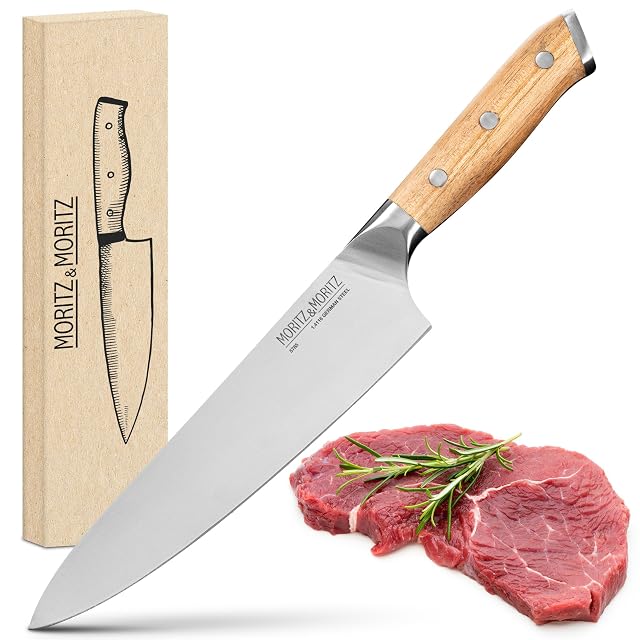
    Moritz & Moritz 5785$54German knife steel, stated
    ZWILLING 1006836$93FRIODUR ice-hardened special steel, stated to hold its edge and resist corrosion
    WÜSTHOF 1040100120$170Wüsthof stainless, forged from a single piece
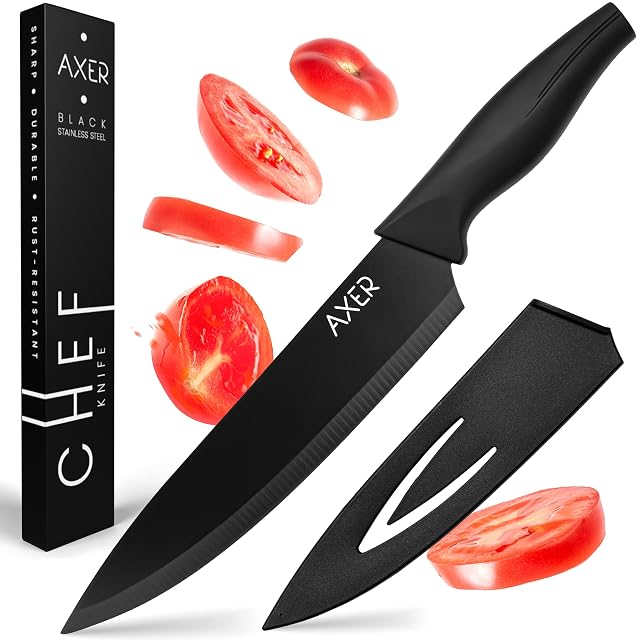
    Axer KNF-CHEF-BLK——
    Kuppels SOLID—Hardened chrome-vanadium, stated as X30Cr14

    Guides covering chef's knives

    Where this comes from

    Specifications: manufacturer sheets for cookware and kitchen knives and the matching Amazon product pages. Prices and availability: Keepa. Every figure in this table names its source.

    Most recent revision in this category: September 3, 2026.

    What we judge chef's knives on

    Prices quoted in these summaries are dated readings. The live price is shown next to each product.