Materials
Hard or tough: the choice behind every kitchen knife
Hardness is the single number that shapes how a knife behaves. A harder blade holds its edge longer and chips more easily; a softer one dulls sooner and forgives a twist against a bone. Japanese kitchen steels sit high, German ones lower, and neither is the right answer in general — only for a particular pair of hands.
By Jean-Benoit Buisson
Two philosophies, five knives.
Hard: the Japanese answer
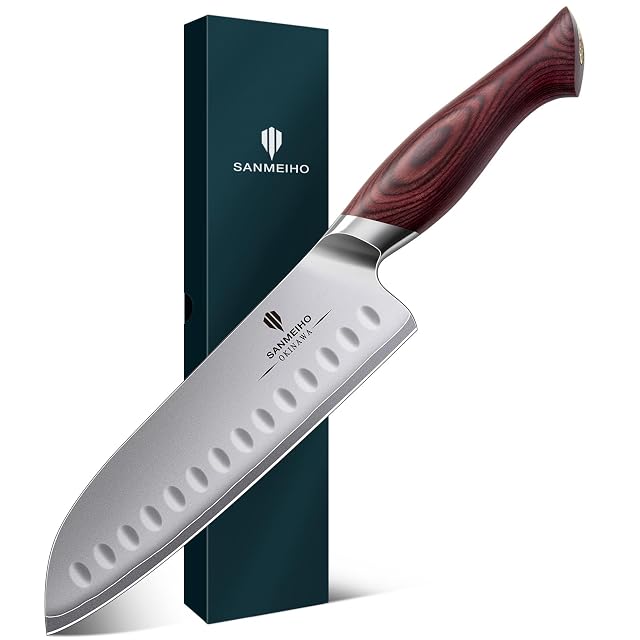
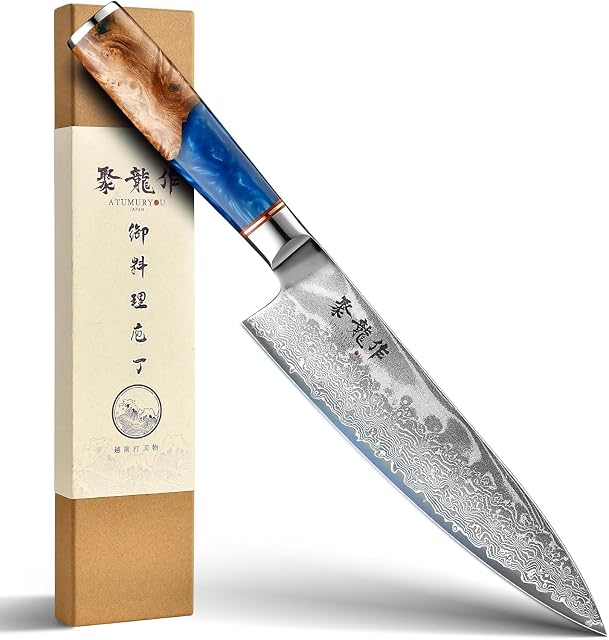
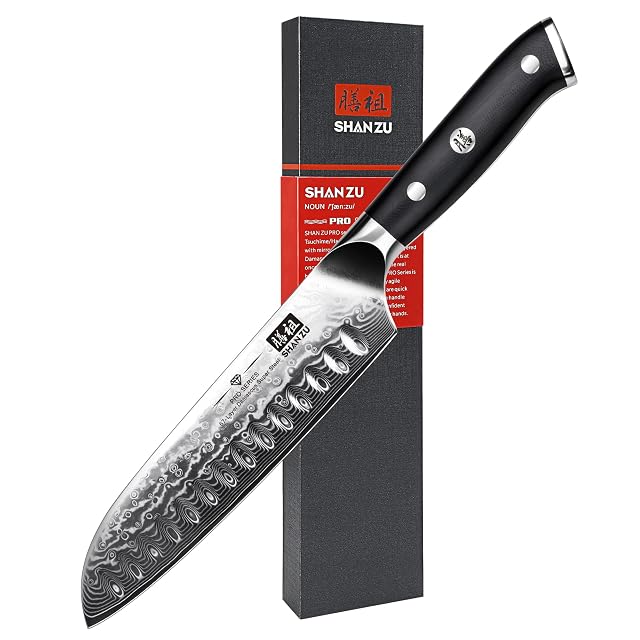
The Sanmeiho santoku, 18 cm (7.1 in) in 10Cr15MoV at a stated HRC 62, five-layer laminated, with a stated 12° edge. The Shan Zu santoku, 18 cm (7.1 in) with a Japanese 10Cr15MoV Damascus core and 67 forged layers, stated genuinely forged rather than etched. The Atumuryou 20 cm (7.9 in), VG-10 core at a stated 60 HRC.
Sixty and above means an edge that lasts through a great deal of work — and a blade that will chip if you lever with it or drop it on a tile floor.
Tough: the German answer
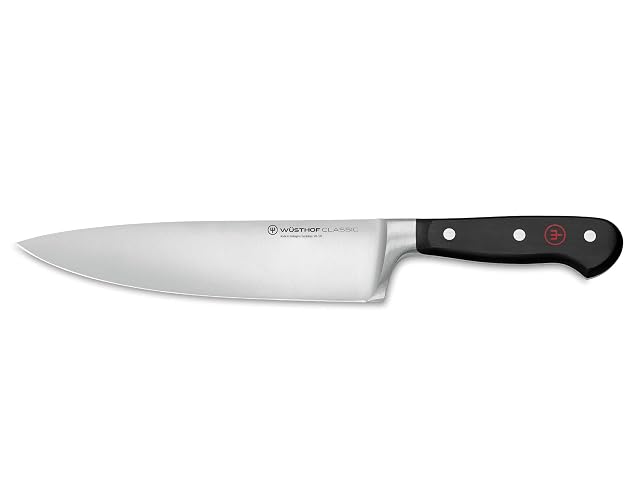
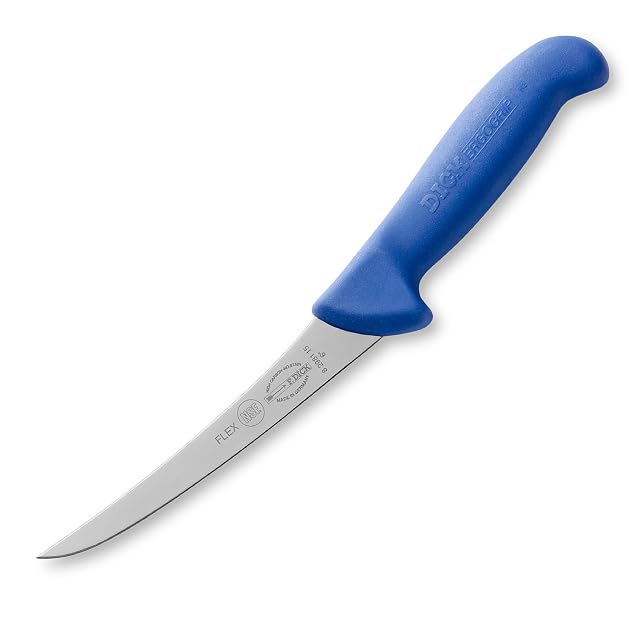
The Wüsthof 20 cm (7.9 in) chef’s knife, forged from one piece, stated 58 HRC, with a laser-measured edge. The F. Dick boning knife, 15 cm (5.9 in) in X55CrMo14 at a stated 56 HRC, flexible with a curved blade.
Fifty-six is deliberately chosen on a boning knife: it has to flex against bone without snapping, and a 62 HRC blade in the same shape would break.
What each costs you
Hard: sharpen less often, sharpen with better stones, and treat the edge carefully.
Tough: sharpen more often, sharpen on anything, and stop worrying about it.
Every hardness on this page is the maker’s claim, reported here as published. What makes a figure credible is whether it is consistent with the steel named beside it — and on these five, it is.
The questions that come in
What does HRC mean?
The Rockwell C hardness scale. Kitchen knives run roughly from 52 to 63. Each point up means a longer-lasting edge and a more brittle one, and the difference between 56 and 62 is genuinely felt.
Which is easier to sharpen?
The softer one, by a wide margin. A 56 HRC blade takes an edge on almost any stone; a 62 HRC blade wants a diamond or a good ceramic, and rewards it with an edge that lasts.
Can I put a hard knife in the dishwasher?
You should not put any good knife in one — the detergent is abrasive and the blade knocks against everything. On a hard blade the chipping is worse and it is permanent.
Which steel is better?
Neither. Harder steel holds an edge longer and chips more easily; softer steel dulls sooner and forgives more. It is a trade-off.
Which should I buy?
It depends on how you treat knives and whether you will sharpen properly. Careful cooks with stones benefit from hard steel.
Why did my knife chip?
Usually twisting, prying, or hitting bone or frozen food. Hard steel chips where soft steel would simply bend.
Can I sharpen hard steel at home?
Yes, with suitable stones. Basic pull-through sharpeners are not appropriate for it and can do damage.
Does hardness make a knife sharper?
It allows a thinner, more acute edge and keeps it longer, which is much of why it feels sharper. Any steel can be sharpened well.
Do harder steels rust?
Some traditional steels are less corrosion resistant and need drying immediately. Check what the maker says about the specific steel.