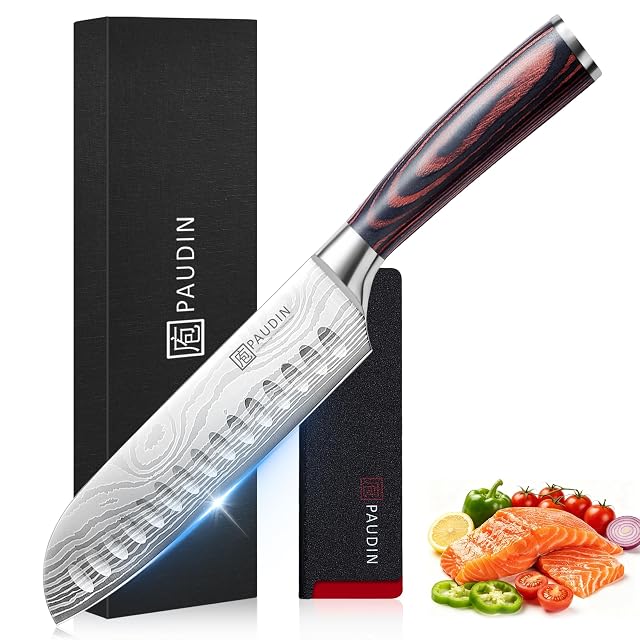
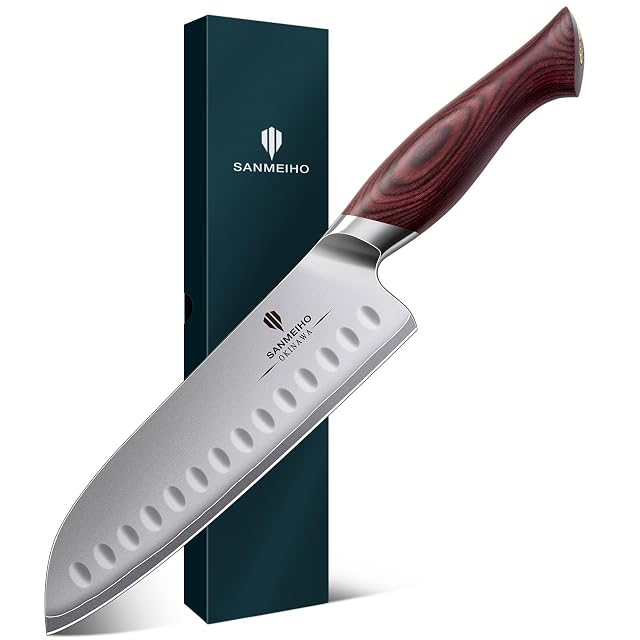
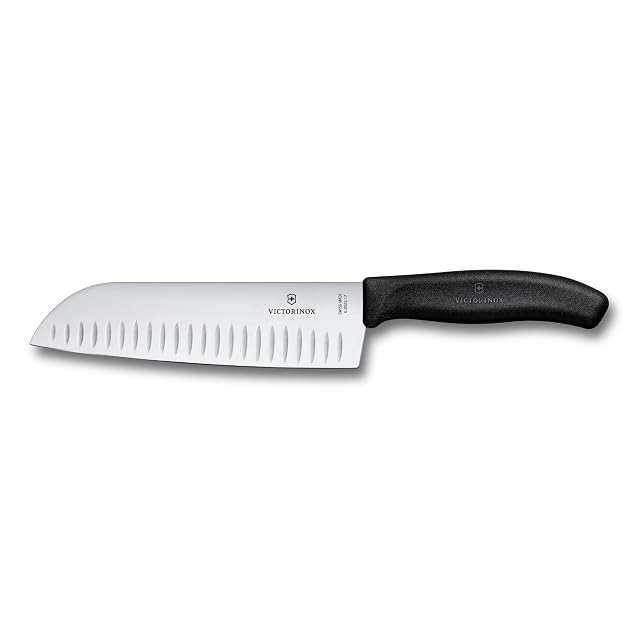
Flat edge, shorter blade, and it chops rather than rocks · review
SHAN ZU Damascus 18 cm (7.1 in) santoku review
A Damascus-clad santoku with a 10Cr15MoV Japanese core and 67 forged layers, and a maker who states explicitly that the pattern is forged rather than laser-etched.
What we would actually buy The right things are published: the core, and the fact that the pattern is real. The missing hardness figure is the one gap.
What you are getting
An 18 cm (7.1 in) santoku with a Japanese 10Cr15MoV Damascus core, clad in 66 further layers of carbon steel for 67 in total, with the maker stating the pattern is forged rather than laser-etched.
Why the core is the specification
Everything you feel on the board comes from the core steel and its grind. The cladding gives stiffness and the pattern. A listing that names a layer count and never names the core has told you nothing — this one names both.
The etching question, answered
SHAN ZU states the pattern is genuine. That matters because printed patterns fade with use and washing, and they are sold at a premium that buys nothing.
What is missing
A hardness figure. 10Cr15MoV is commonly stated around 60 HRC by other makers; this listing does not say, so nothing is claimed here.
Availability
On sale at around $90 on the American Amazon store at the time of checking.
Prices and availability are what Keepa reported on the date this page was updated; both move.
Prices quoted in this text were read on 3 September 2026. The live price is at the top of the page.
What we rate, and what we do not
Strengths
Names the CORE steel, which is the part that cuts — most Damascus listings name only the layer count
States explicitly that the pattern is forged rather than etched
The most expensive santoku here, and it publishes the most
Compromises
No hardness figure, despite naming the steel
Damascus cladding is appearance and stiffness, not cutting performance
Hand wash only in practice, whatever a listing allows
Specifications
Blade length
18 cm (7.1 in)
Core steel
Japanese Damascus steel 10Cr15MoV
Layers
67 forged layers — 66 of carbon steel around the core
Pattern
Maker states genuine forged Damascus, not laser-etched
Amazon reference
B072K2HDKS
EAN
0714757573518
Where this model is listed
A listing is not an offer: the reference exists on these stores, availability changes daily.
France
Germany
Italy
Spain
United Kingdom
United States
The questions that come in
How can I tell forged Damascus from etched?
An etched pattern is perfectly uniform, identical between knives, and stops at the edge bevel. A forged pattern varies from blade to blade and flows through the bevel, because the layers are structural.
Does the layer count affect cutting?
No. The core steel and its hardness decide the edge. The layers give stiffness, corrosion resistance and appearance.
Our score
8.4/ 10
The right things are published: the core, and the fact that the pattern is real. The missing hardness figure is the one gap.
What use this one answers, among cookware and knives
Someone who wants a beautiful knife and wants to know what is underneath the pattern.
Where this model is cited, among our cookware and knives guides
Specifications: the manufacturer sheet for cookware and kitchen knives and the matching Amazon product page. Prices and availability: Keepa. Every figure on this page names its source.
18 cm (7.1 in) blade · 10Cr15MoV Japanese steel · stated HRC 62 · 5-layer laminated · stated 12° edge
An 18 cm (7.1 in) santoku in 10Cr15MoV Japanese steel stated at HRC 62, with a five-layer laminated blade and a stated 12° edge — the hardest blade in this hub.
Best for: A cook who sharpens their own knives and will keep this one for vegetables and fish.
A 17 cm (6.7 in) santoku with a granton hollow edge, from a maker whose knives are the default in professional kitchens for their grip and their weight.
Best for: Long prep sessions, and anyone who values grip over heft.