Flat edge, shorter blade, and it chops rather than rocks · review
SANMEIHO 18 cm (7.1 in) laminated santoku review
An 18 cm (7.1 in) santoku in 10Cr15MoV Japanese steel stated at HRC 62, with a five-layer laminated blade and a stated 12° edge — the hardest blade in this hub.
What we would actually buy The most completely specified knife in this hub, and the one with the strictest care rules. Both come from the same number.
What you are getting
An 18 cm (7.1 in) santoku with a 10Cr15MoV Japanese steel core stated at HRC 62, in a five-layer laminated blade, with a stated 12° edge.
The two numbers
HRC 62 and 12°. Together they describe a knife that cuts more cleanly than anything else in this hub and demands more care: it will chip on a bone where a 56 HRC blade would roll, and it wants a ceramic rod rather than a steel.
Lamination
A hard core between softer layers. The core does the cutting; the outer layers make the blade less brittle overall. It is why a hard Japanese blade is usable in a kitchen at all.
The care that comes with it
Wood or plastic boards only. No bones, no frozen food, no glass. Hone on ceramic weekly, sharpen on a stone at 12°, and hand wash and dry it every time.
Availability
On sale at around $70 on the American Amazon store at the time of checking.
Prices and availability are what Keepa reported on the date this page was updated; both move.
Prices quoted in this text were read on 3 September 2026. The live price is at the top of the page.
What we rate, and what we do not
Strengths
Publishes both hardness and edge angle — HRC 62 and 12°
Laminated construction: a hard core with softer layers for stiffness
The keenest edge specification in this hub
Compromises
HRC 62 chips where a softer blade would roll — no bones, no frozen food
Needs a ceramic rod rather than a steel, and a stone rather than a pull-through
A 12° edge is thin enough to be damaged by careless board contact
Specifications
Blade length
18 cm (7.1 in)
Steel
Japanese 10Cr15MoV
Hardness
Stated HRC 62
Construction
Five-layer laminated blade, stated rust and chip resistant
Edge
Stated 12°, hand-forged
Amazon reference
B0GHM14SQ3
EAN
6979272510330
Where this model is listed
A listing is not an offer: the reference exists on these stores, availability changes daily.
France
Germany
Italy
Spain
United States
The questions that come in
Can I hone HRC 62 on a traditional steel?
No — at that hardness the steel is softer than the blade and slides over it without realigning anything. Use a ceramic rod.
What does five-layer lamination do?
A hard cutting core with softer steel on either side: the core holds the edge, the outer layers add toughness and resist chipping. It is the standard construction for hard Japanese blades.
Our score
7.8/ 10
The most completely specified knife in this hub, and the one with the strictest care rules. Both come from the same number.
What use this one answers, among cookware and knives
A cook who sharpens their own knives and will keep this one for vegetables and fish.
Where this model is cited, among our cookware and knives guides
Specifications: the manufacturer sheet for cookware and kitchen knives and the matching Amazon product page. Prices and availability: Keepa. Every figure on this page names its source.
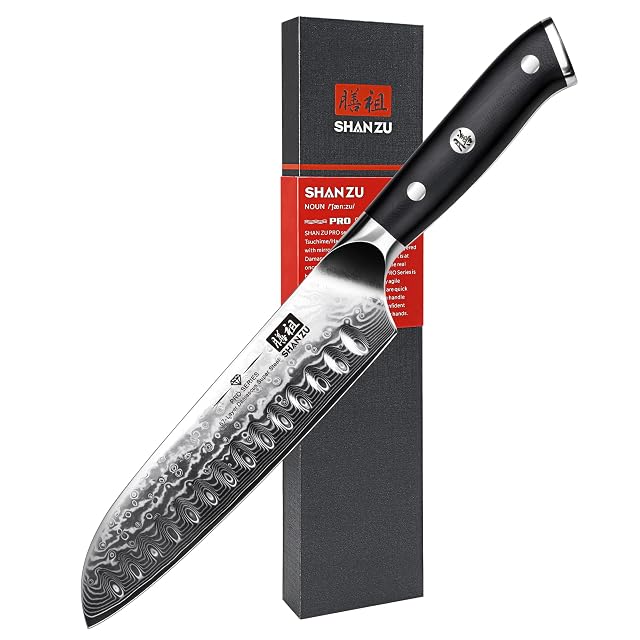
18 cm (7.1 in) blade · Japanese 10Cr15MoV Damascus core · 67 forged layers · stated genuine, not etched
A Damascus-clad santoku with a 10Cr15MoV Japanese core and 67 forged layers, and a maker who states explicitly that the pattern is forged rather than laser-etched.
Best for: Someone who wants a beautiful knife and wants to know what is underneath the pattern.
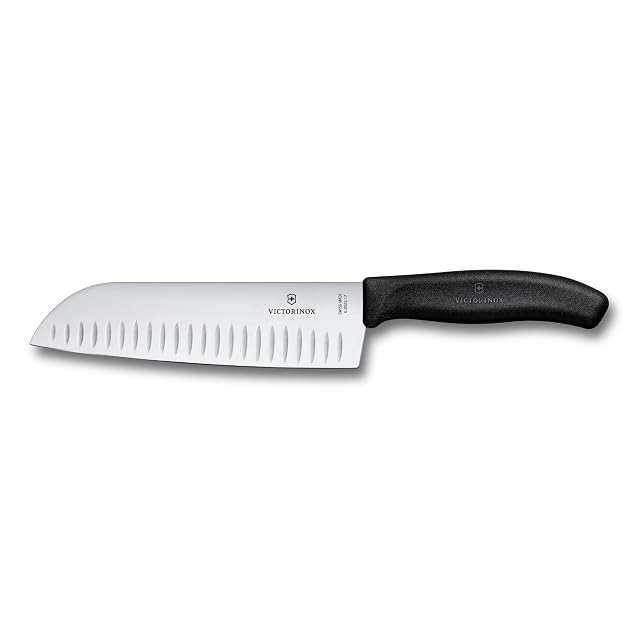
A 17 cm (6.7 in) santoku with a granton hollow edge, from a maker whose knives are the default in professional kitchens for their grip and their weight.
Best for: Long prep sessions, and anyone who values grip over heft.