What we would actually buy The published 13° is the useful number here, and it also tells you what not to cut with it.
What you are getting
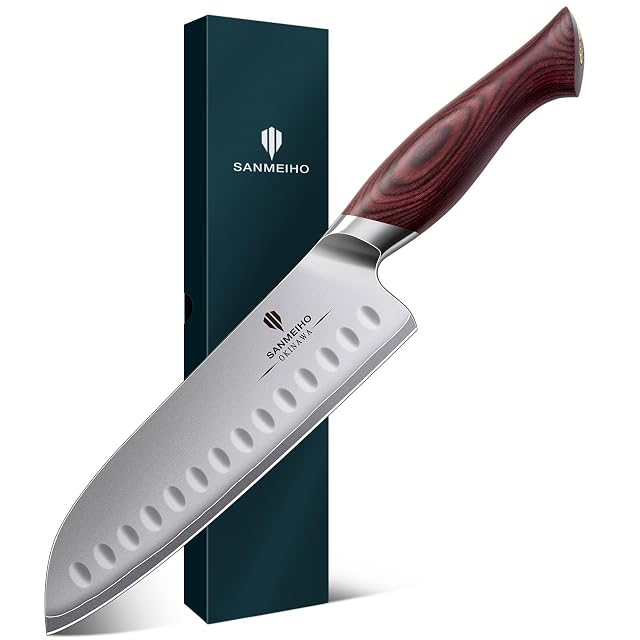
A 17.8 cm (7 in) santoku in 5Cr15MoV steel with a stated 13° edge per side, a pakkawood handle, and a symmetrical grind that suits either hand.
The angle, and what follows from it
13° per side is a Japanese-style edge: keener than a European 20°, and correspondingly more fragile. Keep it away from bones, frozen food and hard rinds, and sharpen it at 13° rather than on a Western guided sharpener.
The steel
5Cr15MoV is a moderate stainless — it sharpens easily and does not hold an edge like a 62 HRC blade. Combined with a thin edge, that means honing often rather than sharpening hard.
The handle
Pakkawood is resin-impregnated wood: it feels like wood and tolerates a kitchen far better. It is still not a dishwasher part.
Availability
Listed but with no offer on the American Amazon store — the reference exists there and nobody is currently selling it.
Prices and availability are what Keepa reported on the date this page was updated; both move.
What we rate, and what we do not
Strengths
Publishes the edge angle — 13° per side — which almost nothing at this price does
Names the steel
Pakkawood: the warmth of wood with far more water resistance
Compromises
A 13° edge is thin, and it will chip on bone or frozen food
No hardness figure
5Cr15MoV is a moderate-hardness stainless, so a thin edge on it needs frequent honing
Specifications
Blade length
17.8 cm (7 in)
Steel
5Cr15MoV
Edge angle
Stated 13° per side, ground on both sides
Handle
Pakkawood, non-slip
Hands
Suitable for left- and right-handed use
Amazon reference
B07KC6DMRB
EAN
0715002307438
Where this model is listed
A listing is not an offer: the reference exists on these stores, availability changes daily.
France
Germany
Italy
Spain
United Kingdom
United States
The questions that come in
What does 13° per side mean in practice?
A thinner, keener edge than the 20° European convention — it cuts more cleanly and is more fragile. Sharpen it at its own angle, not on a Western pull-through ground for 20°.
What is pakkawood?
Wood impregnated with resin under pressure. It behaves like hardwood in the hand and resists water far better, which makes it a sensible handle for a kitchen.
Our score
7.8/ 10
The published 13° is the useful number here, and it also tells you what not to cut with it.
What use this one answers, among cookware and knives
Vegetables and fish, from someone who will keep it off bones.
Where this model is cited, among our cookware and knives guides
Specifications: the manufacturer sheet for cookware and kitchen knives and the matching Amazon product page. Prices and availability: Keepa. Every figure on this page names its source.
18 cm (7.1 in) blade · 10Cr15MoV Japanese steel · stated HRC 62 · 5-layer laminated · stated 12° edge
An 18 cm (7.1 in) santoku in 10Cr15MoV Japanese steel stated at HRC 62, with a five-layer laminated blade and a stated 12° edge — the hardest blade in this hub.
Best for: A cook who sharpens their own knives and will keep this one for vegetables and fish.
18 cm (7.1 in) blade · Japanese 10Cr15MoV Damascus core · 67 forged layers · stated genuine, not etched
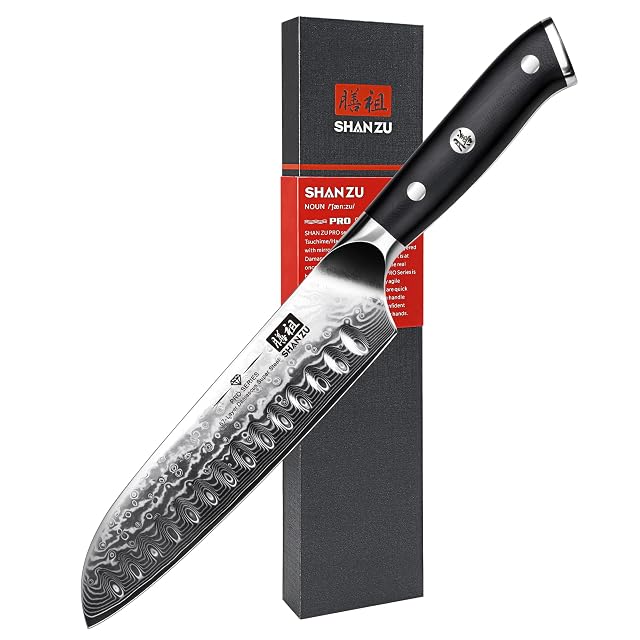
A Damascus-clad santoku with a 10Cr15MoV Japanese core and 67 forged layers, and a maker who states explicitly that the pattern is forged rather than laser-etched.
Best for: Someone who wants a beautiful knife and wants to know what is underneath the pattern.
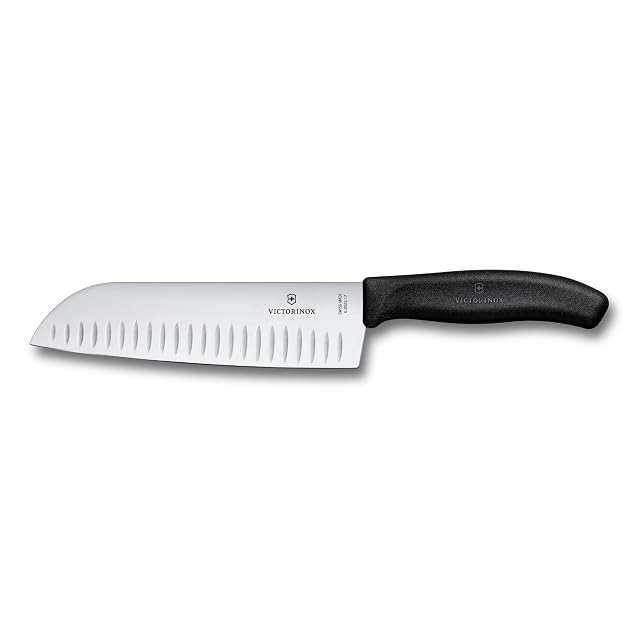
A 17 cm (6.7 in) santoku with a granton hollow edge, from a maker whose knives are the default in professional kitchens for their grip and their weight.
Best for: Long prep sessions, and anyone who values grip over heft.