Skip to content

Left-handed: the four listings that actually say so

A symmetrically ground knife cuts straight for either hand. An asymmetric one steers, and it steers the wrong way for a left-handed cook — which feels like bad technique rather than a bad tool. Shears are worse: a right-handed grind pushes the blades apart under a left hand. These are the listings that state the answer.

Five products that state it, rather than leaving you to find out.

The santoku

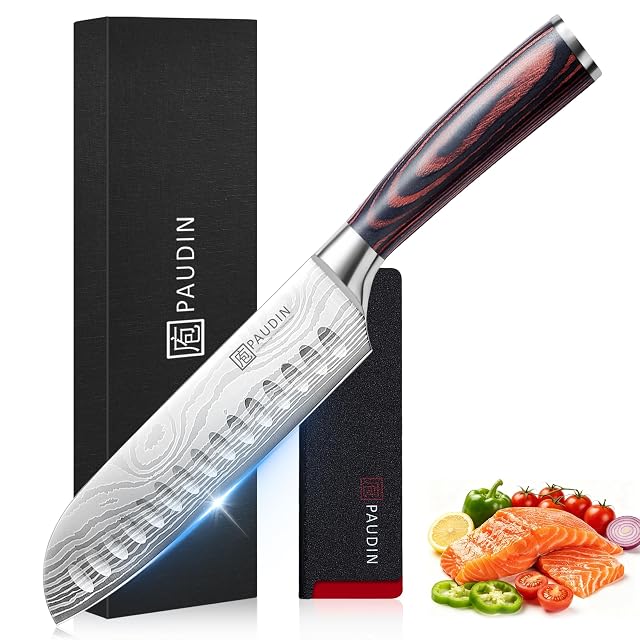
The Paudin 17.8 cm, 5Cr15MoV with a 13° double bevel, pakkawood, stated for left- and right-handed use. A published symmetrical bevel is exactly the statement a left-handed buyer needs.

The paring knife

The Paudin 9 cm, same steel, same handle, same statement.

The shears

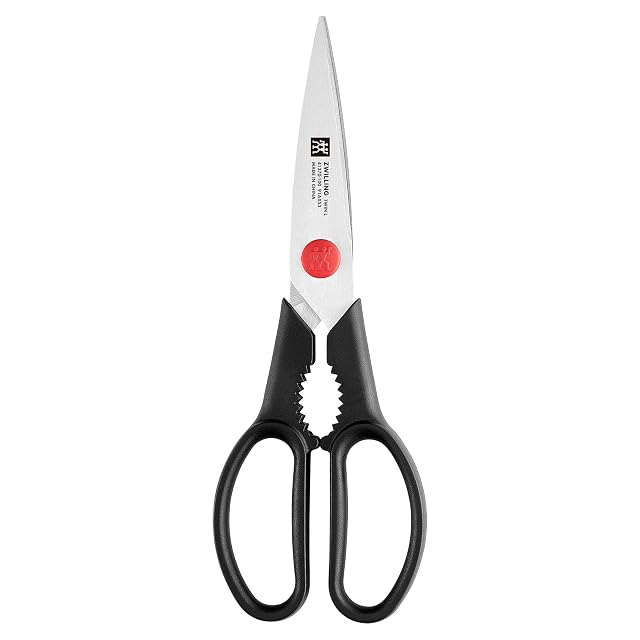
The Zwilling 20 cm (7.9 in) in stainless special steel, precision ground, stated for left- and right-handed use, with glass-fiber handles. Shears are where handedness is felt most, and almost no listing addresses it.

The sharpener

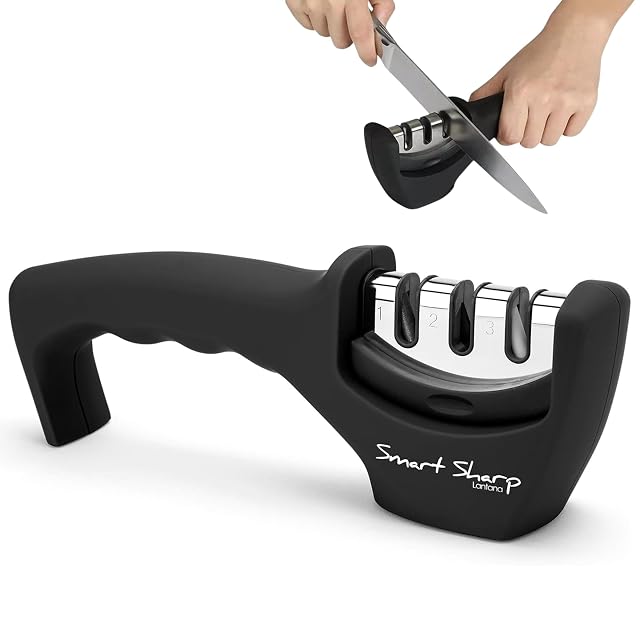
The Lantana, three stages — prepare, sharpen, finish — stated for left- and right-handed use and for straight and serrated edges. A pull-through with angled slots is genuinely handed; stating it removes the guesswork.

The one that is handed by design and says nothing

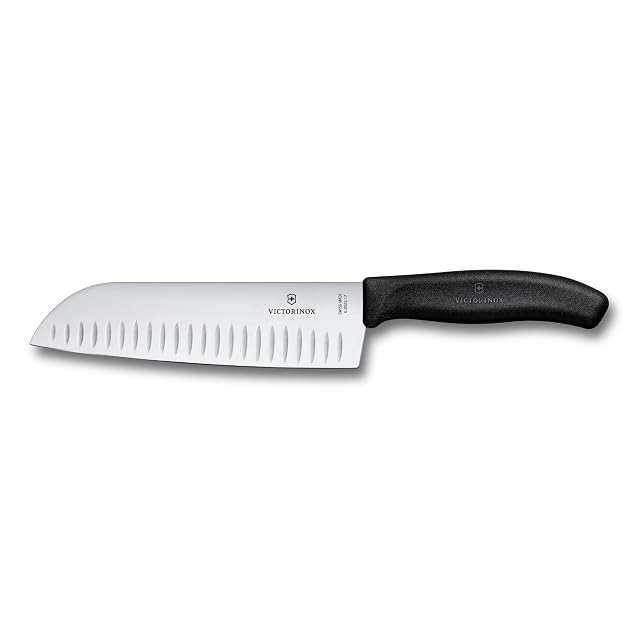
Nothing on this list. But the Victorinox santoku is included for a different reason: a granton hollow edge, light and balanced, with a symmetrical grind, is the safest general-purpose choice when a listing is silent.

The general rule

If a listing does not state it, assume double-bevelled for a European knife and check the spine when it arrives. For a Japanese single-bevel knife, assume right-handed unless it says otherwise.

Which pan does your cooking want?

Your knife is symmetric
Handedness makes no difference and you can ignore the question.
Your knife is asymmetric
A right-handed grind steers away from the cut in a left hand.
You use a bread knife
Serrations are often ground on one side only.
You use scissors and peelers
Those are where handedness bites hardest in the kitchen.

Picking by what you cook

General chopping

Where most Western chef’s knives are symmetric and handedness is irrelevant.

Precise slicing

Where an asymmetric grind steers the blade, helpfully or otherwise depending on your hand.

Bread and serrated blades

Where one-sided serrations affect how the knife tracks through a loaf.

Peelers and scissors

Where left-handed versions genuinely exist and genuinely matter.

What makes the difference in use

Symmetric or asymmetric grind
The whole question. A symmetric blade behaves identically in either hand; an asymmetric one does not.
Handle shape
Contoured handles are often shaped for a right hand. A straight handle suits both.
Bolster and finger guard
Some are shaped asymmetrically and press awkwardly in the other hand.
Serrations
Often ground on one side, which affects how a bread knife tracks.
Availability
Left-handed versions of asymmetric knives exist but are less common and sometimes need ordering.

Which figure for which dish

The itemDoes handedness matter?The note
Symmetric chef’s knifeNoIdentical in either hand
Asymmetric bladeYesSteers the cut
Serrated knifeOftenOne-sided serrations
Peelers and scissorsVery muchLeft-handed versions exist

Where it usually goes wrong

Assuming every knife is handed
Most Western chef’s knives are symmetric and work identically in either hand. The question only applies to some blades.
Buying an asymmetric knife without checking
It will steer away from the cut in the wrong hand, which feels like poor technique rather than a mismatched tool.
Ignoring the handle
A contoured handle shaped for a right hand is uncomfortable in a left one, whatever the blade does.
Persevering with right-handed peelers
Left-handed versions exist and cost very little. This is the easiest fix in the kitchen.

By the cook you are

The left-handed cook
Buys symmetric blades and left-handed peelers, which covers almost everything.
The one wanting an asymmetric knife
Needs to seek out a left-handed version, which exists but is less common.
The shared kitchen
Is best served by symmetric knives and straight handles that suit everyone.

Care, seasoning and how long it lasts

Asymmetric blades need asymmetric sharpening, and that is where a left-handed cook can quietly ruin a knife. Sharpening such a blade evenly, or on the wrong side, changes how it cuts in ways that are difficult to undo.

  • Find out how your blade is ground before sharpening it.
  • Sharpen asymmetric blades as the maker specifies, not evenly.
  • Store blades protected regardless of handedness.
  • Dry immediately and hone regularly, as with any knife.

Safety

A knife that steers is a knife that slips.

  • Do not persevere with a blade that pulls away from your cut.
  • Keep the board stable with a damp cloth underneath.
  • Keep all knives sharp; blunt blades slip in any hand.
  • Set up your board and bin on the side that suits your working hand.

Our choices, and the reasons

  1. PAUDIN 17.8 cm (7 in) santoku

    17.8 cm (7 in) blade · 5Cr15MoV steel · 13° double bevel · pakkawood handle · left- and right-handed

    A 17.8 cm (7 in) santoku in 5Cr15MoV steel ground at a stated 13° per side, with a pakkawood handle and a symmetrical bevel that suits either hand.

    Best for: Vegetables and fish, from someone who will keep it off bones.

    7.8/10

The questions that come in

How do I tell if a knife is asymmetric?

Look down the spine at the edge. If the two bevels are equal, it is a double bevel and it suits either hand. If one side is flat or much shallower, it is single-bevelled and it is handed.

Why do shears matter more than knives?

Because the grind determines which way the blades push under pressure. A right-handed pair used in a left hand splays apart and tears rather than cutting. It is the most-felt handedness problem in a kitchen.

Are sharpeners handed too?

Pull-through sharpeners can be, because the slots are angled. The Lantana here states left- and right-handed use and covers both straight and serrated edges.

Do left-handed cooks need special knives?

Usually not. Most Western chef’s knives are symmetric and behave identically in either hand.

When does it matter?

With asymmetric blades, which are ground differently on each side and steer the cut. In the wrong hand they pull away from the line.

What about bread knives?

Serrations are often ground on one side, which affects how the knife tracks. It is worth checking on a serrated blade.

Are handles handed?

Contoured ones often are, shaped for a right hand. A straight handle is comfortable in either.

What is the easiest fix?

Left-handed peelers and scissors. They exist, cost very little, and make more daily difference than the knives do.

Can I sharpen an asymmetric knife myself?

Yes, but not evenly. Find out how the blade is ground first, because sharpening it wrongly changes how it cuts.
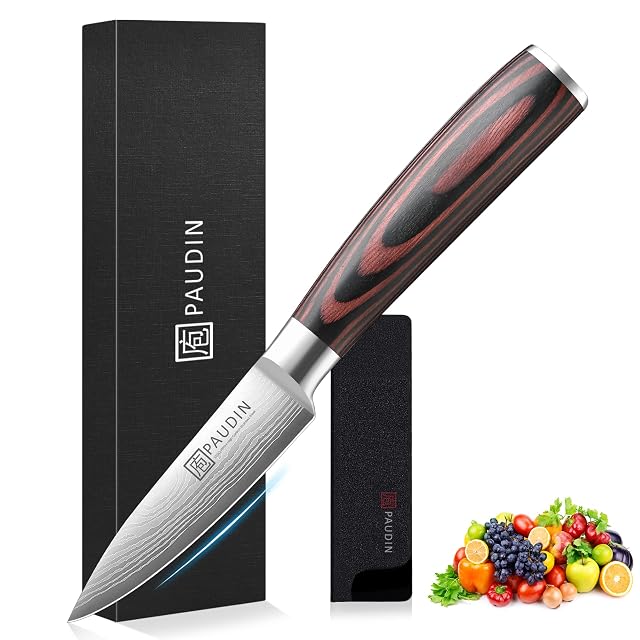
Each pan, and the cooking it rewards

PAUDIN PD8BMC8CR503

Good for: Vegetables and fish, from someone who will keep it off bones.

What it does best: Publishes the edge angle — 13° per side — which almost nothing at this price does

What it does badly: A 13° edge is thin, and it will chip on bone or frozen food

Read the full review →

PAUDIN PD8BMC8CR506

Good for: Someone building a matched set rather than buying a multipack.

What it does best: Names the steel, which nothing else in this hub does

What it does badly: The most expensive paring knife here, for a knife that is often bought in pairs

Read the full review →

ZWILLING 1005566 · $35

Good for: A left-handed cook, or a household where the same pair does food and packaging.

What it does best: Ambidextrous handles, which almost no shears are

What it does badly: Not stated to come apart

Read the full review →

Lantana Smart Sharp · $16

Good for: A household with mixed knives and no interest in a stone.

What it does best: Names what each stage is for rather than numbering them

What it does badly: Serrated sharpening in a pull-through abrades the flat back rather than the scallops

Read the full review →

Victorinox 6.8523.17B

Good for: Long prep sessions, and anyone who values grip over heft.

What it does best: Victorinox handles are the reason professional kitchens buy them — grip when wet is the whole point

What it does badly: No steel grade or hardness published

Read the full review →

Where the money goes, band by band

Short answer first

What is behind this list

The pans here are drawn from the catalog of this site. Specifications come from the maker and from the Amazon product page; prices are what Keepa recorded on the date below, and both move. Order is set by declared specifications, by stated strengths against stated limits, and by price. Nothing here has been cooked with by us, and no claim to the contrary is made.

Last checked on

Prices quoted in these summaries are dated readings. The live price is shown next to each product.

The tool we use ourselves

Chosen your tool? Now buy it at the right price.

Cookware sets, knife blocks and cast iron swing by thirty dollars or more across the year, and the biggest "discounts" often land at prices the same model sold for six weeks earlier. UniverTrack tracks the real price history across retailers, spots fake reductions, and alerts you when it is genuinely the moment to buy.

Real price historyBuy-now alertsAI buying assistant
Try free for 14 days →
No commitment · Cancel in one click · 5 languages