What we would actually buy Clear staging and ambidextrous use are both welcome. Treat the serrated claim with caution.
What you are getting
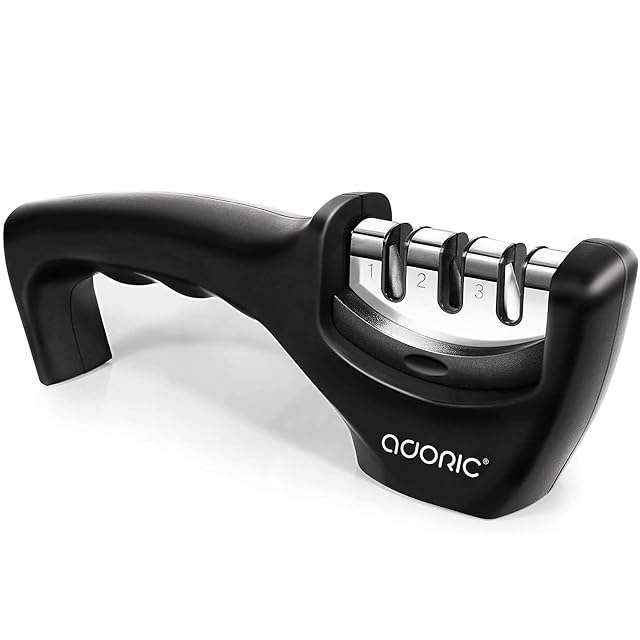
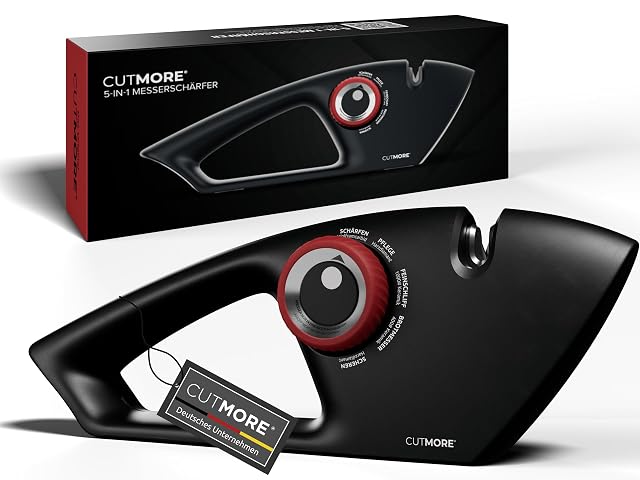
A three-stage manual sharpener with stages named for what they do — prepare, sharpen, finish — usable in either hand, and stated to handle straight and wide-serrated blades.
Naming the stages
More useful than numbering them. The order matters: coarse first only if the edge needs it, then sharpening, then the fine finish. A sharpener that explains its own sequence is one that will be used correctly.
The serrated claim
Read it carefully. A pull-through works on the flat back of a serrated blade, not on the scallops. It can improve a tired bread knife and it does not restore the factory grind.
What is missing
The angle, and what the abrasives are made of. Both are standard omissions in this category and both would tell you more than three stages do.
Availability
On sale at around $16 on the American Amazon store at the time of checking.
Prices and availability are what Keepa reported on the date this page was updated; both move.
Prices quoted in this text were read on 3 September 2026. The live price is at the top of the page.
What we rate, and what we do not
Strengths
Names what each stage is for rather than numbering them
Ambidextrous, which pull-throughs rarely are
Stated to handle wide-serrated bread knives
Compromises
Serrated sharpening in a pull-through abrades the flat back rather than the scallops
No angle published
No steel or abrasive material stated
Specifications
Stages
Three: prepare, sharpen, fine finish
Hands
Suitable for left- and right-handed use
Blades
Straight edges and wide-serrated blades, including bread knives
Handle
Ergonomic, stated for maximum safety
Amazon reference
B010O4OCCS
EAN
0700461539254
Where this model is listed
A listing is not an offer: the reference exists on these stores, availability changes daily.
France
Germany
Italy
Spain
United Kingdom
United States
The questions that come in
Can a pull-through sharpen a bread knife?
It abrades the flat back of the blade rather than the scallops. Some improvement is reported; the geometry the maker ground is not restored, and the points can be flattened.
Does ambidextrous matter on a sharpener?
It matters for the handle and the pulling direction. A right-handed sharpener used left-handed puts the hand across the blade rather than behind it.
Our score
7.8/ 10
Clear staging and ambidextrous use are both welcome. Treat the serrated claim with caution.
What use this one answers, among cookware and knives
A household with mixed knives and no interest in a stone.
Where this model is cited, among our cookware and knives guides
Specifications: the manufacturer sheet for cookware and kitchen knives and the matching Amazon product page. Prices and availability: Keepa. Every figure on this page names its source.
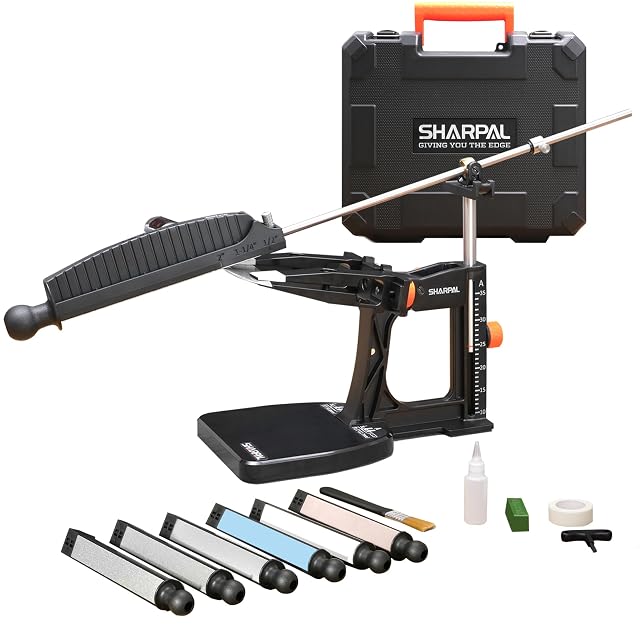
Adjustable 10° to 35° · 7-piece set · monocrystalline diamond plates 220/325/600/1000 · whetstone included
A guided system with a genuinely adjustable angle from 10° to 35°, four diamond plates and a whetstone — the only sharpener here that can match a Japanese 15° edge.
Best for: Someone with Japanese knives who wants repeatable results without freehand practice.