Skip to content

Sharp for under twenty dollars: and why it beats a new knife

The most common upgrade in a kitchen is a new knife, and it is usually the wrong purchase. A knife that will not cut is almost never a knife that cannot; it is a knife nobody has sharpened. Sharpening equipment costs less than a knife and improves every knife you own.

Five purchases, all under about twenty dollars, each of which improves every knife you own.

The stone

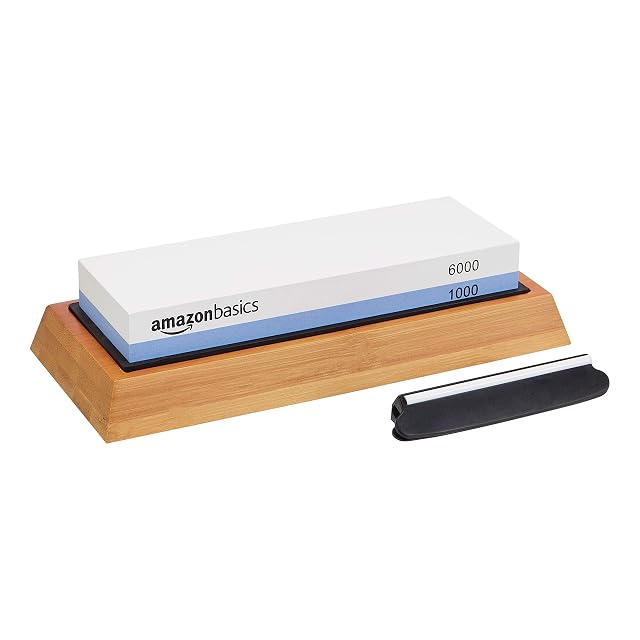
The Amazon Basics 1000/6000 with an angle guide and a bamboo base. It is the cheapest complete sharpening solution on this site and nothing about the specification is compromised.

The two-stone alternative

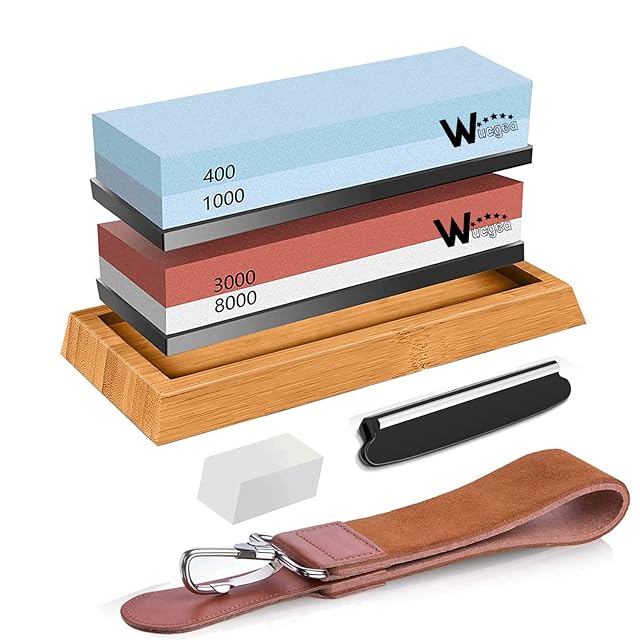
The Wucgea, two stones with four grits in white corundum, a stated five to ten minute soak, and a non-slip silicone base. Four grits is more range than one combination stone, at a similar price.

The honing steel

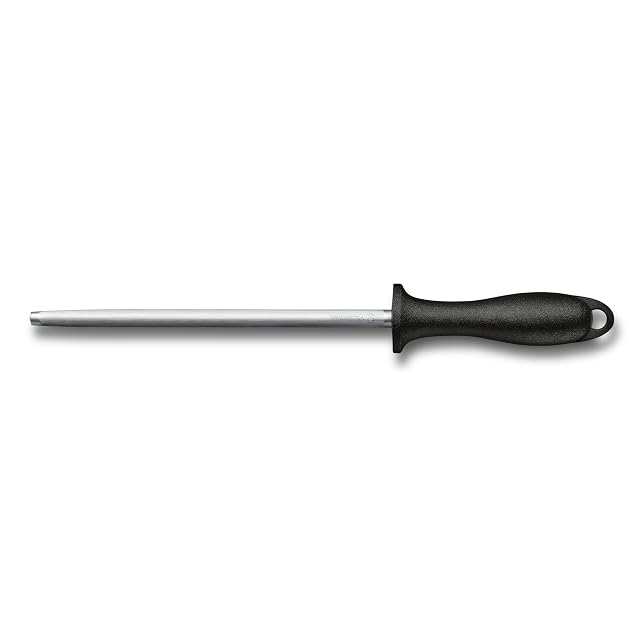
The Victorinox 20 cm (7.9 in) chromed steel with a medium-fine cut. Ten seconds every few uses is what keeps an edge feeling sharp between sharpenings, and it is the single most under-used tool in a domestic kitchen.

The pull-throughs

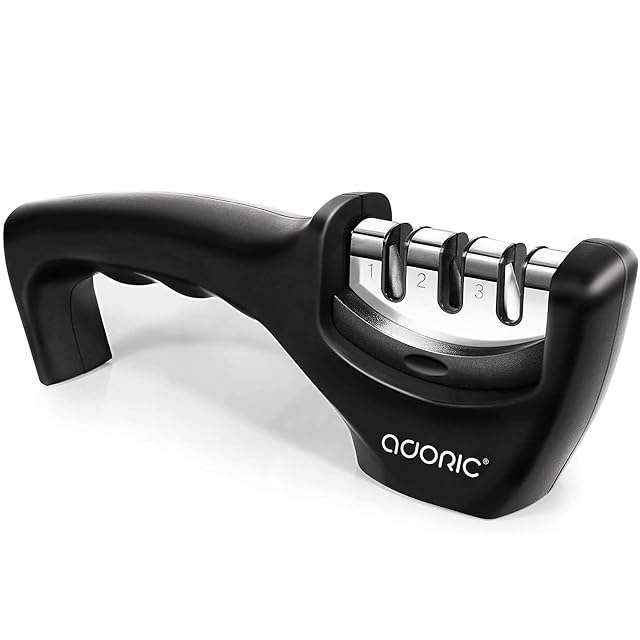
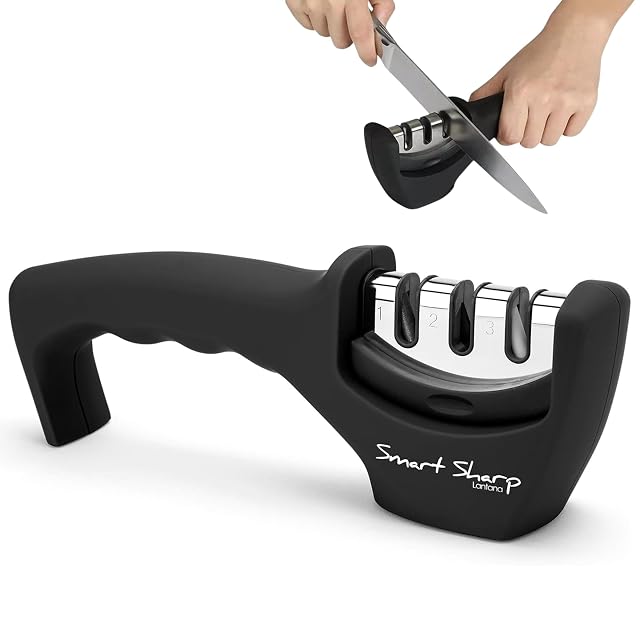
The Adoric three-stage — diamond rod, tungsten carbide, ceramic, removable head. The Lantana three-stage, stated for left- and right-handed use and for straight and serrated edges.

Both remove metal at a fixed angle. Both are worth having if the alternative is a drawer of blunt knives.

The comparison worth making

The cheapest whetstone here costs roughly what the cheapest chef’s knife in this catalog costs. One of them makes every knife in your kitchen cut. The other adds a knife to the drawer.

Which pan does your cooking want?

You own one knife
Learning to hone costs almost nothing and changes it immediately.
Honing no longer works
A single medium stone is the cheapest real answer.
You will not learn
A professional sharpening once or twice a year is cheap.
You keep buying new knives
That is the expensive route, and it is what sharpening replaces.

Picking by what you cook

Daily maintenance

Honing, which costs the price of one rod and takes seconds.

Occasional restoration

A stone, which is the cheapest way to bring an edge back properly.

Outsourcing

Professional sharpening, which for one or two knives a year is very cheap indeed.

Avoiding the need

Board choice, storage and washing habits, all of which cost nothing.

What makes the difference in use

What actually dulls knives
Hard boards, dishwashers and drawer storage do more damage than cutting. Fixing those is free.
Honing first
Most knives that feel blunt have a rolled edge. A rod fixes that in seconds and costs little.
One stone
A single medium stone sharpens most kitchen knives. Multiple grits are refinement, not necessity.
Professional sharpening
For a small number of knives it is a modest annual cost and requires no skill.
Avoiding cheap gadgets
Aggressive pull-through devices remove metal quickly and leave a poor edge, shortening the knife.

Which figure for which dish

The stepThe costThe effect
Better board and storageNothingKnives stay sharp longer
Honing rodVery littleFixes most 'blunt' knives
One medium stoneModestReal sharpening
Professional serviceAnnual, smallNo skill required

Where it usually goes wrong

Replacing knives instead of sharpening them
It is by far the most expensive approach, and the new knife dulls exactly as the last one did.
Buying an aggressive pull-through device
It removes a lot of metal for a poor edge, which shortens the knife’s life for a short-lived result.
Ignoring the free measures
A wooden board instead of glass, and hand washing instead of the dishwasher, cost nothing and matter greatly.
Assuming a blunt knife needs a stone
Most need honing. A rod costs a fraction of a stone and solves the common case.

By the cook you are

The tight budget
Fixes the free things first, then buys a honing rod.
The reluctant learner
Uses a professional service once or twice a year, which for a couple of knives is cheap.
The one willing to practice
Buys one medium stone and never pays for sharpening again.

Care, seasoning and how long it lasts

The cheapest sharpening is the sharpening you do not need, and that comes from habits rather than equipment. A knife cut on wood, washed by hand and stored protected stays usable far longer than the same knife treated carelessly.

  • Cut on wood or plastic, never on glass, stone or a plate.
  • Hand wash and dry immediately rather than using the dishwasher.
  • Store so the edge touches nothing.
  • Hone regularly rather than waiting for the knife to feel blunt.

Safety

Sharp knives are the safe ones.

  • A blunt knife slips and needs force; keep yours sharp.
  • Test an edge on paper, never on your thumb.
  • Take care with the first cuts after any sharpening.
  • Keep the board stable with a damp cloth underneath.

Our choices, and the reasons

  1. wucgea 400/1000 + 3000/8000 set

    Two stones, four grits · white corundum · soak 5–10 minutes · non-slip silicone holder

    Two double-sided corundum stones covering four grits from 400 to 8000 — the full progression, including the coarse grit that repairs a chipped edge.

    Best for: A kitchen with a chipped knife as well as dull ones.

    7.5/10

    ≈ $22

The questions that come in

Will sharpening rescue a really bad knife?

It will make it cut. It will not give it edge retention, balance or a handle that fits your hand. A sharp bad knife is a usable tool; a blunt good one is not.

Is a pull-through sharpener bad for knives?

It removes metal at whatever angle the slots are set to, regardless of your knife’s grind. Over years that reshapes the bevel. Used occasionally on ordinary kitchen knives it is fine, and it is far better than never sharpening.

Do soaking stones need anything else?

Water and time. The Wucgea here states a five to ten minute soak and sits on a non-slip silicone base. That is the whole preparation.

What is the cheapest way to a sharp knife?

Fix the free things first: a wooden board, hand washing and protected storage. Then a honing rod, which solves most cases of apparent bluntness.

Do I need an expensive stone?

No. One medium stone sharpens most kitchen knives adequately, and technique matters far more than owning several.

Are pull-through sharpeners worth it?

The aggressive ones remove a great deal of metal for a poor edge, which shortens the knife. They are a false economy.

Is professional sharpening expensive?

For one or two knives a year it is a modest cost and requires no skill or equipment at all.

Should I just buy a new knife?

It is the most expensive approach, and the new one dulls exactly as the old one did. Sharpening is what breaks that cycle.

What dulls knives fastest?

Hard boards, dishwashers and loose drawer storage, all of which do more damage than the cutting itself.
Each pan, and the cooking it rewards

Amazon Basics DS-WSTAMZ003 · $28

Good for: A first stone, for knives that are dull but undamaged.

What it does best: 1000/6000 is the combination that covers nearly every home kitchen

What it does badly: No stone dimensions published — length matters against blade length

Read the full review →

Victorinox 7.8014

Good for: European kitchen knives, honed weekly.

What it does best: The cheapest way to double the interval between sharpenings

What it does badly: 20 cm (7.9 in) is shorter than a 20 cm (7.9 in) chef’s knife — the last part of the blade is awkward

Read the full review →

Adoric 3-stage

Good for: Soft European kitchen knives that need bringing back quickly.

What it does best: Three distinct abrasives rather than one carbide slot

What it does badly: Tungsten carbide removes a great deal of steel

Read the full review →

Lantana Smart Sharp · $16

Good for: A household with mixed knives and no interest in a stone.

What it does best: Names what each stage is for rather than numbering them

What it does badly: Serrated sharpening in a pull-through abrades the flat back rather than the scallops

Read the full review →

wucgea 8 in 1 · $22

Good for: A kitchen with a chipped knife as well as dull ones.

What it does best: Four grits including 400, which is what repairs a chip

What it does badly: A 400 grit stone removes a lot of steel — easy to overuse

Read the full review →

Where the money goes, band by band

Mid range

$30 – $60

3 models

Upper range

$70 – $180

3 models

Short answer first

Comparisons that settle it

Comparisons already online between two pans from this guide or this aisle.

What is behind this list

The pans here are drawn from the catalog of this site. Specifications come from the maker and from the Amazon product page; prices are what Keepa recorded on the date below, and both move. Order is set by declared specifications, by stated strengths against stated limits, and by price. Nothing here has been cooked with by us, and no claim to the contrary is made.

Last checked on

Prices quoted in these summaries are dated readings. The live price is shown next to each product.

The tool we use ourselves

Chosen your tool? Now buy it at the right price.

Cookware sets, knife blocks and cast iron swing by thirty dollars or more across the year, and the biggest "discounts" often land at prices the same model sold for six weeks earlier. UniverTrack tracks the real price history across retailers, spots fake reductions, and alerts you when it is genuinely the moment to buy.

Real price historyBuy-now alertsAI buying assistant
Try free for 14 days →
No commitment · Cancel in one click · 5 languages