Skip to content

Cooking for six: the pots that scale, and the two that scale too far

Volume is easy to buy and hard to lift. A 20 liter stockpot full of soup weighs more than most people can safely move off a hob, and a pot that cannot be lifted has to be emptied with a ladle. This guide runs from a sensible family size up to the largest published capacity here, and says where the line is.

Five pots, from family-sized to genuinely large.

The family size

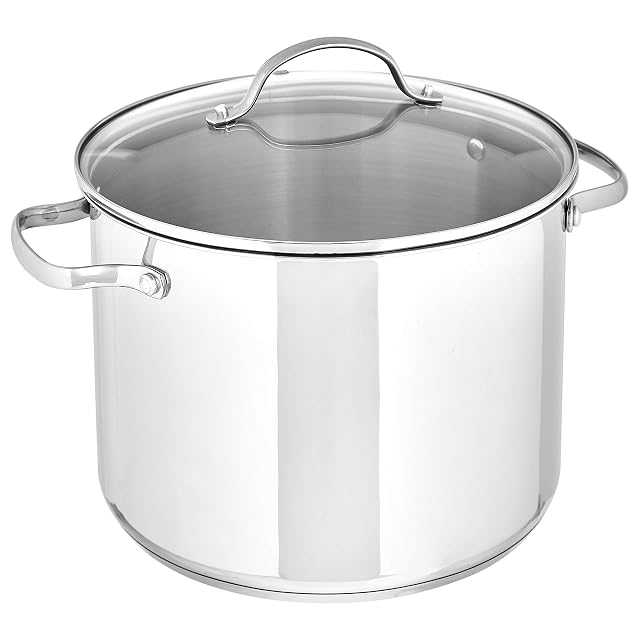
The Amazon Basics 7.6 liter, heavy stainless with an aluminum-core base, riveted side handles, a glass lid and oven safe. For four people this is the right pot and the cheapest complete specification here.

The one that publishes everything

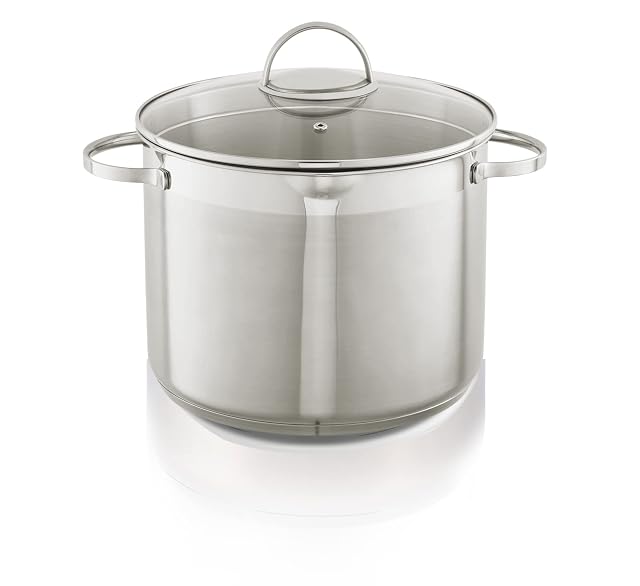
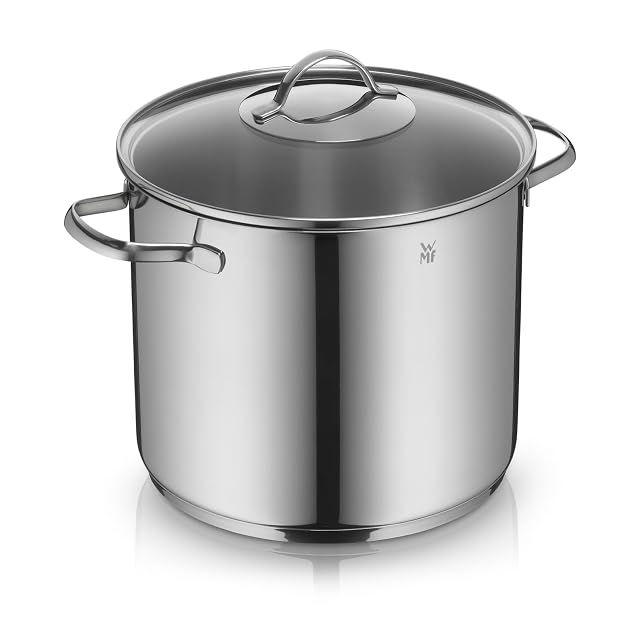
The WMF 24 cm (9.4 in), 8.8 liters, 20.5 cm (8.1 in) high, uncoated Cromargan 18/10, oven safe to 250 °C (482 °F). Height is what decides whether it fits under an extractor, and it is published.

The one with a level indicator and spouts

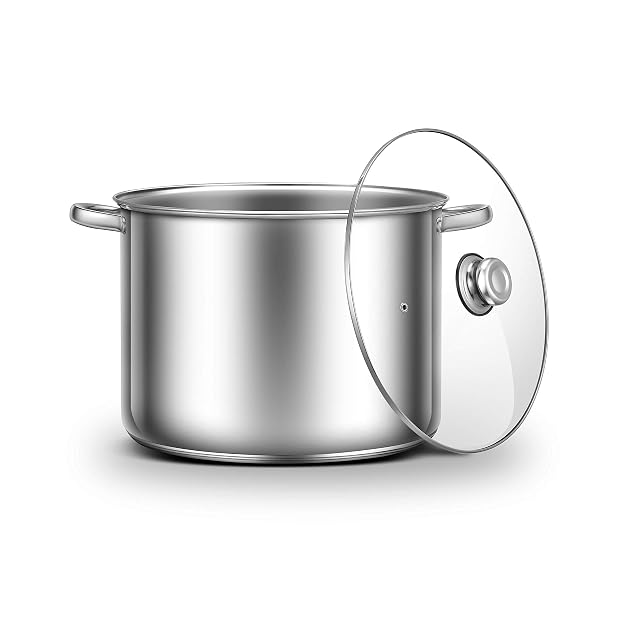
The KHG 26 cm (10.2 in), 10 liters, uncoated stainless, with a fill-level indicator and straining spouts on both sides. At ten liters, pouring rather than lifting is how you empty it, and spouts on both sides suit either hand.

The two very large ones

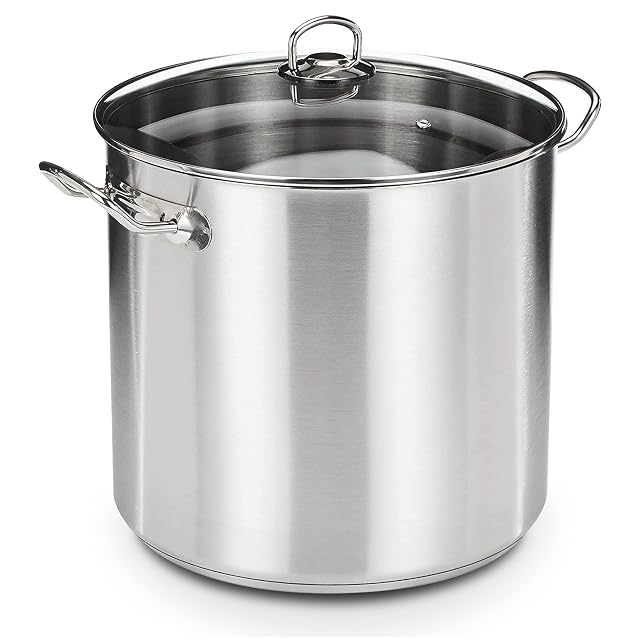
The Ribelli at 32 cm (12.6 in) and 24 cm (9.4 in) high, about 20 liters, stainless on an aluminum-core base with two side handles. The GSW at 30 × 28 cm (11.8 × 11 in), 20 liters, uncoated stainless with a heat- and impact-resistant glass lid and a smooth easy-clean interior.

The honest warning about twenty liters

Two-thirds full of liquid, either of those weighs more than thirteen kilograms before you count the pot. That is a two-handed lift at best and a ladle job in practice. Buy twenty liters if you preserve or make stock in quantity; buy ten if you cook dinner.

Where to start

Ten liters. It is large enough for everything domestic and still liftable.

Which pan does your cooking want?

You cook in batches
One genuinely large pot beats several medium ones.
You have a small hob
A wide pot may overhang the burner and heat unevenly.
You will lift it full
Weight when empty is only half the question.
Storage is limited
A large pot is a permanent occupier of cupboard space.

Picking by what you cook

Batch cooking

Stews, soups and sauces made for the week, which is where a big pot pays for itself.

Pasta and boiling

Where volume of water matters more than base thickness.

Stock

Where a tall narrow shape reduces evaporation over long cooking.

Preserving and large quantities

Where the pot’s weight when full becomes the real constraint.

What makes the difference in use

Capacity against your hob
A pot wider than the burner heats unevenly at the edges. Height gains capacity where width cannot.
Base thickness
For stews and sauces it prevents catching. For boiling water it matters much less.
Handles
Two sturdy side handles are what let you lift a full pot safely. This is a safety feature, not a detail.
Weight when full
A heavy pot plus contents can exceed what is safe to lift. Consider draining in place instead.
Storage
A large pot occupies real space permanently. Some people store other things inside it, which is sensible.

Which figure for which dish

Your useThe shapeThe reason
Stews and saucesThick basePrevents catching
PastaTall and wideVolume of water
StockTall and narrowLess evaporation
AnyTwo side handlesLifting safely

Where it usually goes wrong

Buying wider than the burner
The edges never reach temperature and food cooks unevenly. Height is the better route to capacity on a domestic hob.
Ignoring the handles
A full large pot is heavy. Small or poorly attached handles turn that into a genuine hazard.
Choosing thin material for stews
It catches and burns on the base. For boiling water it matters little, for anything thick it matters a great deal.
Carrying a full pot across the kitchen
It is how most serious kitchen scalds happen. Drain in place or ladle out instead.

By the cook you are

The batch cook
Wants one large thick-based pot and uses it weekly.
The pasta household
Cares about volume and handles more than about base thickness.
The small hob
Chooses a taller, narrower pot to gain capacity without overhanging the burner.

Care, seasoning and how long it lasts

Large pots are washed less carefully than small ones simply because they are awkward, and that is how they acquire a permanently scorched base. The handles are the other weak point: they carry far more load than any other cookware fixing.

  • Soak a scorched base rather than attacking it with abrasives.
  • Check handle fixings regularly; they carry real weight.
  • Let the pot cool before washing to protect the base.
  • Dry thoroughly before storing, particularly if you store things inside it.

Safety

A full large pot is genuinely dangerous.

  • Never carry a large pot of boiling liquid across a kitchen; drain in place.
  • Check both handles are secure before lifting anything full.
  • Keep children away from the hob when a large pot is in use.
  • Use two dry cloths and lift with both hands.

Our choices, and the reasons

  1. Amazon Basics 7.6 L with glass lid

    7.6 L · heavy stainless with aluminum-core base · riveted side handles · glass lid · oven safe to 260 °C (500 °F) without lid

    A 7.6 liter stockpot that publishes an oven limit — 260 °C (500 °F) without the lid — with riveted stainless side handles and an aluminum-core base.

    Best for: Everyday soup and stock, and anything that starts on the hob and finishes in the oven.

    7.8/10

    ≈ $48

  2. WMF Provence Plus 24 cm (9.4 in), 8.8 L

    24 cm (9.4 in) · 8.8 L · 20.5 cm (8.1 in) high · Cromargan 18/10 uncoated · oven safe to 250 °C (482 °F) · optimal for 22 cm (8.7 in) rings

    An 8.8 liter uncoated stainless pot that publishes its height, its oven limit and the hob ring it is designed for — and has a lid that seals well enough to steam vegetables.

    Best for: Stock and soup, where tall and narrow keeps the liquid in the pot.

    7.8/10

    ≈ $130

  3. Ribelli 32 cm (12.6 in), 20 L

    32 cm (12.6 in) × 24 cm (9.4 in) high · about 20 L · stainless with aluminum-core base · two side handles · dishwasher safe

    A 20 liter pot for goulash, mulled wine and preserving, on a stainless base with an aluminum core, with two side handles.

    Best for: Preserving, batch cooking and events, not everyday soup.

    7.8/10

The questions that come in

What capacity for a family of four?

Seven to nine liters covers pasta, soup and stock for four with room to stir. Twenty liters is preserving and stock-making territory, not everyday cooking.

How heavy is a full pot?

Water alone is a kilogram per liter. A 20 liter pot two-thirds full is over thirteen kilograms plus the pot — which is why the large ones have two side handles and why you ladle rather than pour.

Do I need a fill-level indicator?

It is more useful than it sounds. The KHG pot here has one, and it turns "how much stock is in there" into something you read rather than estimate.

How large a pot do I need?

Large enough for your normal batch, not for the biggest meal you can imagine. Check it against your burner size too.

Tall or wide?

Tall gains capacity without overhanging a domestic burner. Wide is better for pasta but heats unevenly if it exceeds the hob zone.

Does base thickness matter?

For stews and sauces very much, since a thin base catches. For boiling water it makes far less difference.

What should I look at first?

The handles. A full large pot carries serious weight, and that is the fixing most likely to matter to your safety.

How do I drain it safely?

Ideally without lifting it: ladle out, or use a strainer basket. Carrying boiling liquid is how most kitchen scalds happen.

How do I store something that big?

Many people store other cookware inside it, which is sensible. Dry it thoroughly first or you will find it damp.
Each pan, and the cooking it rewards

Amazon Basics ST1903223 · $48

Good for: Everyday soup and stock, and anything that starts on the hob and finishes in the oven.

What it does best: Publishes a specific oven limit, and says explicitly that it excludes the lid

What it does badly: No base thickness published

Read the full review →

WMF 0723246380 · $130

Good for: Stock and soup, where tall and narrow keeps the liquid in the pot.

What it does best: Publishes diameter, volume, height, oven limit and ring diameter

What it does badly: No base thickness figure

Read the full review →

KHG XXL 26 cm

Good for: Stock, soup for a crowd, and pasta for six.

What it does best: Fill-level indicator, which turns the pot into a measuring vessel for stock and preserving

What it does badly: No base construction stated

Read the full review →

Ribelli 500576

Good for: Preserving, batch cooking and events, not everyday soup.

What it does best: Twenty liters, which covers preserving, mulled wine and cooking for a crowd

What it does badly: 32 cm (12.6 in) overhangs every domestic ring

Read the full review →

GSW 643474 · $205

Good for: Batch cooking, preserving and events.

What it does best: Twenty liters with a lid included

What it does badly: No base construction published

Read the full review →

Short answer first

What is behind this list

The pans here are drawn from the catalog of this site. Specifications come from the maker and from the Amazon product page; prices are what Keepa recorded on the date below, and both move. Order is set by declared specifications, by stated strengths against stated limits, and by price. Nothing here has been cooked with by us, and no claim to the contrary is made.

Last checked on

Prices quoted in these summaries are dated readings. The live price is shown next to each product.

The tool we use ourselves

Chosen your tool? Now buy it at the right price.

Cookware sets, knife blocks and cast iron swing by thirty dollars or more across the year, and the biggest "discounts" often land at prices the same model sold for six weeks earlier. UniverTrack tracks the real price history across retailers, spots fake reductions, and alerts you when it is genuinely the moment to buy.

Real price historyBuy-now alertsAI buying assistant
Try free for 14 days →
No commitment · Cancel in one click · 5 languages