Skip to content

Boards: wood or plastic, and how many

Two questions decide a board: what it does to your knife, and how you keep raw meat separate from everything else. Wood is kinder to an edge and harder to store; plastic sets solve separation with color and stack flat. End grain is the best of both and the largest and heaviest thing on this list.

Five boards, and the space they take.

The separation answer

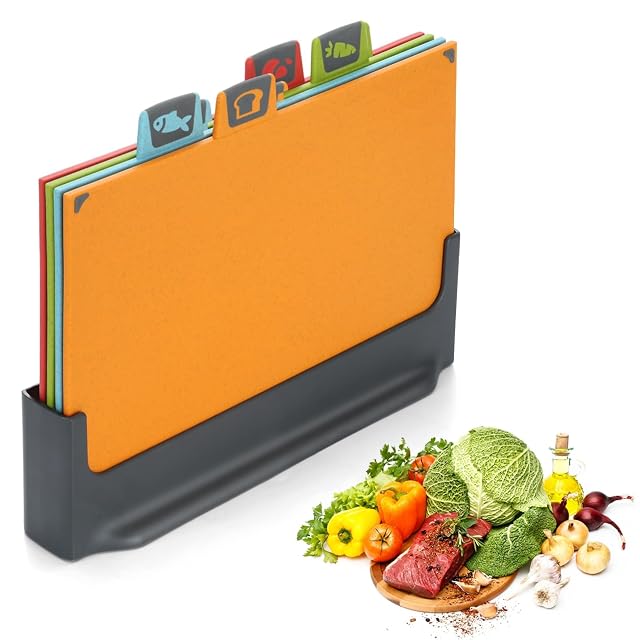
The Bewos set of four, color-coded by food type, reversible, with non-slip feet on all sides. Color coding is how a small kitchen keeps raw meat off the salad board without owning eight boards.

The everyday one

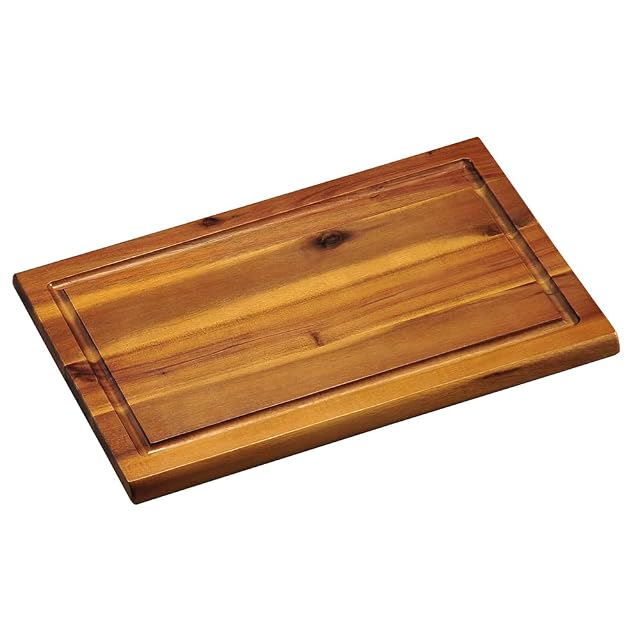
The Kesper 32 × 21 × 1.5 cm (12.6 × 8.3 × 0.6 in) in FSC-certified acacia with a juice groove, stated knife-friendly. Small enough to live on a worktop, cheap enough to replace.

The stacking set

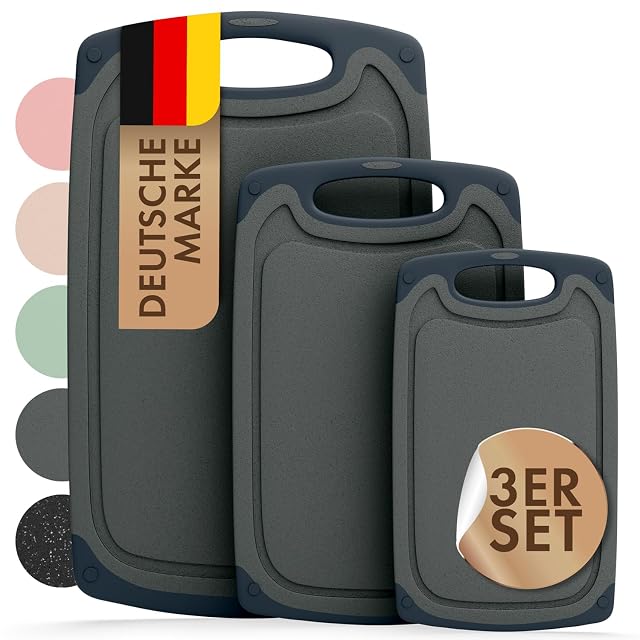
The Blumtal three in S, M and L in non-porous heat-resistant plastic with TPR non-slip edges and juice grooves. The non-slip edge is the safety feature — a sliding board is the most common cause of a home kitchen cut.

The one that treats your knives best

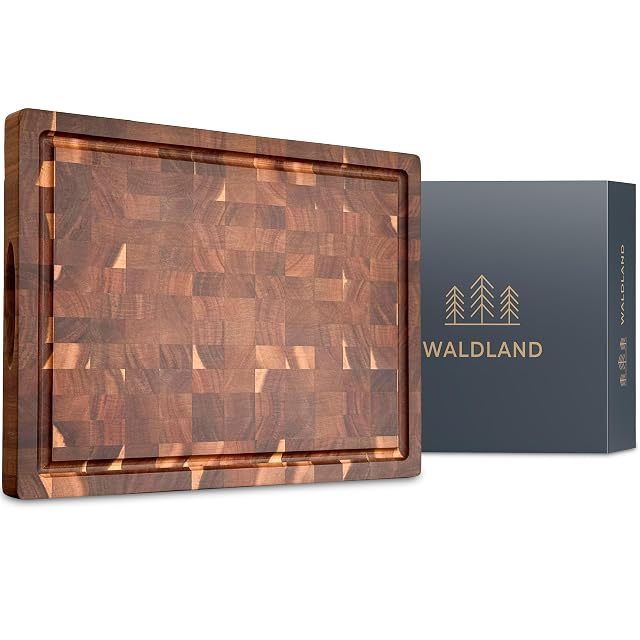
The Waldland 40 × 30 × 3 cm (15.7 × 11.8 × 1.2 in) in acacia end grain with visible growth rings and non-slip feet. End grain parts under an edge rather than cutting across it.

The one you keep

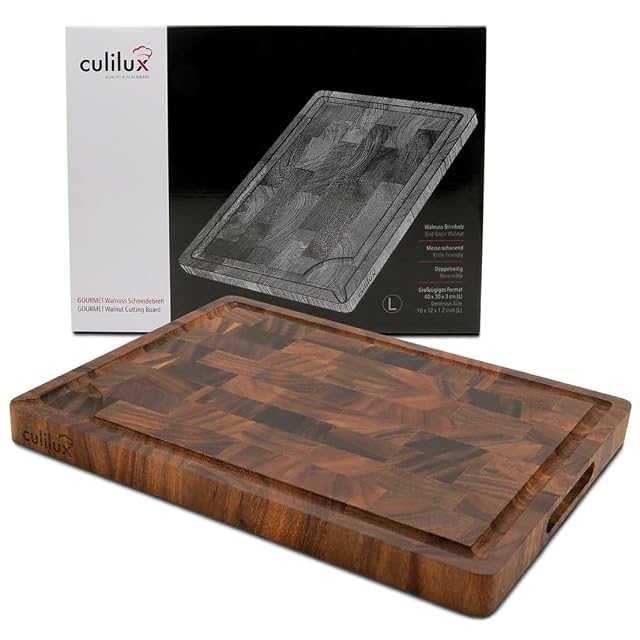
The Culilux walnut end grain, oiled, double-sided, with a juice groove and a spout and an integrated handle. Double-sided means one face for meat and one for everything else.

The small-kitchen answer

One large board that lives out, and a stacking plastic set in a drawer for the jobs the big one should not do.

Which pan does your cooking want?

Worktop space is the problem
One good board beats three that have nowhere to live.
You handle raw meat
A separate board is a hygiene measure, not a luxury.
You have no drying space
Plastic boards go in the dishwasher; wooden ones do not.
Your board slides
That is a safety problem before it is an annoyance.

Picking by what you cook

Everyday preparation

The board is the most used object in most kitchens and the least considered.

Raw meat and fish

Where a separate board avoids cross-contamination in a kitchen with no room to spread out.

Serving

Where a wooden board doubles as a serving surface, which saves space.

Working over a sink

Where a board sized to span the sink creates worktop out of nothing.

What makes the difference in use

Size against your worktop
A board too large to use is a board left leaning against a wall. Measure before buying.
Wood or plastic
Wood is kinder to knives and cannot go in the dishwasher. Plastic can, and scores more visibly.
Stability
A board that slides is dangerous. A damp cloth underneath fixes it instantly and costs nothing.
Thickness and weight
Thick boards are stable and heavy to wash. In a small kitchen that trade-off is real.
Storage
Boards need to stand somewhere and dry. That is often the deciding constraint in a small kitchen.

Which figure for which dish

The constraintThe boardThe reason
Small worktopOne medium boardSized to what you have
Raw meatA second boardCross-contamination
No drying spacePlasticDishwasher safe
SlidingDamp cloth underneathFree and effective

Where it usually goes wrong

Using glass or stone boards
They destroy knife edges and offer nothing in return. Every knife you own suffers for the sake of appearance.
Letting a board slide
It is the cause of a great many kitchen cuts. A damp cloth underneath removes the problem entirely.
Putting a wooden board in the dishwasher
It warps and splits. If dishwashing is your only option, buy plastic.
Buying a board too big for the worktop
It ends up leaning against a wall, unused, taking space in a kitchen that has none.

By the cook you are

The studio kitchen
One medium board sized to the worktop, plus a small second for raw meat.
The dishwasher household
Chooses plastic, because that is the only way the boards get properly dried.
The knife owner
Chooses wood, which is far kinder to edges than any hard surface.

Care, seasoning and how long it lasts

Boards fail from moisture more than from cutting. A wooden board dried flat traps water on one side and warps; a plastic board left in a puddle harbours what it should not. Standing them on edge to dry solves most of it.

  • Stand boards on edge to dry so both faces get air.
  • Oil wooden boards occasionally with a food-safe oil.
  • Replace plastic boards when the scoring becomes deep.
  • Never soak a wooden board or leave it in water.

Safety

Stability and cross-contamination.

  • Put a damp cloth under any board that moves.
  • Keep a separate board for raw meat and fish.
  • Wash boards thoroughly between raw and ready-to-eat foods.
  • Replace boards that are deeply scored or split.

Our choices, and the reasons

  1. Waldland 40 × 30 × 3 cm (15.7 × 11.8 × 1.2 in) end grain acacia

    40 × 30 × 3 cm (15.7 × 11.8 × 1.2 in) · acacia END GRAIN · visible growth rings · non-slip feet · stated self-healing surface

    An end-grain acacia board 3 cm (1.2 in) thick: the fibers stand upright, so the blade parts them rather than cutting across them — the construction that is genuinely kindest to an edge.

    Best for: A worktop board that stays out, in a kitchen that cooks daily.

    8.1/10

The questions that come in

Wood or plastic for raw meat?

Either, provided it is washed properly and dried. What matters more in a small kitchen is having a second board so raw meat and salad never share one — which is what color-coded sets are for.

What is end grain?

A board built with the wood fibers standing vertically, so the knife edge parts them rather than cutting across them. It is kinder to an edge and it costs more, because it is made from many pieces glued together.

Do wooden boards need oiling?

Yes, periodically, with a food-safe oil. A dry board cracks. The Culilux here arrives oiled; keeping it that way is the maintenance.

How many boards do I need?

One good board sized to your worktop, plus a second for raw meat. Beyond that, storage becomes the limiting factor.

Wood or plastic?

Wood is far kinder to knife edges; plastic can be dishwashed. If you have no space to dry a wooden board, choose plastic.

Are glass boards a bad idea?

For your knives, yes. They blunt edges quickly and offer no cutting advantage in return.

How do I stop the board sliding?

A damp cloth or a piece of damp kitchen paper underneath. It costs nothing and removes a genuine cause of kitchen cuts.

How do I dry a wooden board?

Standing on edge so both faces get air. Dried flat, one side stays wet and the board warps.

When should I replace a board?

When the scoring is deep enough to be hard to clean, or when a wooden board splits. Deep grooves are the issue rather than appearance.
Each pan, and the cooking it rewards

BEWOS 4 colour-coded

Good for: A household that will actually keep the boards separate.

What it does best: Four colors assigned to food types rather than just four colors

What it does badly: No thickness published

Read the full review →

Kesper 28180 · $39

Good for: A second board, or a small kitchen where sink size is the constraint.

What it does best: FSC certification published, which no other board here gives

What it does badly: 1.5 cm (0.6 in) is thin — thin boards cup when one face dries faster

Read the full review →

Blumtal EB0262

Good for: A household where boards slide on a smooth worktop.

What it does best: TPR non-slip edges, which is the safety detail that matters most on a board

What it does badly: No thickness published

Read the full review →

Waldland 10

Good for: A worktop board that stays out, in a kitchen that cooks daily.

What it does best: End grain, which is the construction that genuinely spares a knife edge

What it does badly: Heavy — end grain at 3 cm (1.2 in) is a substantial object

Read the full review →

culilux CBW3040

Good for: A board that stays on the worktop and is meant to be seen.

What it does best: Walnut end grain, which is the premium construction in the premium timber

What it does badly: The most expensive board in this hub

Read the full review →

Where the money goes, band by band

Short answer first

Comparisons that settle it

Comparisons already online between two pans from this guide or this aisle.

What is behind this list

The pans here are drawn from the catalog of this site. Specifications come from the maker and from the Amazon product page; prices are what Keepa recorded on the date below, and both move. Order is set by declared specifications, by stated strengths against stated limits, and by price. Nothing here has been cooked with by us, and no claim to the contrary is made.

Last checked on

Prices quoted in these summaries are dated readings. The live price is shown next to each product.

The tool we use ourselves

Chosen your tool? Now buy it at the right price.

Cookware sets, knife blocks and cast iron swing by thirty dollars or more across the year, and the biggest "discounts" often land at prices the same model sold for six weeks earlier. UniverTrack tracks the real price history across retailers, spots fake reductions, and alerts you when it is genuinely the moment to buy.

Real price historyBuy-now alertsAI buying assistant
Try free for 14 days →
No commitment · Cancel in one click · 5 languages