Skip to content

Pressure cookers: the size, the settings and the seal

A pressure cooker is the one piece of cookware that is also safety equipment. Three things decide a good one: a capacity that suits your cooking, settings published as something you can understand, and a seal you can still buy in five years. Everything else is convenience.

Five cookers, and the three questions that separate them.

The one that publishes its temperatures

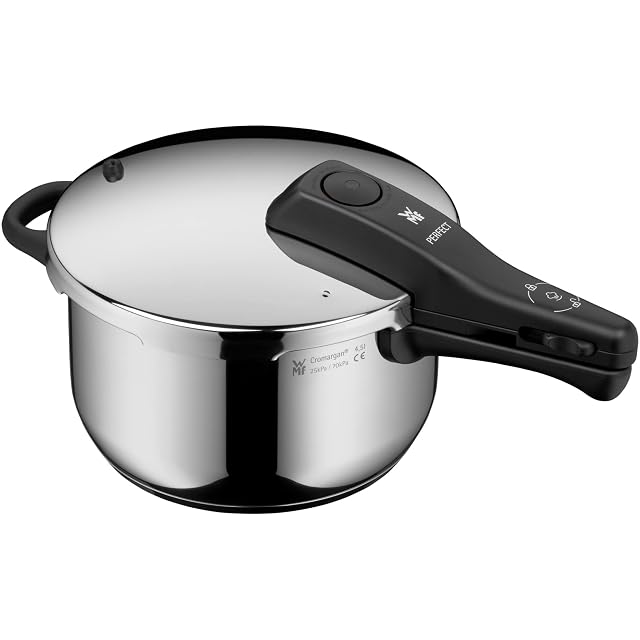
The WMF 4.5 liter, Ø 22 cm (8.7 in), 18.3 cm (7.2 in) high, with two settings at 110 °C (230 °F) and 119 °C (246 °F) and a large cooking signal. Publishing the settings as temperatures rather than symbols is the clearest specification in this hub.

The one with the longest durability claim

The Tefal 6 liter, 22 cm (8.7 in), 18/10 stainless, two cooking settings, and stated tested to a thirty-year life. That is the longest such claim anywhere in this catalog.

The one that publishes its metal

The Elo 18 cm (7.1 in), 18/10 stainless, with a 1.0 mm (0.04 in) wall and a 5.0 mm (0.20 in) total base, and automatic pressure regulation. Wall and base thickness published together is rare, and the base is what stops food catching under pressure.

The one with a basket included

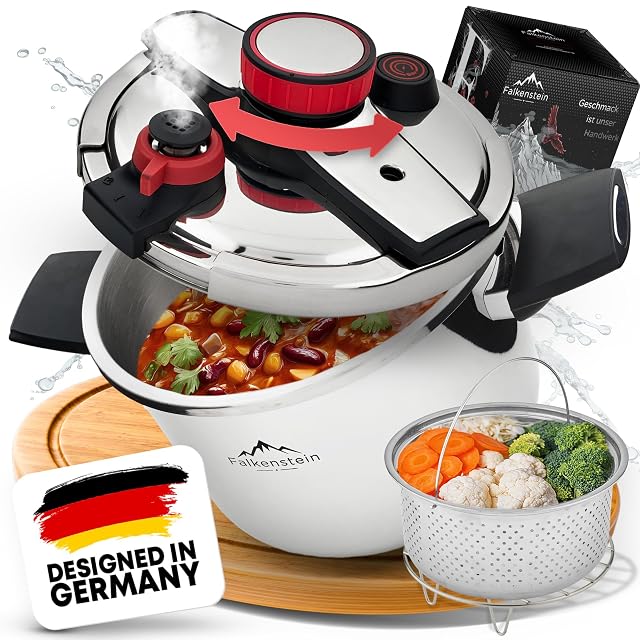
The Falkenstein 6 liter, with a Quickturn lid mechanism, a cooking signal and a steaming basket included. The basket is what makes a pressure cooker also a steamer.

The one built around its valve

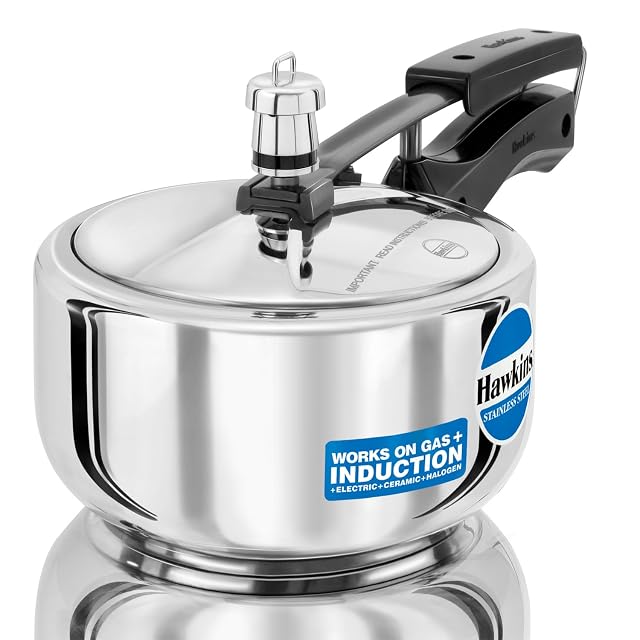
The Hawkins, stainless, with a shielded safety valve and a pressure-locked safety lid. A pressure-locked lid cannot be opened while there is pressure inside, which is the mechanism that matters most.

Before you buy any of them

Find the replacement seal for that model and check it is still sold. A cooker whose seal has been discontinued is a pot.

Which pan does your cooking want?

You cook pulses and tough cuts
This is where a pressure cooker genuinely changes the kitchen.
You want it to do everything
An electric multicooker, with the compromises that brings.
You want speed and control
A stovetop model, which reaches pressure faster.
You are nervous about them
Modern models have several independent safety systems.

Picking by what you cook

Pulses and grains

The clearest gain: dried beans and chickpeas without an overnight plan.

Tough cuts

Where long braising is compressed into a fraction of the time.

Stock

Where pressure extracts quickly and produces a clear result.

Everyday cooking

Where an electric model doubling as a slow cooker earns its worktop space.

What makes the difference in use

Stovetop or electric
Stovetop reaches pressure faster and gives more control. Electric is programmable and does more jobs less brilliantly.
Capacity
Pressure cookers cannot be filled to the top, so usable volume is well below stated capacity.
Safety systems
Modern cookers have several independent mechanisms. Understanding them is part of using one confidently.
Seal availability
The gasket is a wearing part. A cooker whose seals you cannot buy is a cooker with a fixed life.
Ease of cleaning
Lids and valves need proper cleaning. A design that makes that awkward gets neglected.

Which figure for which dish

Your priorityThe typeThe trade-off
SpeedStovetopNeeds attention
ConvenienceElectricSlower to pressure
Many functionsMulticookerMaster of none
AnyCheck seal availabilityIt is a wearing part

Where it usually goes wrong

Overfilling
Pressure cookers have a maximum fill line for good reason, and it is lower than people expect. Follow it exactly.
Forcing the lid
A lid that will not open still has pressure inside. Release it as the instructions direct and never force it.
Neglecting the valve
A blocked valve is a genuine hazard. Cleaning it is part of every use, not an occasional job.
Ignoring the gasket
It perishes and stops sealing. Replacing it is routine maintenance, not a repair.

By the cook you are

The pulse cook
Gets the most from it, since dried beans stop needing planning.
The busy household
Often prefers an electric model that can be set and left.
The traditional cook
Chooses stovetop for speed and control, and accepts the attention it needs.

Care, seasoning and how long it lasts

A pressure cooker is one of the few kitchen items where maintenance is a safety matter rather than a longevity one. The gasket perishes, the valve blocks, and both failures are gradual and invisible until the cooker either will not seal or will not vent.

  • Clean the valve and lid thoroughly after every use.
  • Inspect the gasket regularly and replace it when it hardens or cracks.
  • Check that all safety mechanisms move freely.
  • Follow the manufacturer’s instructions exactly; they are specific to the model.

Safety

This is the one piece of cookware where the manual matters.

  • Read and follow the manufacturer’s instructions for your specific model.
  • Never exceed the maximum fill line.
  • Never force the lid; release pressure as the instructions direct.
  • Keep the valve clean and unobstructed at all times.

Our choices, and the reasons

  1. WMF Perfect One Pot 4.5 L

    4.5 L · Ø 22 cm (8.7 in) · 18.3 cm (7.2 in) high · two settings at 110 °C (230 °F) and 119 °C (246 °F) · large cooking signal · removable lid handle

    The only cooker here that publishes its actual cooking temperatures: 110 °C (230 °F) for the gentle setting and 119 °C (246 °F) for the intensive one, with a large cooking signal and a removable lid handle.

    Best for: Two to four people, and anyone who wants to know what temperature they are actually cooking at.

    8.1/10

    ≈ $245

  2. Tefal Secure 5 Neo 6 L

    6 L · 22 cm (8.7 in) · 18/10 stainless · two cooking settings · tested to a stated 30-year life · dishwasher safe

    A 6 liter cooker with two cooking settings that Tefal states is tested for a thirty-year working life — the longest durability claim in this hub.

    Best for: A family cooker for someone who wants a mainstream model with parts available.

    8.1/10

  3. ELO Praktika XS 18 cm (7.1 in)

    18 cm (7.1 in) · 18/10 stainless · 1.0 mm (0.04 in) wall, 5.0 mm (0.20 in) total base · automatic pressure regulation · safety valve and lid-rim relief · TÜV tested

    The only cooker here that publishes its wall and base thicknesses — 1.0 mm (0.04 in) and 5.0 mm (0.20 in) — with automatic pressure regulation, a safety valve, lid-rim relief and a stated TÜV test.

    Best for: One or two people, and anyone who wants the construction figures published.

    7.5/10

    ≈ $135

  4. HAWKINS Stainless pressure cooker

    Stainless steel · shielded safety valve · pressure-locked safety lid · long-life gasket stated · welded handle bracket

    A stainless cooker sold on its mechanisms rather than its numbers: a shielded safety valve, a pressure-locked lid, and a gasket the maker states is long-lasting.

    Best for: Someone who knows the brand and wants the mechanism rather than a specification sheet.

    7.5/10

    ≈ $55

The questions that come in

What size do I need?

A pressure cooker is filled to two-thirds at most, and less for anything that foams. A 4.5 liter cooker is a three liter meal; six liters feeds four or five comfortably.

How often does the seal need replacing?

Makers commonly say every one to two years, or as soon as it hardens, cracks or stops sealing. Check that a replacement seal is available for your model before you buy the cooker — this site lists seals for WMF, Silit, Fissler and Tefal.

Why do published temperatures matter?

Because "setting 1" and "setting 2" tell you nothing. The WMF here publishes 110 °C (230 °F) and 119 °C (246 °F), which is the difference between gentle cooking and the fast setting, expressed as something you can reason about.

Stovetop or electric?

Stovetop reaches pressure faster and gives more control; electric is programmable and can be left. It depends on how you cook.

Are pressure cookers safe?

Modern models have several independent safety systems. The manufacturer’s instructions for your model are the thing to follow.

How much can I put in?

Never above the maximum fill line, which is lower than most people expect. It is a safety limit, not a suggestion.

What maintenance does it need?

Cleaning the valve after every use and replacing the gasket when it hardens. Both are safety matters rather than longevity ones.

What is it best at?

Pulses and tough cuts. Dried beans without soaking overnight is the change most people notice first.

Is a multicooker a good pressure cooker?

It does the job alongside several others, generally less quickly than a dedicated stovetop model. That trade is the whole question.
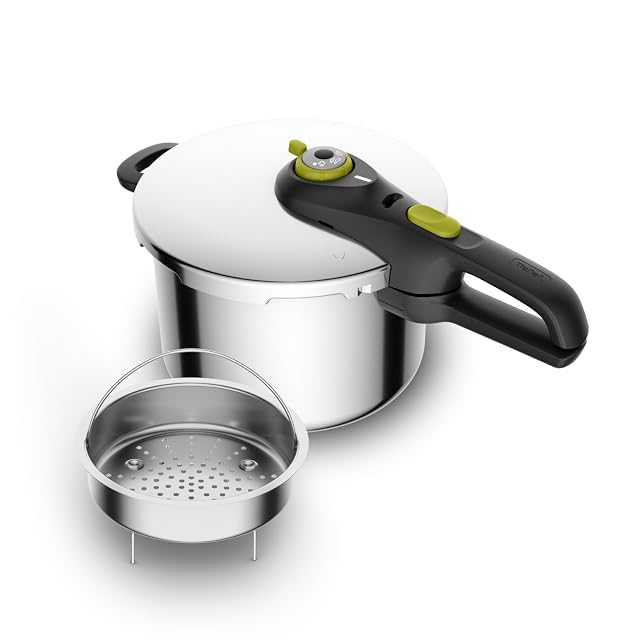
Each pan, and the cooking it rewards

WMF 0791829990 · $245

Good for: Two to four people, and anyone who wants to know what temperature they are actually cooking at.

What it does best: Publishes the actual temperatures of both settings — 110 °C (230 °F) and 119 °C (246 °F)

What it does badly: 4.5 liters is small for a family cooker

Read the full review →

Tefal P2530738

Good for: A family cooker for someone who wants a mainstream model with parts available.

What it does best: 6 liters and 22 cm (8.7 in) is the size that suits most households

What it does badly: No operating pressure figures for either setting

Read the full review →

ELO 99389 · $135

Good for: One or two people, and anyone who wants the construction figures published.

What it does best: Publishes wall and base thickness — 1.0 and 5.0 mm (0.20 in) — which nothing else here does

What it does badly: 18 cm (7.1 in) is small — a two- to three-person cooker

Read the full review →

Falkenstein DSZA22-6L

Good for: Someone who wants the basket and prefers a turn-and-lock lid.

What it does best: A steaming basket in the box, which turns the cooker into a steamer

What it does badly: The most expensive cooker here, on the thinnest published specification

Read the full review →

HAWKINS B25 · $55

Good for: Someone who knows the brand and wants the mechanism rather than a specification sheet.

What it does best: A pressure-locked lid, which is the mechanism that prevents opening under pressure

What it does badly: The sparsest listing in this hub — no capacity, no pressure, no dimensions

Read the full review →

Short answer first

What is behind this list

The pans here are drawn from the catalog of this site. Specifications come from the maker and from the Amazon product page; prices are what Keepa recorded on the date below, and both move. Order is set by declared specifications, by stated strengths against stated limits, and by price. Nothing here has been cooked with by us, and no claim to the contrary is made.

Last checked on

Prices quoted in these summaries are dated readings. The live price is shown next to each product.

The tool we use ourselves

Chosen your tool? Now buy it at the right price.

Cookware sets, knife blocks and cast iron swing by thirty dollars or more across the year, and the biggest "discounts" often land at prices the same model sold for six weeks earlier. UniverTrack tracks the real price history across retailers, spots fake reductions, and alerts you when it is genuinely the moment to buy.

Real price historyBuy-now alertsAI buying assistant
Try free for 14 days →
No commitment · Cancel in one click · 5 languages