The coating has gone: replace it, or change approach
A coating that has stopped releasing cannot be repaired, and cooking on a failed one is frustrating rather than dangerous in any way this site is qualified to judge. The interesting question is what replaces it: another consumable, or a pan that will still be here in twenty years. Both are legitimate, and the second requires a month of learning.
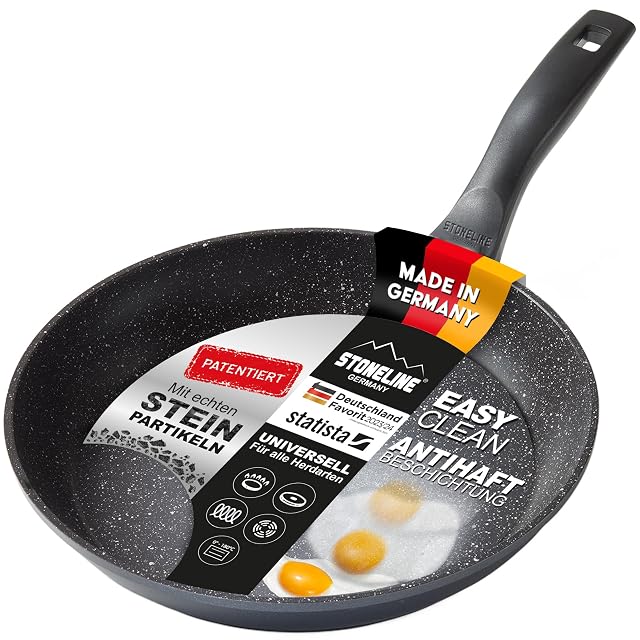
Nothing wrong with it. The Stoneline 28 cm (11 in) publishes 4.7 cm (1.9 in) of depth, 2.3 liters and a 22.8 cm (9 in) induction base — more specification than almost any coated pan here. Treat it as a consumable, hand wash it, keep metal utensils out of it, and it will last as long as coated pans last.
Route two: uncoated stainless
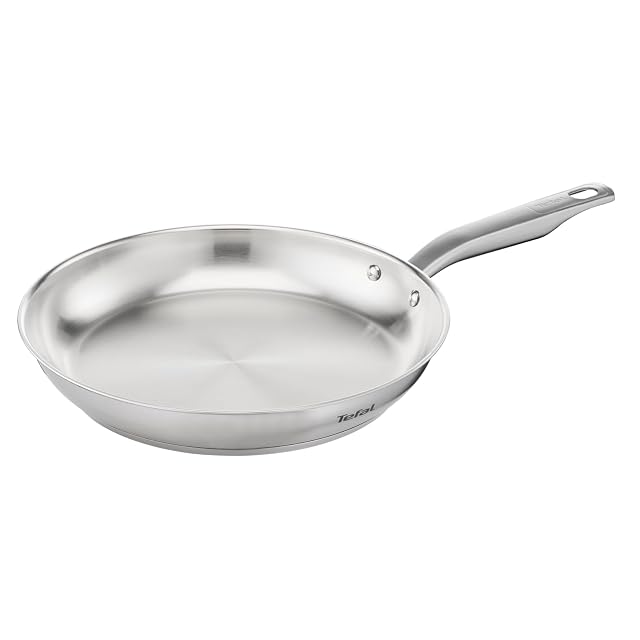
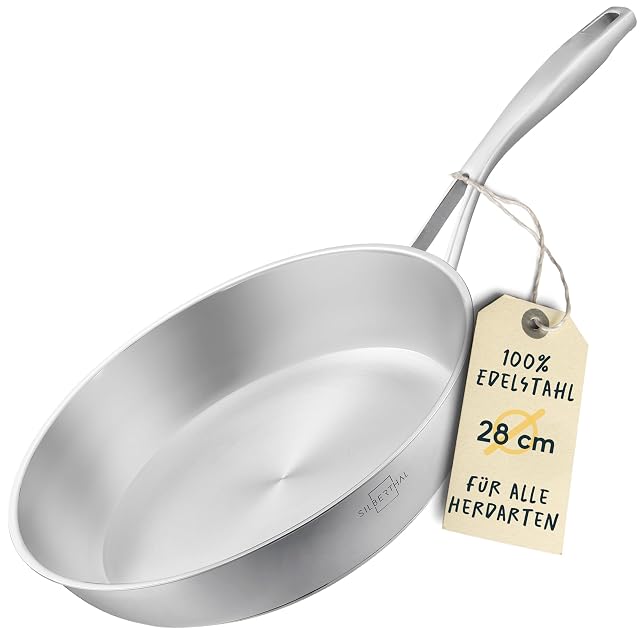
The Tefal 28 cm (11 in) uncoated textured stainless is oven safe to 250 °C (482 °F), dishwasher safe, and the cheapest way into a pan you will never replace. The Silberthal 28 cm (11 in) in 18/10 has a three-layer base with an aluminum core, which is what stops a hot ring in the middle.
The learning curve is real and it is short: preheat, fat, wait, do not fidget.
Route three: iron
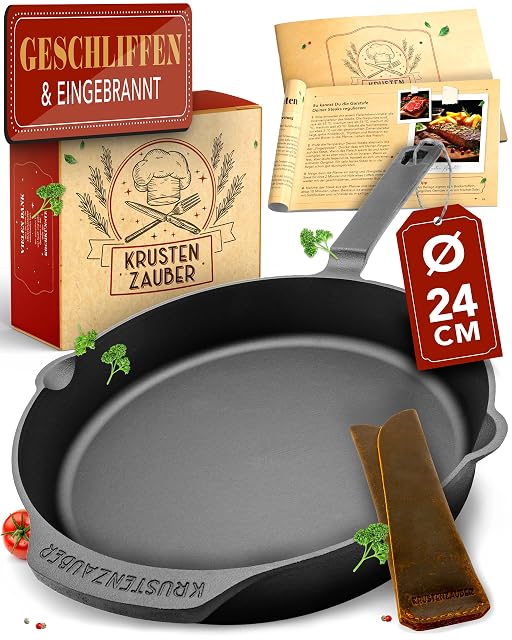
The Krustenzauber 24 cm (9.4 in) is ground smooth bare cast iron, for hob, oven, grill and open fire, with a recipe book. Ground smooth releases far better than an unground casting from the start.
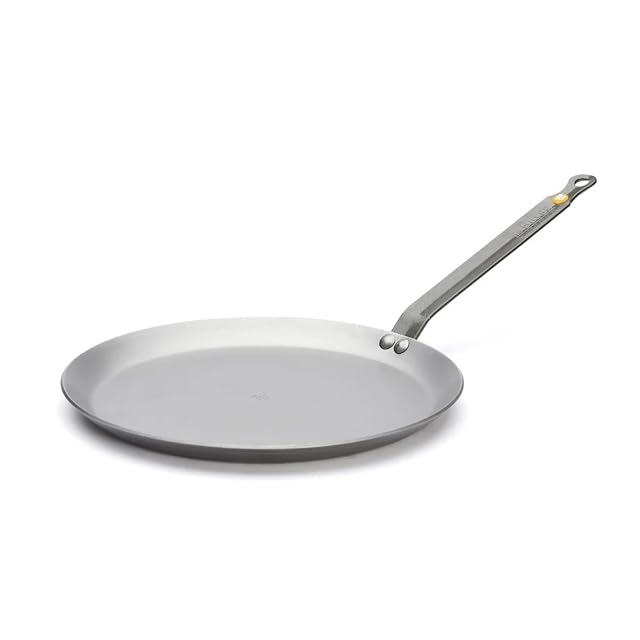
The de Buyer 24 cm (9.4 in) carbon steel is much lighter than cast iron, arrives beeswax-protected — wash that off before first use — and seasons the same way.
The surface you can repair
Only seasoning. A coating cannot be renewed; a seasoned iron or carbon steel pan that has lost its surface is stripped, re-oiled, heated, and it is new again. That is the argument, and it is the whole argument.
Which pan does your cooking want?
The coating is flaking
Stop using it and replace it; that is not a repairable state.
It only sticks slightly
Check heat and fat first, since both mimic a worn coating.
You want to stop replacing pans
This is the moment to consider uncoated.
You still want easy eggs
Another coated pan is a legitimate answer, treated as a consumable.
Picking by what you cook
Like for like
Replace with another coated pan and accept the cycle. Simple and honest.
Moving to carbon steel
Where the surface can be rebuilt indefinitely, at the cost of learning to season it.
Moving to cast iron
Where heat retention and durability are the gains, and weight is the cost.
Moving to stainless
Where nothing wears out but nothing releases either, and technique carries the load.
What makes the difference in use
Why the old one died
Overheating and metal utensils kill most coated pans. If those habits stay, another coated pan will follow the same path.
What you cook in it
Eggs and fish argue for a coating. Searing and browning argue against.
Willingness to maintain
Carbon steel and cast iron reward care. If that will not happen, coated is the realistic choice.
Weight
Uncoated alternatives are heavier, sometimes considerably. That is a daily consideration.
Cost over time
A replaced coating every few years against a pan bought once. The maths depends on your habits, not on the pans.
Which figure for which dish
Your reason
The replacement
The cost
Want easy eggs
Another coated pan
The cycle continues
Want it to last
Carbon steel
Learning to season
Want heat retention
Cast iron
Weight
Want zero surface worry
Stainless
Nothing releases easily
Where it usually goes wrong
Keeping a flaking pan in use
A coating shedding into food is the point to stop. Damaged coated pans are not repairable.
Blaming the pan when it is the heat
Food sticks in good pans too, if they are too cool, too crowded or too dry. Rule that out first.
Buying the same pan and the same habits
If metal utensils and high heat killed the last one, the next one will not last either.
Switching to stainless expecting non-stick behavior
It will not release like a coating. That is not a fault; it is a different tool.
By the cook you are
The egg cook
Buys another coated pan and reserves it for eggs alone.
The cook tired of replacing
Moves to carbon steel and learns the seasoning routine.
The high-heat cook
Should have been on uncoated all along, and this is the moment to switch.
Care, seasoning and how long it lasts
The replacement pan lasts as long as the habits allow. Whatever surface you choose next, the two things that decide its life are the temperature you cook at and what you stir with, and neither is a property of the pan.
Match utensils to the surface from day one.
Stay within the maker’s heat guidance for anything coated.
Season carbon steel or cast iron properly before first use.
Let any pan cool before washing.
Safety
Damaged coatings and high heat.
Stop using a coated pan once the surface is flaking.
Never heat a coated pan empty.
Ventilate the kitchen when cooking at high temperatures.
Follow the manufacturer’s temperature limits for coated cookware.
28 cm (11 in) · uncoated textured stainless · oven safe to 250 °C (482 °F) · riveted stainless handle · dishwasher safe
The only pan in this hub that publishes an oven limit: 250 °C (482 °F). Uncoated, textured interior, riveted stainless handle, and stated dishwasher safe.
Best for: Searing and finishing in the oven, which is what the 250 °C (482 °F) rating is for.
24 cm (9.4 in) · ground smooth cast iron · hob, oven, grill and open fire · recipe book included
A 24 cm (9.4 in) cast iron skillet with a ground-smooth interior rather than the usual sand-cast texture, sold with instructions and a recipe book — which is the part beginners actually need.
Best for: A first cast iron pan for someone who wants to learn it properly.
24 cm (9.4 in) · carbon steel, uncoated · beeswax protected · riveted angled handle · lifetime guarantee · made in France
The one pan in this hub with no coating at all: French carbon steel protected with beeswax, seasoned by the user, with a riveted handle angled away from the heat and a stated lifetime guarantee.
Best for: Someone who will season it properly and keep it for thirty years.
28 cm (11 in) · 4.7 cm (1.9 in) deep · 2.3 L · induction base 22.8 cm (9 in) · cast aluminum · dishwasher safe
The only pan in this hub that publishes its own dimensions in full: 28 cm (11 in) across, 4.7 cm (1.9 in) deep, 2.3 liters, and an induction contact area of 22.8 cm (9 in) — which is the figure that actually decides how it heats.
Best for: Anyone who wants to know the actual dimensions before buying, and cooks on induction.
Eggs stick where they used to slide, and washing takes scrubbing. Visible scratches are not the same thing — a scratched pan can still release, and a smooth pan that has been overheated may not.
Is a worn coating dangerous?
That is a question about materials science and regulation, and it is not one a cookware site should answer for you. ECHA is the European authority on these substances. What we can say is practical: a pan that no longer releases is no longer doing its job.
How long does learning stainless take?
A couple of weeks of cooking. The whole technique is: heat the empty pan properly, add fat, wait for it to shimmer, then add the food and do not move it until it releases by itself.
When should I replace a coated pan?
When the coating is flaking or scored, or when food sticks despite correct heat and fat. Flaking in particular means stop.
Should I switch to uncoated?
If the cycle of replacement annoys you, yes. Carbon steel and cast iron can be restored indefinitely, at the cost of maintenance.
Why did the last one fail?
Usually overheating and metal utensils. If those habits continue, the replacement will follow the same path whatever you buy.
Is stainless a good replacement?
It lasts indefinitely and does not release like a coating. That is a different way of cooking rather than a straight substitution.
Can a coating be repaired?
No. That is the practical case for uncoated pans, whose surfaces can be cleaned back and rebuilt as often as needed.
Is uncoated more expensive over time?
It depends entirely on your habits. A pan bought once against a coating replaced periodically is the comparison to make honestly.
Lids, handles and spares from the same aisle, at the price we read. Confirm they match the pan you choose before ordering: it turns on the diameter and the part number, which the product page gives.
AOTHOD 446 °F Set · Silicone utensils — Food-grade silicone cooking utensil set rated to 446 °F with stainless steel reinforcement, a thickened soft silicone head for non-stick pans and a seamless one-piece design, dishwasher safe · $20
BESTZMWK 33-Piece 304 Stainless · Silicone utensils — 33-piece utensil set with thick top-grade 304 stainless steel handles and durable silicone heads, stated free of any plastic and of BPA, dishwasher safe with hanging holes · $40
Boskermeal 8-Piece with Grater Attachments · Mixing bowls — An 8-piece set of five nesting stainless steel mixing bowls with three grater attachments for grating, slicing and shredding, plus lids, in thicker stainless steel with a mirrored interior, 100 per cent dishwasher safe · $22
COOK WITH COLOR 12-Piece with TPR Lids · Mixing bowls — A 12-piece set of six plastic nesting bowls with six TPR lids, in capacities of 0.32, 0.74, 1.37, 3.69 and 5.8 quarts, in BPA-free polypropylene, top-rack dishwasher, microwave and freezer safe · $27
The pans here are drawn from the catalog of this site. Specifications come from the maker and from the Amazon product page; prices are what Keepa recorded on the date below, and both move. Order is set by declared specifications, by stated strengths against stated limits, and by price. Nothing here has been cooked with by us, and no claim to the contrary is made.
Last checked on
Prices quoted in these summaries are dated readings. The live price is shown next to each product.
The tool we use ourselves
Chosen your tool? Now buy it at the right price.
Cookware sets, knife blocks and cast iron swing by thirty dollars or more across the year, and the biggest "discounts" often land at prices the same model sold for six weeks
earlier.
UniverTrack tracks the real price history across retailers, spots fake
reductions, and alerts you when it is genuinely the moment to buy.
Real price historyBuy-now alertsAI buying assistant