“This versatile cutting board is perfect for everyday use, ideal for cutting, slicing, and chopping a variety of meats, poultry, fruits, and vegetables”
“Made from premium polypropylene plastic, this cutting board is non-absorbent, non-porous, and resistant to odors, stains, and is BPA-Free”
“Features a reversible design, providing double the cutting surface and a convenient hand hole for enhanced control and stability”
“The non-porous surface is gentle on knives, helping to keep blades sharp. The board is hygienic and easy to clean”
“Measuring 8 x 10 inches and 5mm (0.20 in) thick, this cutting board is perfect for everyday use and fits easily in any kitchen space”
It names the plastic, which most of this shelf does not
Polypropylene.
Four of twelve boards here name their material: both Farberwares, HOMWE and Fotouzy. The other eight say “plastic” or “BPA-free plastic”.
That matters because polypropylene is the right material for a cutting board. It is genuinely non-porous, so it takes up no juice. It is tough enough to take a knife without shattering or shedding chips. And it handles dishwasher heat better than polyethylene, which softens lower.
Note also what “BPA-free” is worth here: BPA is a bisphenol used in polycarbonate, not in polypropylene at all. So the claim is true and tells you nothing.
Five millimeters, and what follows
The thinnest rigid board on this shelf:
0.20 in (5 mm) — this
0.25 in (6.35 mm) — Farberware’s large 11 × 14 in board
0.30 in (7.6 mm) — Freshware · 0.35 in (8.9 mm) — Viretang · 0.37 in (9.4 mm) — GORILLA GRIP
0.39 in (9.9 mm) — Empune
Nearly double across the range, and six boards publish nothing.
Two consequences. It will flex — harmless on a countertop, less so over a sink edge. And it can warp in a dishwasher: polypropylene softens as it heats, and a thin sheet cooling unevenly after a hot cycle can take a permanent bow.
Fotouzy’s flexible mats are the only listing here to publish a dishwasher temperature limit — <90 ℃ — which is exactly the right thing to state about thin PP.
Reversible, and genuinely so
A flat face on each side and a hand hole. Nothing on one face stops you using the other.
That is worth saying because three listings on this shelf claim rubber feet and reversibility together — Belwares (“flip it over for a second clean cutting surface” and “rubber feet grip the counter”), Viretang, ROTTOGOON. A board with feet on one side cannot lie flat on the other.
The coherent answers are a rubber border (GORILLA GRIP) or edge handles (Empune), which work either way up.
What it gives up
No juice groove. Six boards here have one, and on a tomato, a melon or a carved roast it is the difference between a clean countertop and a wiped one.
No feet and no border, so a 320 g board slides on a wet surface.
No warranty — only Empune and Fotouzy publish one.
Eight by ten inches
A small board, and the listing says so: fits easily in any kitchen space.
That is a real use — the board you keep next to the stovetop for a lemon, a bit of cheese, a shallot — rather than the one you carve on. For that, buy Farberware’s 11 × 14 in board at $6.44, or a three-piece set from $13.99.
Availability
On sale at about $5 on Amazon.com when we read the listing on October 31, 2026.
Price and availability were read on Amazon.com on October 31, 2026; both move.
Prices quoted in this text are dated readings and can differ from the live price in the buy box.
What we rate, and what we do not
Strengths
Names its material as polypropylene, which eight of the twelve boards here do not
Reversible with no feet or groove to stop you flipping it, which three listings here get wrong
Five dollars and 320 grams — a board you can keep by the stovetop and wash without thinking
Compromises
Five millimeters is the thinnest rigid board here, so it will flex and can warp in a hot dishwasher
No juice groove, so a tomato or a roast will run off the edge
No non-slip feet or border, so it slides on a wet countertop
Specifications
Size
8 × 10 in
Thickness
0.20 in (5 mm) — the thinnest rigid board on this shelf
Material
Premium polypropylene, named by the maker
Properties
Non-absorbent, non-porous, resistant to odors and stains, BPA-free
Reversible
Yes, for double the cutting surface
Handle
A hand hole, for control and stability
On knives
The non-porous surface is stated gentle on blades
Dishwasher
Safe
Weight
11.3 oz (320 g)
Storage
Stated to fit easily in any kitchen space
Juice groove
None — see the FAQ
Non-slip feet or border
None
Warranty
Not published by the maker
Amazon reference
B09LVS3T2B
EAN
0045908060237
The questions that come in
Why does the material name matter?
Because "plastic" covers materials that behave quite differently, and only four of the twelve boards here name theirs. Polypropylene is the right one for a cutting board: it is non-porous, so it does not take up juices; it is tough enough to take a knife without shattering or shedding chips; and it tolerates dishwasher heat better than polyethylene, which softens lower. Farberware names it on both its listings here, as do HOMWE ("food-grade polypropylene") and Fotouzy ("polypropylene Boards"). The other eight say "plastic" or "BPA-free plastic", which tells you what is not in it rather than what is. BPA is a bisphenol used in polycarbonate, not in polypropylene at all — so "BPA-free" on a PP board is true and uninformative.
Is five millimeters too thin?
It is the thinnest rigid board on this shelf, and it has two consequences. It will flex — press down with a cleaver or lean on one corner and the board bows, which on a countertop is harmless and over a sink edge is not. And it can warp in a dishwasher: polypropylene softens as it heats, and a thin sheet coming out of a hot cycle and cooling unevenly can take a permanent bow. The published thicknesses here run 0.20 in (5 mm) for this board, 0.25 in (6.35 mm) for Farberware’s large one, 7.6 (Freshware), 8.9 (Viretang), 9.4 (GORILLA GRIP) and 0.39 in (9.9 mm) for the Empune — nearly double. Six boards publish nothing. If the board goes in the machine often, a thicker one will stay flat longer.
Does it matter that there is no juice groove?
It depends entirely on what you cut. Six of the twelve boards on this shelf publish a juice groove — a channel round the perimeter that catches the liquid a tomato, a melon or a carved roast releases — and on those jobs it is the difference between a clean countertop and a wiped one. Neither Farberware board here has one. What that buys is reversibility without compromise: a groove is cut into one face, so a grooved board has a right way up, and the three listings here that claim both rubber feet and reversibility (Belwares, Viretang, ROTTOGOON) are promising two things that fight each other. This board is flat on both sides with a hand hole, and that is coherent. Use it for cheese, bread and fruit.
Our score
6.9/ 10
Five dollars, five millimeters and eight by ten inches — the thinnest rigid board here, in named polypropylene, reversible with a hand hole. It is a small board and the listing does not pretend otherwise.
This one against the other cookware and knives
Close prices, same category: comparable cookware and knives. We keep only the specifications all of them publish, because a column with gaps compares nothing.
Model
Price
Thickness
Dishwasher
Weight
Warranty
Farberware Reversible 8 × 10 in
$5
0.20 in (5 mm) — the thinnest rigid board on this shelf
0.3 in — about 0.30 in (7.6 mm), published for all three
Safe
2.6 lb (1.2 kg) for three
Not published by the maker
What sets the models apart, in cookware and knives
If price decides: this model, at $5.
Highest Thickness in the table: Freshware 3-Pack with Juice Grooves (0.3 in — about 0.30 in (7.6 mm), published for all three).
What use this one answers, among cookware and knives
A small second board — fruit, cheese, a lemon — kept to hand and washed constantly
Sources
Specifications: the manufacturer sheet for cookware and kitchen knives and the matching Amazon product page. Prices and availability: Keepa. Every figure on this page names its source.
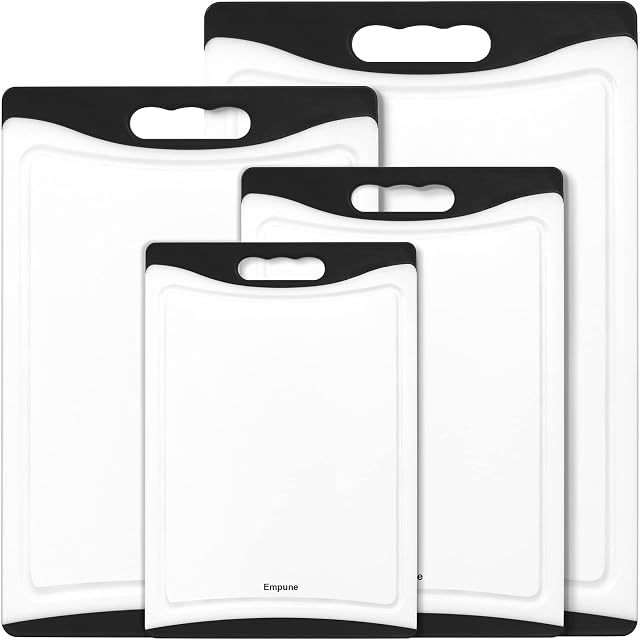
A BPA-free plastic cutting board set of four in small, medium, large and extra-large with boards up to 0.39 in thick, black TPR edge handles, perimeter juice grooves on every board, dishwasher safe and backed by a limited lifetime warranty
Four boards up to 0.39 in thick with TPR edge handles, juice grooves and a limited lifetime warranty.
Best for: A kitchen that wants four sizes and the thickest plastic here, with a warranty behind it
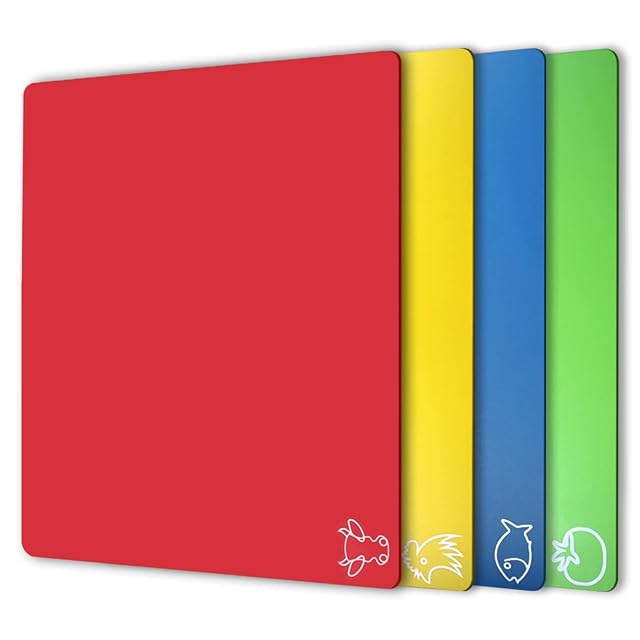
A set of four flexible BPA-free cutting mats color-coded with food icons, red for meat, yellow for fruit, blue for fish and green for vegetables, with a grid-textured non-slip bottom, bendable for pouring, dishwasher safe below 194°F (90°C)
Four flexible color-coded mats with food icons, grid-textured backs, dishwasher safe below 194°F (90°C).
Best for: Separating raw meat, fish, fruit and vegetables — and tipping the result straight into the pan
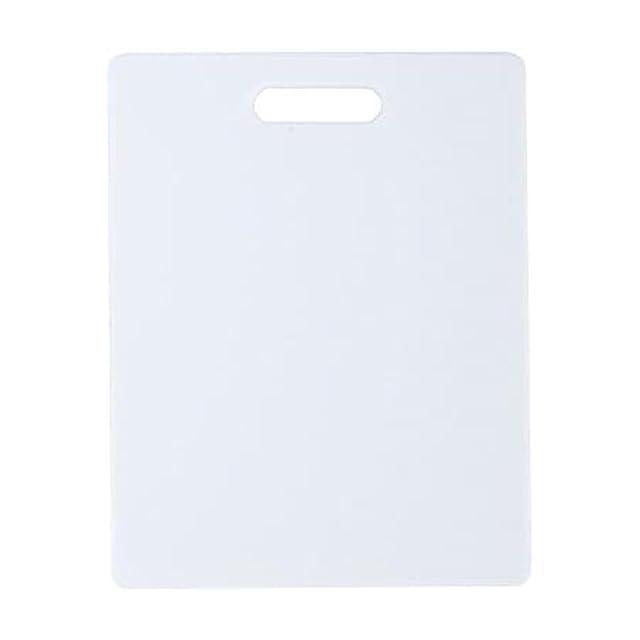
Reversible 11 × 14 in cutting board 0.25 in thick in BPA-free polypropylene, non-absorbent and non-porous, stated not to harbor odors, stains or harmful bacteria, with a hand hole and dishwasher safe
An 11 × 14 in reversible polypropylene board, a quarter inch thick, for six dollars.
Best for: A large everyday board, cheap enough to own two and replace without thinking