Flex is the specification, and it is chosen by the job · review
SHAN ZU Damascus 18 cm (7.1 in) fillet knife review
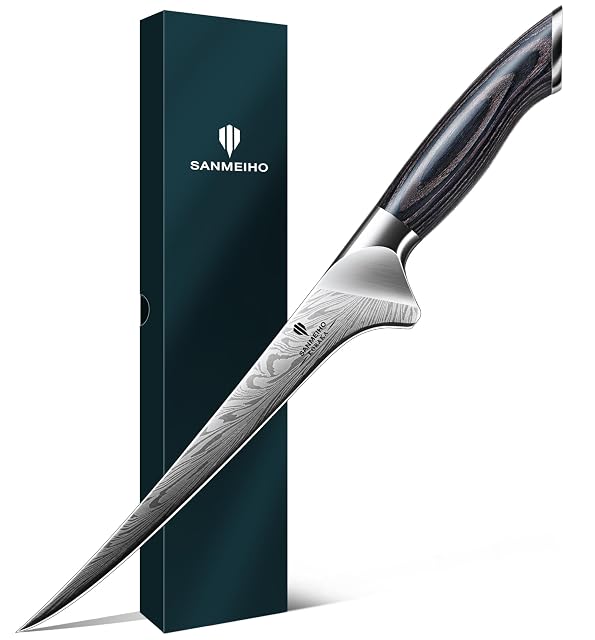
The top of this hub: an 18 cm (7.1 in) Damascus fillet knife with 67 forged layers, a stated 12° edge per side, and a maker who states the pattern is forged rather than etched.
What we would actually buy Beautiful, keen, and demanding. The two figures it does not publish — hardness and flex — are the two that would settle whether it suits your work.
What you are getting
An 18 cm (7.1 in) Damascus fillet and boning knife: a hard core clad in 67 forged layers, with a stated 12° edge per side, hand-finished, and a maker statement that the pattern is forged rather than laser-etched.
The edge
12° per side is very keen — keener than the santoku in this catalog and far keener than any European blade. On fish it is superb. Against a spine or a joint it will chip.
What is published, and what is not
The angle and the construction, both. Not the hardness, and not the flex — and flex is the property that separates a filleting knife from a boning knife. Buy it as a fish knife, which is what the geometry suggests.
The care
Ceramic rod, stone at 12°, hand wash and dry immediately. A knife at this price and this angle is not a knife to leave in a sink.
Availability
On sale at around $90 on the American Amazon store at the time of checking.
Prices and availability are what Keepa reported on the date this page was updated; both move.
Prices quoted in this text were read on 3 September 2026. The live price is at the top of the page.
What we rate, and what we do not
Strengths
States the edge angle — 12° per side — and that the pattern is forged
67 layers around a hard core, which is real construction rather than decoration
The keenest edge specification in this hub
Compromises
The most expensive knife here by a wide margin
No hardness figure and no stated flex
A 12° edge on a filleting knife will chip on a fish spine
Specifications
Blade length
18 cm (7.1 in)
Construction
67 forged steel layers around a hard core
Edge
Stated 12° per side, hand-finished
Pattern
Maker states genuine forged Damascus, not laser-etched
Use
Filleting fish and boning meat
Amazon reference
B0D926V4DV
EAN
0714757570739
Where this model is listed
A listing is not an offer: the reference exists on these stores, availability changes daily.
France
Germany
Italy
Spain
United Kingdom
United States
The questions that come in
Is a 12° edge sensible on a boning knife?
For fish, yes. For working around bone it is thin, and contact with a spine or a joint will chip it where a 20° European edge would survive.
Why does forged rather than etched matter?
A forged pattern is structural: the layers are real steel and they continue through the bevel. An etched one is surface decoration that fades and adds nothing.
Our score
8.4/ 10
Beautiful, keen, and demanding. The two figures it does not publish — hardness and flex — are the two that would settle whether it suits your work.
This one against the other cookware and knives
Close prices, same category: comparable cookware and knives. We keep only the specifications all of them publish, because a column with gaps compares nothing.
What sets the models apart, in cookware and knives
If price decides: Victorinox Fibrox 15 cm (5.9 in) flexible, at $39.
Highest Blade length in the table: SANMEIHO 18 cm (7.1 in) powder steel fillet knife (18 cm (7.1 in)).
What use this one answers, among cookware and knives
A cook who fillets often, sharpens their own knives, and wants a beautiful one.
What buyers actually choose
Amazon reports what buyers took in the month before this page was last checked: at least 50.
The figure is a floor, rounded by Amazon, and read through Keepa — it says what buyers picked, not what a maker claims.
Sources
Specifications: the manufacturer sheet for cookware and kitchen knives and the matching Amazon product page. Prices and availability: Keepa. Every figure on this page names its source.
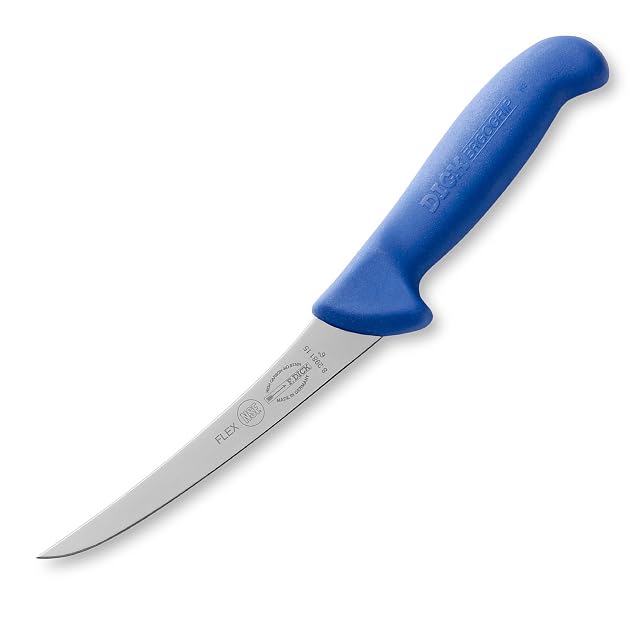
The only knife in this hub that publishes both its steel designation and its hardness: X55CrMo14 at a stated 56 HRC, flexible, with a curved blade that lengthens the cutting stroke.
Best for: Skinning, trimming sinew and separating poultry.
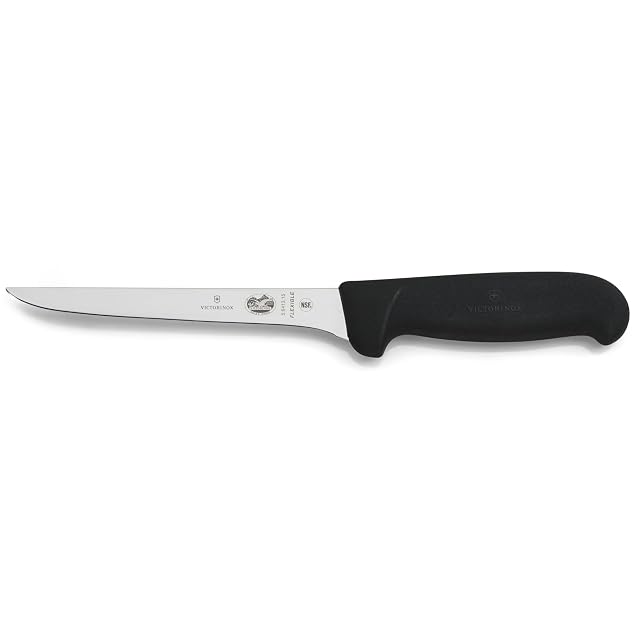
A 15 cm (5.9 in) straight flexible blade with the Fibrox handle — the grip that professional kitchens buy Victorinox for, on the knife most likely to be used with wet hands.
Best for: Filleting fish and jointing poultry, with wet hands.