What the maker puts in writing
- “Grinds spices, herbs, nuts, seeds, and pills into fine paste or powder; convenient size for everyday cooking and wellness”
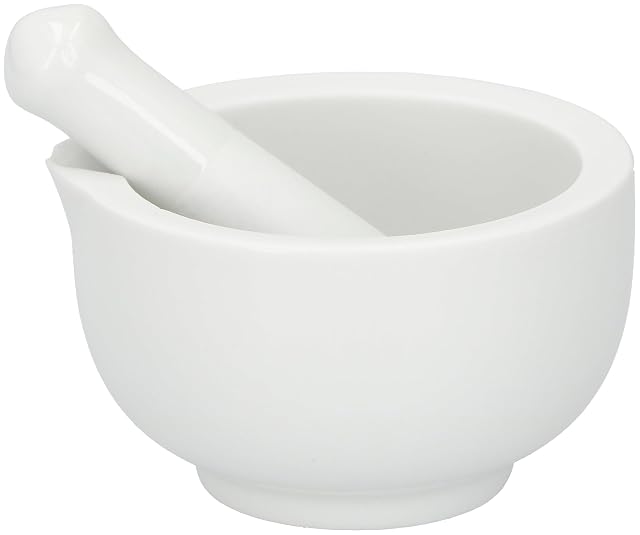
- “Mortar measures 4.25 x 4.625 x 2.375-inches, pestle measures 6.375 x 1.25-inches; sturdy porcelain bowl and pestle deliver smooth and efficient grinding”
- “Built-In Pour Spout: Integrated spout makes it easy to transfer sauces, dressings, spice blends, and herbal mixtures directly from the mortar without mess”
- “Perfect for curry pastes, pesto, guacamole, chutneys, nut butters, spice blends, herbal remedies, and crushing harder-to-swallow pills”
- “Lead- and cadmium-free porcelain complements any decor; dishwasher safe”
The only spout on this shelf
Getting the result out of a mortar is the part nobody warns you about.
A mortar is a round bowl with a thick rim, and a finished paste clings to it — pesto, a curry paste, a mustard vinaigrette. Without a spout you scrape at it with a spatula, catch half on the rim, and leave the rest behind.
HIC puts a spout in the rim: makes it easy to transfer sauces, dressings, spice blends, and herbal mixtures directly from the mortar without mess.
The only comparable idea anywhere here is Tera’s translucent lid, which solves the opposite half of the same problem — keeping jumping peppercorns in the bowl rather than getting a paste out of it.
Two obvious solutions. One instance of each, on a shelf of fourteen.
Six point three seven five inches of pestle
On a 4.25 inch bowl — the best ratio on this shelf.
WALDWERK is the only maker here to explain why that matters: an extra long pestle… ensures that your hand does not collide with the edge of the mortar.
On a deep bowl with a short pestle, your knuckles hit the rim on every stroke. Which is uncomfortable, and worse: it makes people grind with their fingertips instead of leaning their weight into it, so the grinding takes three times as long.
The pestle lengths published across this shelf:
- 6.375 in on a 4.25 in bowl — this
- 6.2 to 6.5 in on 5.1 and 5.5 in bowls — the two Priority Chefs
- 4 in — HIC Carrara marble
- 2.875 in — HIC’s smallest porcelain
Porcelain, and two advantages people do not expect
Acid. Porcelain is inert. The two marble mortars on this shelf — HIC’s own Carrara and the Fasolahome — are calcium carbonate, which lemon, vinegar and tomato etch. For a mortar whose listed uses are pesto, chutneys, guacamole, all of them acidic, that is not academic.
Cleaning. Dishwasher safe. HIC’s Carrara marble says hand wash… and dry thoroughly; the granite UMIEN says hand wash.
And lead- and cadmium-free, stated on all three HIC porcelains — the right thing to publish about a glazed surface you grind food against. HPYNPES on this shelf says only “finest quality ceramic”.
What this page leaves out
No weight, which is the specification that decides whether the bowl stays still. This shelf spans 164 g to 4,569 g, and ChefSofi names the benefit of mass directly: heavy… will not slip on your kitchen counters. A light mortar means one hand holding the bowl for the whole job.
No textured interior stated — and HIC’s two other porcelain mortars both say “textured interiors and rounded pestle heads”. That is the specification that decides whether a mortar grinds at all: a smooth interior slides, and the food circles the bowl instead of being crushed against it. Six of fourteen listings here state their interior finish; IMUSA states both halves, polished exterior and rough textured interior.
It is very likely textured like its siblings. The page does not say.
No capacity in cups. No non-slip base. No warranty.
And porcelain chips where granite does not. A dropped pestle ends it.
Availability
On sale at around $12 on the American Amazon store at the time of checking.
Prices and availability are what Keepa reported on the date this page was updated; both move.
Prices quoted in this text were read on 4 October 2026. The live price is at the top of the page.