What the maker puts in writing
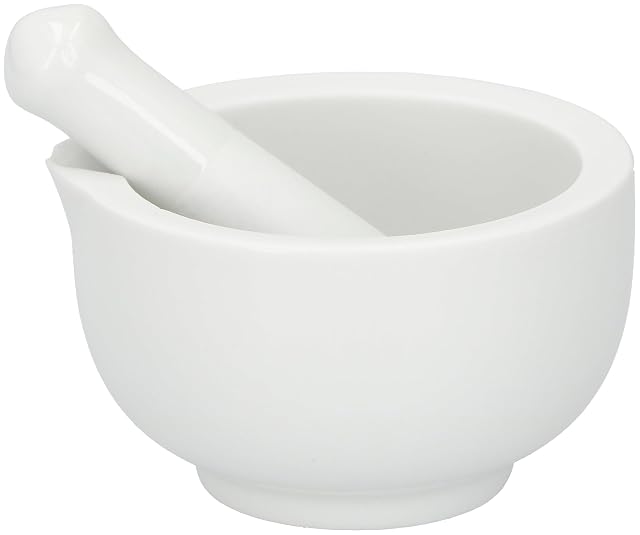
- “Includes 3 different porcelain mortars and pestles; versatile set for grinding spices, herbs, nuts, seeds, and pills”
- “Set includes 3 mortar sizes (2.75-inches, 3.5-inches, and 5-inches) with coordinating pestles; sturdy porcelain delivers consistent grinding results”
- “Smaller mortars are ideal for spice blends, herbal remedies, and pill crushing; larger size handles bigger batches and sauces”
- “Textured interiors and rounded pestle heads quickly break down ingredients into fine pastes and powders with minimal effort”
- “Lead- and cadmium-free porcelain complements any decor; dishwasher safe… Make aromatic dry rubs, curry pastes, pestos, nut butters, ground cinnamon or grind peppercorns”
The only listing here that explains why size matters
“Smaller mortars are ideal for spice blends, herbal remedies, and pill crushing; larger size handles bigger batches and sauces.”
Thirteen other listings on this shelf sell you one bowl and let you work it out.
The reason is mechanical, and it catches almost everyone.
A teaspoon of cumin seed in a 5-inch bowl does not grind. It spreads across the floor of the bowl and the pestle passes over most of it; you chase the seeds round the sides and end up with a mix of powder and whole seed.
The same teaspoon in a 2.75-inch bowl stays under the pestle the whole time.
And the reverse: start working a bowl of pesto in a 2.75-inch mortar and it goes over the rim immediately.
So most people buy one mortar and discover it is the wrong one for half of what they do. This is three, for $18.99 — $6.33 each.
What each one is for
2.75 in — a teaspoon of whole spice, a pill, saffron, a few cardamom pods. The same bowl HIC sells on its own for $8.99.
3.5 in — a spice blend for a curry, a garlic-and-salt paste, enough black pepper for a steak rub.
5 in — a small batch of pesto, a curry paste, guacamole for two. For scale, PriorityChef’s 5.1 inch granite bowl on this shelf holds a stated 1.5 cups and is sold specifically for making guacamole.
The honest cost of three for the price of one
Mass. All three together weigh 1,012 g.
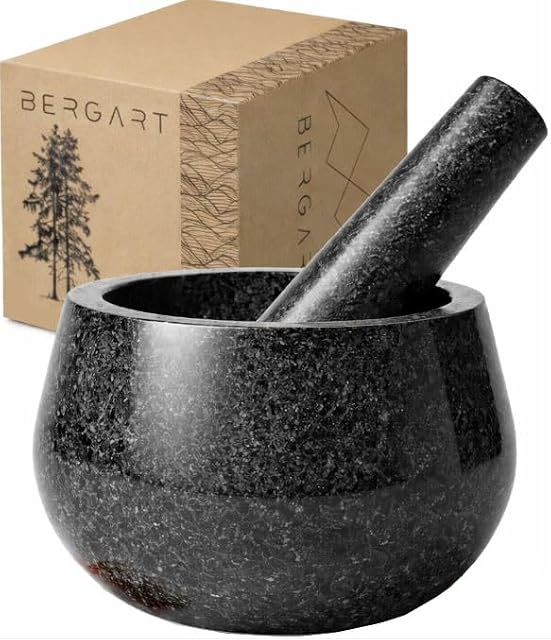
One PriorityChef granite mortar weighs 2,420 g (85.4 oz) by itself. The UMIEN is 4,569.
Weight is the functional specification on a mortar: a heavy bowl stays put, so both hands go to the pestle. ChefSofi puts it directly — as granite is inherently durable and heavy, this mortar will not slip on your kitchen counters.
Each of these three will slide unless you hold it. That is the trade.
And porcelain chips where stone does not — now in triplicate.
Textured inside, which is the specification that matters
Textured interiors and rounded pestle heads.
You cannot grind on a smooth surface. A polished interior lets food slide round the wall instead of being crushed against it, which is why IMUSA on this shelf publishes both halves deliberately — “polished exterior finish” and “rough textured interior surface” — and why ChefSofi and PriorityChef both specify “unpolished granite”.
Six of fourteen listings here state it. Two describe themselves only as “smooth”.
Why porcelain makes more sense in a set
Two practical reasons.
Cleaning. These are dishwasher safe — which matters when you have used two of them in one cooking session. The granite UMIEN says hand wash; HIC’s own Carrara marble says hand wash in warm, soapy water and dry thoroughly.
Acid. Porcelain is inert, so the same bowl handles lemon, vinegar and tomato without etching. The two marble mortars on this shelf will dull under exactly the uses they advertise.
All three HIC porcelains also publish lead- and cadmium-free, the right statement about a glazed surface you grind food against — which the HPYNPES ceramic here does not make.
What is not published
No capacity in cups for any of the three. No pestle lengths, where HIC’s own pour-spout model publishes 6.375 inches and WALDWERK explains why reach matters: a short pestle means your hand… collide[s] with the edge of the mortar.
No individual weights. No non-slip bases. No warranty.
Availability
On sale at around $19 on the American Amazon store at the time of checking.
Prices and availability are what Keepa reported on the date this page was updated; both move.
Prices quoted in this text were read on 4 October 2026. The live price is at the top of the page.