What we would actually buy Color coding is the cheapest hygiene improvement available to a kitchen, and it only works if the boards are different colors.
What you are getting
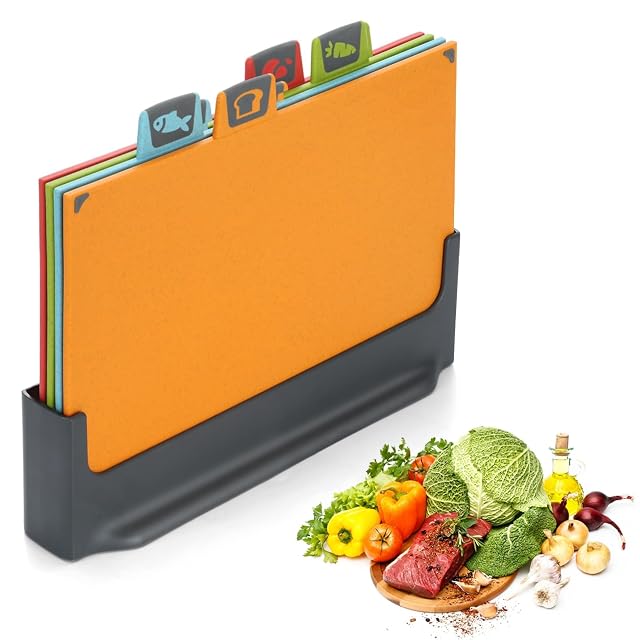
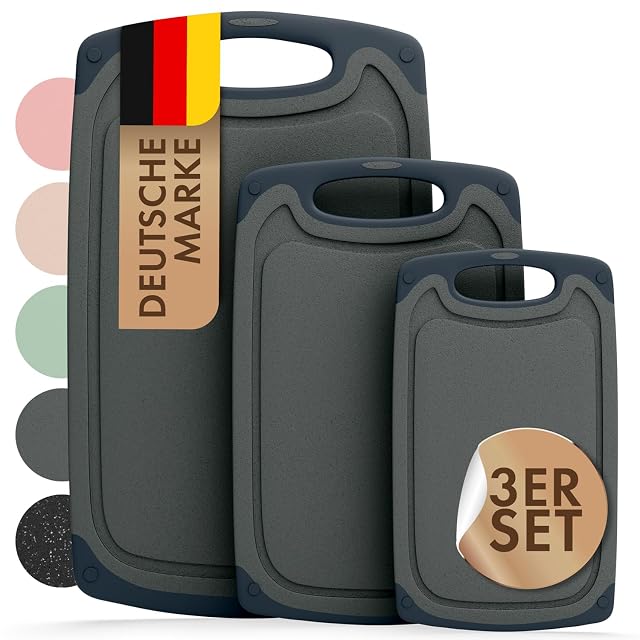
Three BPA-free plastic boards in three colors, with juice grooves, non-slip grips and rubber feet on all sides.
The colors
The point of the set. A board that is obviously the meat board gets used as the meat board; three identical boards do not. It is the cheapest hygiene improvement a kitchen can make.
The feet on all sides
Both faces are non-slip, which means both faces are usable without the board sliding. Most boards manage one.
What is not published
Thickness, and any dishwasher temperature. Both decide whether these stay flat, and neither is given.
Availability
Not found on the American Amazon store, where the buy link falls back to a local search rather than to a page that does not exist.
Prices and availability are what Keepa reported on the date this page was updated; both move.
What we rate, and what we do not
Strengths
Three colors, which makes separation a glance rather than a decision
Rubber feet on all sides, so both faces are non-slip
BPA-free, stated
Compromises
No thickness published
Colors are described rather than assigned to food types
Rubber feet make the boards harder to stack
Specifications
Pieces
3, in three colors
Material
BPA-free, stated easy to clean and odor-neutral
Features
Juice grooves, non-slip grips
Feet
Non-slip rubber feet on all sides
Amazon reference
B0BRCVDRG7
EAN
0797427104939
Where this model is listed
A listing is not an offer: the reference exists on these stores, availability changes daily.
France
Germany
Italy
Spain
United Kingdom
The questions that come in
Does color coding matter at home?
It makes the right board obvious without thinking, which is what makes the habit stick. Professional kitchens use it for exactly that reason.
Which color for what?
Professional convention is red for raw meat, blue for fish, green for vegetables and white for dairy and bread. At home, any consistent scheme works as long as it is consistent.
Our score
7.5/ 10
Color coding is the cheapest hygiene improvement available to a kitchen, and it only works if the boards are different colors.
What use this one answers, among cookware and knives
Keeping raw meat, fish and vegetables genuinely separate.
Sources
Specifications: the manufacturer sheet for cookware and kitchen knives and the matching Amazon product page. Prices and availability: Keepa. Every figure on this page names its source.
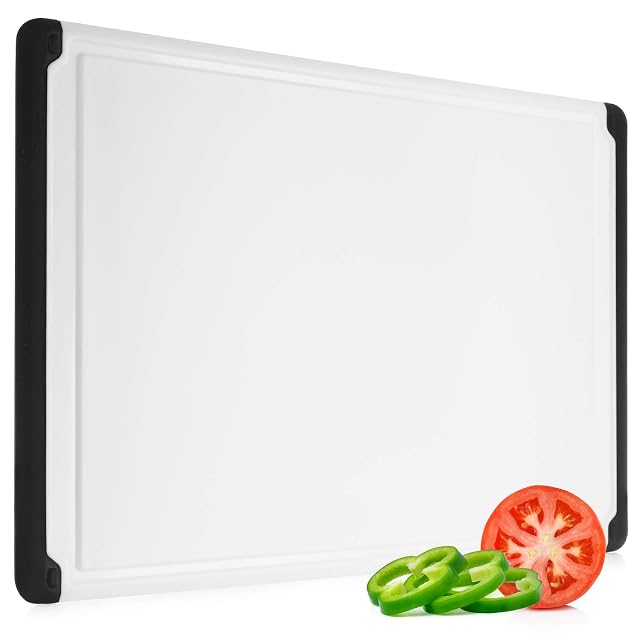
An 18 × 12 in large plastic cutting board in thick food-safe BPA-free plastic with non-slip rubber feet, a wide deep juice groove around the board and a reversible design, dishwasher safe
The largest board here at 18 × 12 in, with rubber feet and a deep perimeter juice groove.
Best for: Carving and jointing — the only board here with the size, the groove and the feet together