What the maker puts in writing
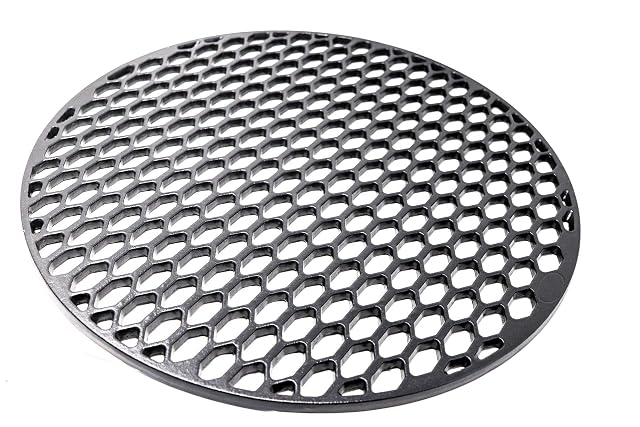
- “The Lodge Cast Iron Grill Topper is perfect for shrimp, veggies, fish, and more! The grid design protects food from falling through the grate and infuses your dish with that wonderful grill flavor… the dual handle design makes it easy to maneuver as you cook”
- “Seasoning is simply oil baked into the iron, giving it a natural, easy-release finish and helps prevent your pan from rusting. Lodge pre-seasons all cast iron cookware with 100% natural vegetable oil: no synthetic coatings or chemicals”
- “Hand washing your cast iron pan with warm soapy water and a nylon scrub brush is recommended”
- “Cast iron cookware is slow to heat up but retains heat longer which makes cast iron ideal for pan-frying and roasting”
- “The Lodge family founded the company in 1896, and they still own it today… Lodge products are made in the USA with non-toxic, PFOA & PTFE free material”
- “Turn your grill into a short-order kitchen… With perforated holes in Lodge’s signature teardrop design, this topper infuses your food with that delicious grill flavor”
First: it does not replace anything
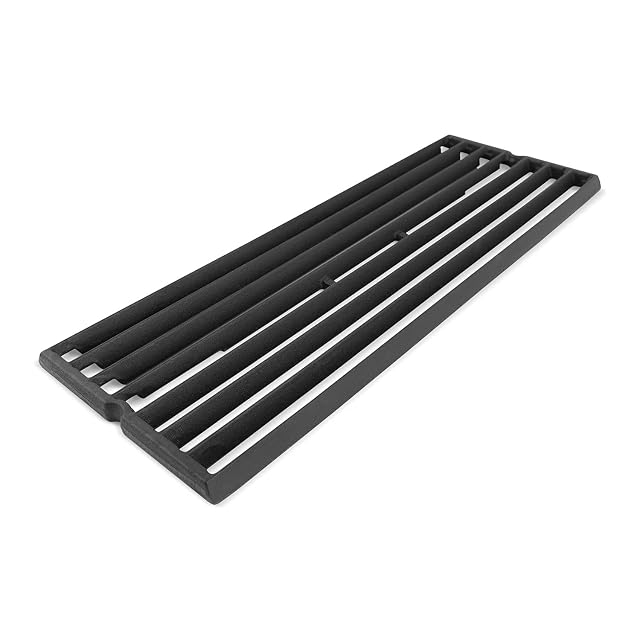
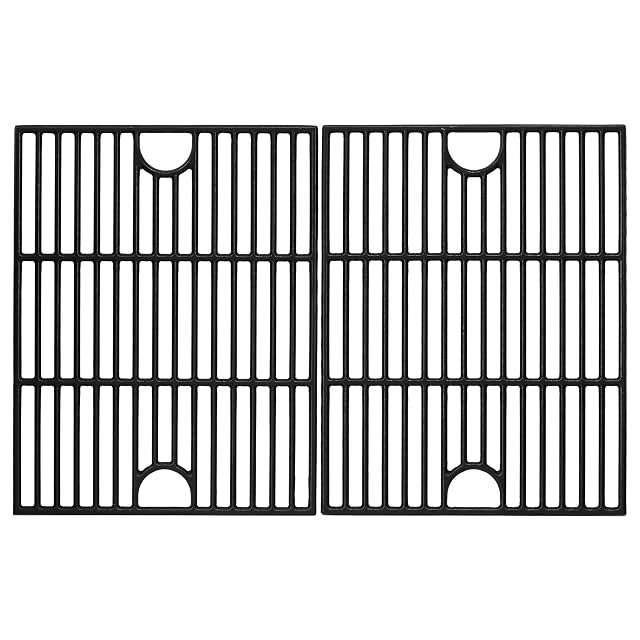
Every other product on this shelf replaces the cooking grate in a named grill — a Charbroil, a Nexgrill, a Weber Spirit, a Dyna-Glo, a Broil King Baron.
This one sits on top of the grate you already own.
It is a 15 × 12 inch perforated cast iron plate with two handles and raised sides. The teardrop perforations let smoke and heat through from below, so the food still tastes grilled, while the plate stops anything falling into the fire.
Which means the thing it has over everything else here: no fitment match required. No model number, no measuring, no “fits 463432215 but not Genesis Silver A”. It works on a kettle, a gas grill, a flat top, a fire pit.
What it is actually for
Shrimp. Asparagus. Sliced peppers. Scallops. A fish fillet that will fall apart the moment you try to turn it on bars.
Lodge’s own phrase is the right one: turn your grill into a short-order kitchen.
The raised sides matter as much as the holes — on a flat plate, sliced onions escape over the edge the first time you push them around.
The only honest definition of seasoning on this shelf
“Seasoning is simply oil baked into the iron, giving it a natural, easy-release finish and helps prevent your pan from rusting.”
That is correct, and it is worth having in writing because another listing here gets it wrong.
Seasoning is polymerized oil bonded to bare iron. It is not a factory coating. Lodge uses 100 per cent natural vegetable oil, with no synthetic coatings, and the piece is PFOA and PTFE free.
Compare the Aura grate on this shelf, which claims both “porcelain enamel coating” and a “pre-seasoned surface”. Those are alternatives: enamel is glass fused to the iron, and oil has nothing to bond to on glass — nor any need, since enamel is already slippery. One of Aura’s two claims must be wrong.
And it does mean maintenance
Bare seasoned iron rusts. The routine is the usual one, and Lodge states part of it: hand wash with warm soapy water and a nylon brush, then dry immediately and put a thin film of oil back on.
COGRICHBF on this shelf puts a number on the risk that applies here too: never leave standing water on cast iron for more than 10 to 15 minutes.
The compensation is that seasoning improves with use — the more you use Lodge the better the seasoning will get — where a porcelain coating only ever degrades.
Thirteen cents a square inch
Mid-shelf, and a fair price for a piece of American-made cast iron that fits every grill.
- $0.068 — Direct Store, three grids
- $0.080 — COGRICHBF · $0.096 — QuliMetal · $0.120 — EasiBBQ
- $0.133 — this
- $0.194 — Broil King (one grid) · $0.220 — Aura · $0.277 — Weber Crafted
No weight published, so the casting thickness cannot be compared with the grates here — which run from 10.0 to 18.1 grams per square inch.
Availability
On sale at around $24 on the American Amazon store at the time of checking.
Prices and availability are what Keepa reported on the date this page was updated; both move.
Prices quoted in this text were read on 4 October 2026. The live price is at the top of the page.
The questions that come in
Is this a replacement grate?
No, and it is the first thing to be clear about. Every other product on this shelf replaces the cooking grate in a specific grill — Charbroil, Nexgrill, Weber Spirit, Dyna-Glo, Broil King Baron. This one sits on top of the grate you already have. Lodge describes it as a "grill topper" with a "grid design [that] protects food from falling through the grate", perforated in the company’s teardrop pattern so smoke and grill flavor still reach the food from below. At 15 × 12 inches it covers part of a grill, not all of it. The practical consequence is a good one: it needs no fitment match, where everything else here lives or dies by a model number. It works on a kettle, a gas grill, a flat-top, anything.
What does "pre-seasoned" mean, and do I have to maintain it?
Lodge gives the only correct definition on this shelf, and yes, you do. "Seasoning is simply oil baked into the iron, giving it a natural, easy-release finish and helps prevent your pan from rusting. Lodge pre-seasons all cast iron cookware with 100% natural vegetable oil: no synthetic coatings or chemicals." That is accurate — seasoning is polymerized oil bonded to bare iron, not a coating applied in a factory press. It also means this piece can rust, and the maintenance is the usual cast iron routine: hand wash with warm soapy water and a nylon brush, as the listing says, then dry it immediately and put a thin film of oil back on. COGRICHBF on this shelf puts a number on the risk: never leave standing water on cast iron for more than 10 to 15 minutes.
How is it different from the Aura grate here?
Lodge describes its finish correctly and Aura describes two finishes that exclude each other. This is bare cast iron, pre-seasoned with vegetable oil — oil polymerized onto raw metal. The Aura grate on this shelf says both "Non-stick cast iron with porcelain enamel coating" and "Food does not stick to the pre-seasoned surface". Those are alternatives, not a combination: porcelain enamel is glass fused to the iron, and there is nothing for oil to bond to on glass — nor any need, since enamel is already slippery. One of Aura’s two claims must be wrong. Lodge’s single claim is consistent, and its listing is the one that defines the term it uses.