Skip to content

WALDWERK Acacia Wood Base 4.7-Inch review

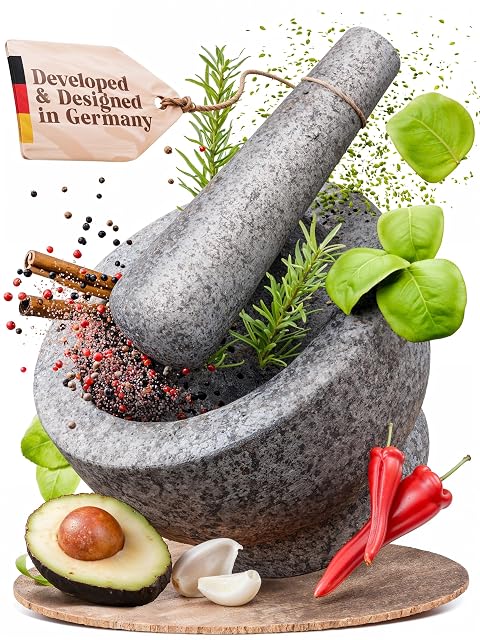
A 4.7 in granite mortar on an anti-scratch acacia base, with an extra-long pestle and a 60-day refund.

What we would actually buy An acacia base that stops a granite bowl marking the worktop, an extra-long pestle so your knuckles clear the rim, and sixty days to send it back without giving a reason. Four point seven inches for thirty dollars.

What the maker puts in writing

  • “Solid granite meets warm acacia wood for a premium look that belongs on your countertop. The wooden base also helps protect your kitchen surface from scratches”
  • “ROCK-SOLID STABILITY – No annoying slipping while you grind. The extra-wide acacia wood base keeps your mortar firmly in place for powerful, controlled crushing with less mess”
  • “EXTRA-LONG PESTLE – Grind harder with less effort. The extended pestle gives you a secure, comfortable grip while keeping your hand safely above the rim of the granite mortar”
  • “100% NATURAL Granite – Granite is one of the oldest and hardest rocks in the world. It hardly absorbs any water, is super easy to clean and gives you a strong, durable surface”
  • “60 Days MONEY BACK – if you are not 100% satisfied… we will immediately transfer the full amount back to your bank account for 60 days and without conditions”

The only listing on this shelf that explains the material

“Granite is one of the oldest and hardest rocks in the world. It hardly absorbs any water.”

Thirteen other listings name a material and move on. This one says why it matters, and it is right.

Granite is quartz and feldspar — 6 to 7 on the Mohs scale. It does not wear under the pestle, and it takes up almost no water.

The two marble mortars on this shelf are calcium carbonate, around 3. Softer, absorbent, and acid-reactive: lemon, vinegar and tomato etch it. HIC correctly tells you to hand wash and dry its Carrara bowl; the Fasolahome marble claims dishwasher safe, which it is not.

Granite asks for none of that.

A base that protects the worktop

Heavy stone and a kitchen surface do not mix, and this shelf shows two ways of dealing with it.

Priority Chef states the problem bluntly on both its mortars: granite heavy enough to leave on display, but that could cause scratches to your countertop — and includes two loose protectors.

WALDWERK builds the answer in: an anti-scratch acacia base, and the second benefit — the extra-wide acacia wood base keeps your mortar firmly in place for powerful, controlled crushing with less mess.

A wide footed base does the job that a 4.5 kg (9.9 lb) bowl does by mass alone, without the mass.

Nine of the fourteen mortars here put bare stone on your surface and say nothing.

Your knuckles, which only this maker mentions

The extended pestle gives you a secure, comfortable grip while keeping your hand safely above the rim of the granite mortar.

A real and underrated problem. With a short pestle in a deep bowl, your hand sits level with the rim and your fingers strike it on every stroke — so you stop leaning your weight in and start grinding with fingertips. Which takes three times as long, and hurts.

The pestle lengths published on this shelf: HIC’s pour-spout mortar gives 6.375 inches on a 4.25 inch bowl, the best ratio here; both Priority Chefs 6.2 to 6.5 inches on 5.1 and 5.5 inch bowls.

WALDWERK gives the reasoning and no figure.

Sixty days, unconditionally

We will immediately transfer the full amount back to your bank account for 60 days and without conditions.

The strongest guarantee on this shelf. The only other is ChefSofi’s vague “Risk-Free purchase” with no period stated. Twelve of fourteen publish nothing.

Against the oak version

WALDWERK has two mortars here:

This — 4.7 in — acacia base — $29.99 Oak base — diameter not published — $49.99

The bullets are near-identical: same anti-scratch wood base, same extra-wide stability claim, same extra-long pestle with the same reason, same granite explanation, same 60-day refund.

The oak listing calls its pestle “extra large” and says the combination “looks like a piece of jewelry”. It publishes no diameter.

So on the information available, the twenty dollars is oak against acacia — and this is the only one of the two that tells you how big the bowl is.

What is not published

No weight, where eleven listings here publish one, from 164 g to 4,569 g. Mass is the functional specification on a mortar: a heavy bowl stays put so both hands go to the pestle. The wide wood base substitutes for some of it, but the figure is still missing.

No capacity in cups, where HPYNPES gives 2.6, UMIEN 3.5 and both Priority Chefs 1.5.

No interior finish. This is the specification that decides whether a mortar grinds at all — you cannot grind on a smooth surface. IMUSA publishes both halves (polished exterior, rough textured interior); ChefSofi and PriorityChef say “unpolished granite”. WALDWERK says neither.

No dishwasher statement — and an acacia base must not go in one: the heat and alkaline detergent will raise the grain and split it. Wash the bowl by hand and keep the wood dry.

Availability

On sale at around $30 on the American Amazon store at the time of checking.

Prices and availability are what Keepa reported on the date this page was updated; both move.

Prices quoted in this text were read on 4 October 2026. The live price is at the top of the page.
What we rate, and what we do not

Strengths

  • An anti-scratch wood base, which is the tidiest answer on this shelf to heavy stone on a worktop
  • The only listing here to explain why granite rather than marble, and it explains it correctly
  • Sixty days to return it for a full refund without conditions — the strongest guarantee on this shelf

Compromises

  • Publishes no weight, no capacity and no pestle length, so nothing can be compared with the figures here
  • Does not state whether the bowl is polished or unpolished inside, which is the specification that matters
  • Twenty dollars less than the maker’s oak version, and the two listings differ only in the wood

Specifications

Diameter4.7 in
MaterialSolid granite
BaseAcacia wood, extra wide, anti-scratch
StabilityThe wide base is stated to keep the mortar firmly in place with less mess
PestleExtra long, so the hand stays safely above the rim of the mortar
Why graniteOne of the hardest rocks in the world; hardly absorbs any water; easy to clean
Guarantee60 days, full amount refunded, without conditions
Stated usesSpices, herbs, garlic and more
Dimensions150 × 150 × 150 mm (5.91 × 5.91 × 5.91 in)
HardnessGranite is 6 to 7 on the Mohs scale, against marble’s 3
WeightNot published by the maker
Pestle lengthDescribed as extended, but no figure is given
Interior finishNot stated as polished or unpolished
Capacity in cupsNot published by the maker
DishwasherNot stated — and a wood base should not go in one
Amazon referenceB0B7WY92PN
EAN4260737069046

The questions that come in

Why does the wood base matter?

Because heavy stone and a worktop do not mix, and this shelf shows two ways of handling it. Priority Chef states the problem bluntly on both its mortars: granite "heavy enough to leave out on display, but that could cause scratches to your countertop" — which is why it includes two loose protectors. WALDWERK builds the answer in: "the high quality acacia wood base is protecting your kitchen surface from scratches while using your mortar", and adds the second benefit — "the extra-wide acacia wood base keeps your mortar firmly in place for powerful, controlled crushing with less mess". A wide footed base does the job a 4.5 kg (9.9 lb) bowl does by mass alone, without the mass. Nine of the fourteen mortars here put bare stone on your surface and say nothing.

What is an extra-long pestle for?

Your knuckles, and WALDWERK is the only maker on this shelf to name it: "EXTRA-LONG PESTLE – Grind harder with less effort. The extended pestle gives you a secure, comfortable grip while keeping your hand safely above the rim of the granite mortar." That is a real and underrated problem. With a short pestle in a deep bowl, your hand ends up level with the rim and your fingers hit it on every stroke — so you stop using your body weight and start grinding with fingertips, which takes three times as long and hurts. The published pestle lengths on this shelf: HIC’s pour-spout mortar gives 6.375 in on a 4.25 in bowl, the best ratio here; both Priority Chefs 6.2 to 6.5 in on 5.1 and 5.5 in bowls. WALDWERK gives no figure, only the reasoning.

Is it worth $20 less than the oak version?

They look like the same mortar on different wood, and this is the cheaper one. WALDWERK has two mortars here: this 4.7 in on acacia at $29.99, and one on oak at $49.99. The bullets are near-identical — the same anti-scratch wood base, the same extra-wide stability claim, the same extra-long pestle with the same reason, the same granite explanation, the same 60-day unconditional refund. The oak listing calls its pestle "extra large" and claims the combination "looks like a piece of jewelry"; it publishes no diameter, where this one publishes 4.7 inches. Neither publishes a weight or a capacity. On the information available, the $20 difference is oak against acacia — and this is the only one of the two that tells you how big the bowl is.

This one against the other cookware and knives

Close prices, same category: comparable cookware and knives. We keep only the specifications all of them publish, because a column with gaps compares nothing.

Model Price Material
WALDWERK Acacia Wood Base 4.7-Inch $30 Solid granite
UMIEN 8-Inch Molcajete $30 Handcrafted natural granite, with a stated natural color pattern
ChefSofi 2-Cup Granite $33 Unpolished granite
Priority Chef Heavy Duty Large 5.5-Inch $26 100 per cent natural black granite

What sets the models apart, in cookware and knives

  • If price decides: Priority Chef Heavy Duty Large 5.5-Inch, at $26.

What use this one answers, among cookware and knives

A worktop you do not want marked — granite grinding on wood, with the reasoning published

What buyers actually choose

Amazon reports what buyers took in the month before this page was last checked: at least 500.

The figure is a floor, rounded by Amazon, and read through Keepa — it says what buyers picked, not what a maker claims.

Sources

Specifications: the manufacturer sheet for cookware and kitchen knives and the matching Amazon product page. Prices and availability: Keepa. Every figure on this page names its source.

What we judge these cookware and knives on

Prices quoted in these summaries are dated readings. The live price is shown next to each product.