Peelers
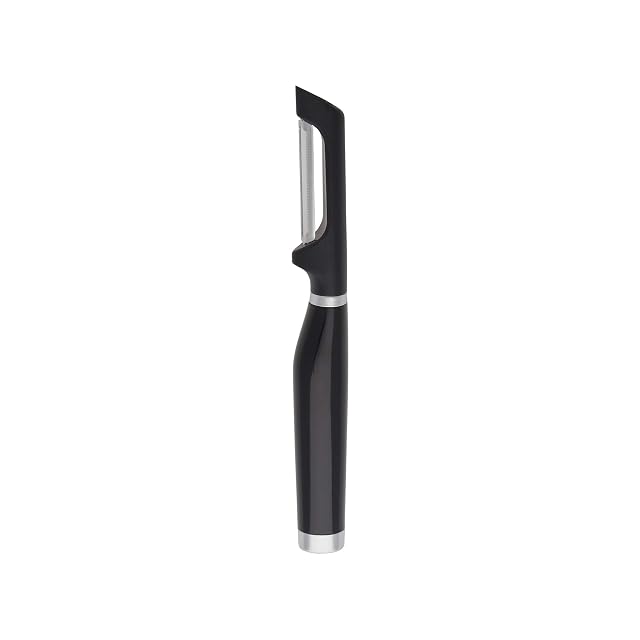
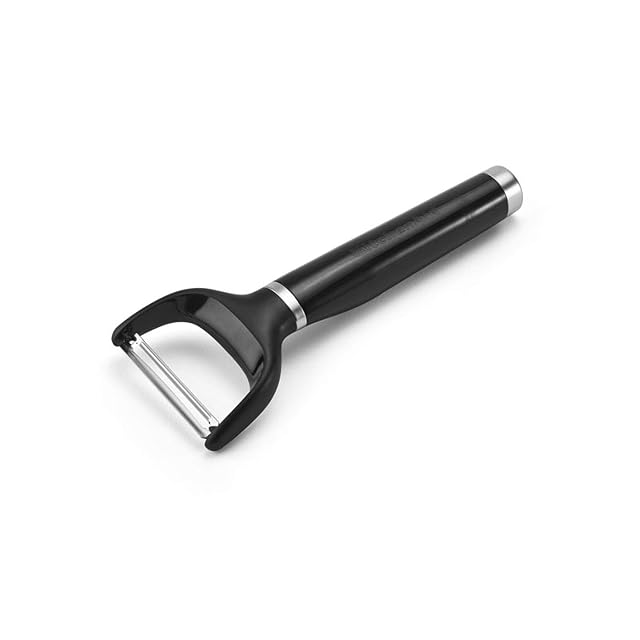
KitchenAid 420 steel, serrated, 8.6 in
The only serrated blade on this shelf, in 420 stainless, with a guard and a lifetime limited warranty.
Specifications
- Blade
- Double-edged and serrated — the only serrated blade on this shelf
- Steel grade
- 420 stainless, rust-resistant
- Length
- 8.6 in
- Suits
- All fruit and vegetables, including soft-skinned foods
- Handle
- Glossy ABS with a debossed logo, a satin chrome-plated bolster and endcap
- Blade guard
- Included — and stated to keep the blade sharp when not in use
- Dishwasher
- Safe
- Warranty
- 1-year hassle-free replacement and Lifetime Limited
- Weight
- 68 g (2.4 oz)
- Eye remover
- None, where seven peelers here have one
- Handedness
- Not stated, though a double-edged blade works either way
- Replaceable blade
- No — only OXO Pro offers one
- Amazon reference
- B07X93XWSX
- EAN
- 0024131404957
What you are getting
An 8.6 inch euro peeler with a double-edged serrated blade in rust-resistant 420 stainless steel, an ABS handle with a satin chrome-plated bolster and endcap, a protective blade cover, dishwasher safe, and a 1-year hassle-free replacement plus Lifetime Limited Warranty.
The only serrated blade on this shelf
Eleven other peelers here have plain edges. A serrated peeler blade has a row of fine scallops instead of one straight edge, and what that buys is grip on a slippery skin.
A plain blade skates off a tomato, a peach or a ripe plum; a serrated one bites in and starts the cut. The same is true of soft-skinned vegetables that give under pressure, which is exactly what KitchenAid names: “perfect for peeling all fruits and vegetables, including soft skin foods”.
The trade is that a serrated edge leaves a very slightly ridged surface, which matters on nothing you would notice.
And the best sentence on this shelf about keeping a peeler
“It also serves to keep the blade sharp when not in use”
About the blade cover. A peeler thrown loose into a drawer has its edge knocked by every spoon, whisk and pair of tongs in there — and a thin hardened edge dulls from contact long before it dulls from peeling.
Both KitchenAid peelers include a guard. This is the only listing that says why.
Four hundred and twenty
One of two grades published on this shelf, both KitchenAid’s. 420 is martensitic, so it hardens by heat treatment and holds an edge — unlike the austenitic 304 used for graters and bowls, which cannot be hardened.
What is not published
No eye remover, where seven peelers here have one. No handedness — though a double-edged blade is inherently ambidextrous. No replaceable blade — only OXO Pro.
Availability
On sale at around $13 on the American Amazon store at the time of checking.
Prices and availability are what Keepa reported on the date this page was updated; both move.
Prices quoted in this text were read on 4 October 2026. The live price is at the top of the page.
The questions that come in
What does a serrated peeler blade do?
It grips where a plain edge slides. A serrated blade carries a row of fine scallops rather than one continuous edge, so each scallop presents a point that bites into the surface and starts the cut. On a tomato, a peach, a ripe plum or a mango — smooth, slippery, and yielding under pressure — a plain blade skates across the skin until you press, and then it goes through into the flesh. A serrated one catches immediately and takes the skin with almost no load. KitchenAid pairs it with exactly the right claim: "perfect for peeling all fruits and vegetables, including soft skin foods". Eleven other peelers on this shelf have plain edges. The cost is that a serrated edge cannot be honed back the way a plain one can.
Why does the blade cover keep it sharp?
Because the thing that dulls a peeler is not peeling. KitchenAid writes that the cover "also serves to keep the blade sharp when not in use" — and that is the most useful sentence on this shelf. A thin hardened edge is damaged by contact with other metal, and a peeler thrown loose into a kitchen drawer spends its life being knocked by spoons, tongs, whisks and knives. Every one of those contacts rolls a little of the edge over. A hard plastic cover stops all of it, which on a tool whose only failure mode is bluntness is cheap insurance. Both KitchenAid peelers include one; Farberware offers the other answer on this shelf — a hang hole, so the peeler lives on a hook instead of in the drawer.
Is 420 the right steel?
For a cutting edge, yes. Stainless steels fall into families and only two behave like blades. Austenitic grades such as 304 — the steel used on this site’s box graters and mixing bowls — are the most corrosion-resistant and cannot be hardened by heat treatment, which is why they are used for bodies. 420 is martensitic: enough carbon to be quenched and tempered, so it reaches a real hardness and holds a fine edge, with somewhat less corrosion resistance. It is the standard grade for kitchen knives. The only steel that beats it for edge retention here is carbon steel — on the KITCHPOWER and FUHUY listings — which hardens further and rusts, which is why KITCHPOWER correctly asks for hand washing.