Peelers
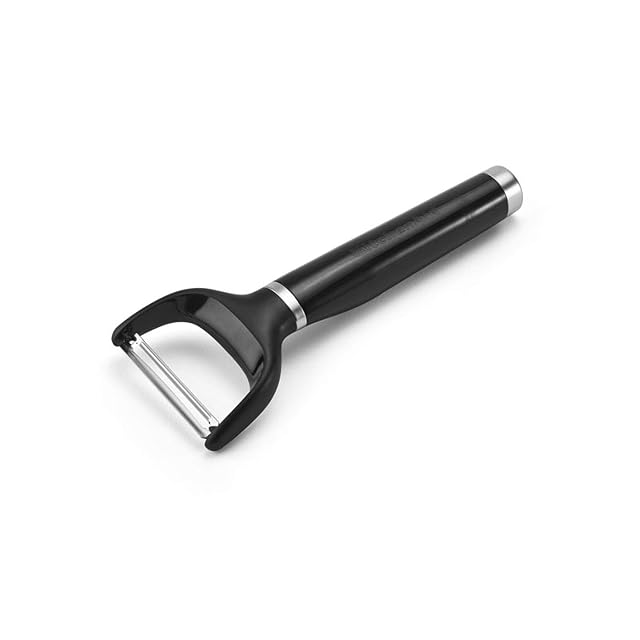
KitchenAid 420 steel, single edge, lifetime
A Y peeler in 420 stainless with a blade guard and a lifetime limited warranty, for nine dollars.
Specifications
- Type
- A Y peeler — the blade sits across the handle
- Blade
- Single edge, straight
- Steel grade
- 420 stainless — one of only two grades published on this shelf
- Handle
- Glossy ABS with a debossed logo, a satin chrome-plated bolster and endcap
- Blade guard
- A protective plastic cover, included
- Suits
- All fruit and vegetables, including soft-skinned
- Dishwasher
- Safe
- Warranty
- 1-year hassle-free replacement and Lifetime Limited Warranty
- Eye remover
- None, where seven peelers here have one
- Handedness
- Not stated, and a single-edge blade is where it would matter
- Weight
- Not published by the maker
- Swivel
- No — a Y peeler blade is fixed
- Replaceable blade
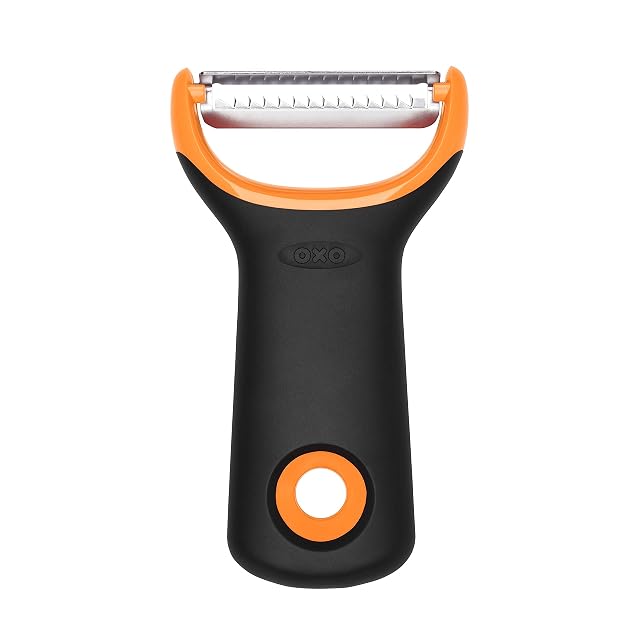
- No — only OXO Pro offers one
- Amazon reference
- B07ZLF6WZZ
- EAN
- 0024131404964
What you are getting
A Y peeler with a single-edge straight blade in rust-resistant 420 stainless steel, a glossy ABS handle with a satin chrome-plated bolster and endcap, a protective plastic blade cover, dishwasher safe, with a 1-year hassle-free replacement and Lifetime Limited Warranty.
The only steel grade on this shelf, besides its own sibling
420 stainless. Nine of the twelve peelers here say only “stainless steel”, and two use carbon steel.
Four hundred and twenty is the right family for a cutting edge: it is martensitic, which means it can be hardened by heat treatment and will therefore hold a fine edge. That is a different thing from the 304 austenitic steel used on graters and bowls, which is more corrosion-resistant and cannot be hardened.
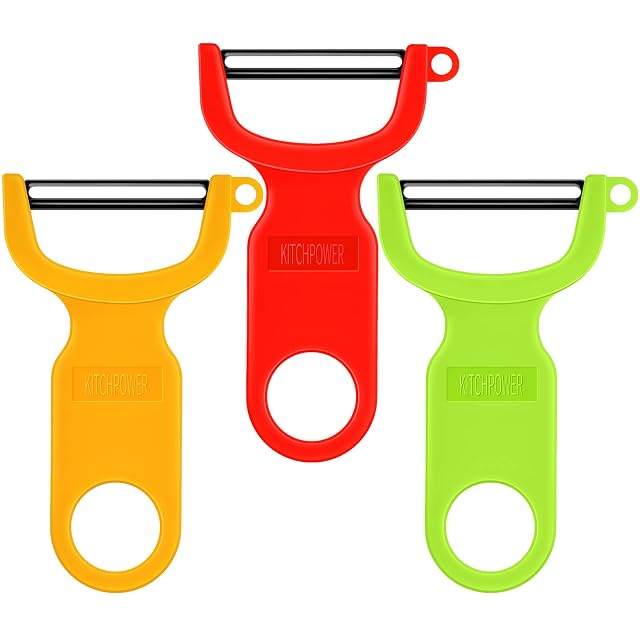
Carbon steel — KITCHPOWER and FUHUY here — takes a keener edge still, at the cost of rusting.
A blade guard, and its sibling says why
Both KitchenAid listings include a plastic cover. The Classic Euro gives the reason this page leaves out: it “also serves to keep the blade sharp when not in use”.
A peeler loose in a drawer has its edge knocked by every other tool in there. A guard is cheap insurance on the one part that wears.
A Y-peeler, and nobody here explains what that means
The blade sits across the handle, so you plane with it rather than pulling it along. That takes a wider swath and is faster on big produce — squash, celeriac, swede — and less controllable on small round things, where a swivel peeler wins.
And the thing to check: it is single-edge
Five peelers on this shelf state they work in either hand. A single-edge straight blade is the one geometry where handedness can matter, and this page says nothing about it.
What is not published
No eye remover, where seven peelers here have one. No weight.
Availability
On sale at around $9 on the American Amazon store at the time of checking.
Prices and availability are what Keepa reported on the date this page was updated; both move.
Prices quoted in this text were read on 4 October 2026. The live price is at the top of the page.
The questions that come in
What does 420 stainless mean for the edge?
That it can be hardened, which is what lets a thin blade hold a fine edge. Stainless steels fall into families: austenitic grades like 304 — the steel on the box graters and mixing bowls on this site — are the most corrosion-resistant and cannot be hardened by heat treatment, which is why they are used for bodies rather than blades. 420 is martensitic: it has enough carbon to be quenched and tempered, so it takes a proper hardness and therefore a lasting edge, at some cost in corrosion resistance. It is the standard grade for kitchen knives and peelers. Nine of the twelve peelers here publish no grade at all, and two use carbon steel, which hardens further still and rusts — FUHUY claims it is "better than stainless steel", which is half true.
Is a Y-peeler right for me?
It depends what you peel, and no listing on this shelf sets out the difference. A Y-peeler holds the blade across the handle, so you hold it like a razor and plane the vegetable away from you or toward you. The swath is wider and the stroke longer, which makes it much faster on big items — butternut squash, celeriac, swede, large carrots — and it is what most professional kitchens use. A swivel or I-peeler holds the blade in line with the handle and pivots to follow curves, which gives more control on small round produce: new potatoes, apples, ginger. FUHUY at $9.99 is the only listing here that includes both shapes in one pack, which is the honest way to settle the argument.
Why does the blade guard matter?
Because it protects the only part that wears, and KitchenAid’s own sibling listing explains it where this one does not. Both KitchenAid peelers include a plastic cover; the Classic Euro page adds that it "also serves to keep the blade sharp when not in use". A peeler thrown loose into a kitchen drawer spends its life being knocked by tongs, spoons and knives, and a thin hardened edge dulls from contact long before it dulls from use. This is one of only three durability answers on the shelf: the two KitchenAids’ guard plus lifetime limited warranty, Zulay’s stated lifetime warranty at $5.99, and OXO Pro’s "replaceable blade available" at $17.95. The other eight peelers here have none.