What the maker puts in writing
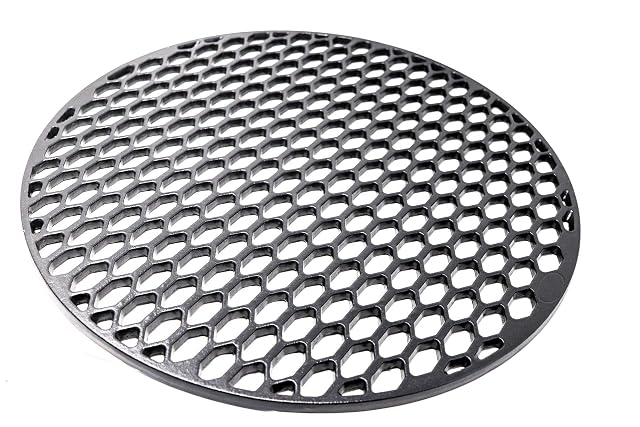
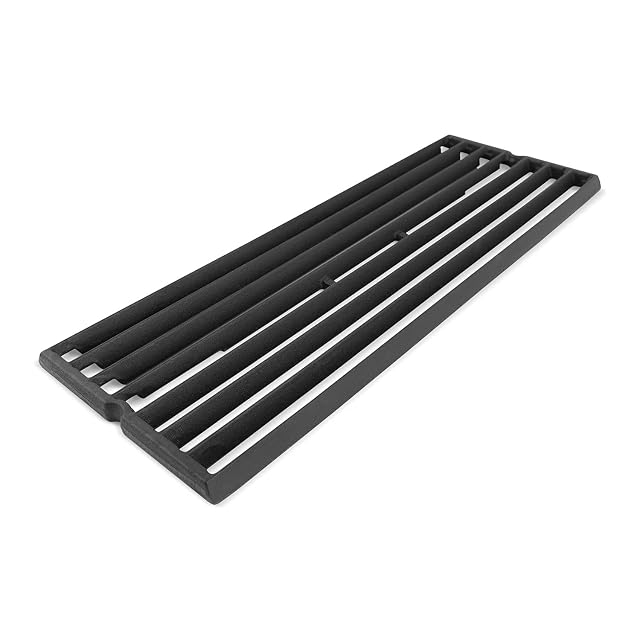
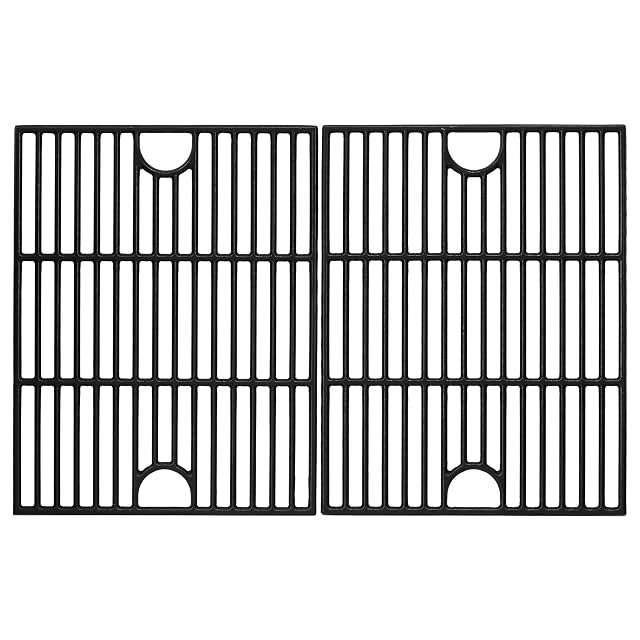
- “PACKAGE CONTAINS: Half Moon Grate*2 + Grate support extension *4”
- “The 22-in grate with the support extension, turns grill into a grill combination. Fits for weber gas grills gourmet BBQ system likes weber 7587, weber 7586 and 22.5 inches weber charcoal grills system likes weber 8835”
- “Every package come with 4 support extension, easy to install and greatly increases the support surface… This support extension is also completely suitable for the original stainless steel grate or porcelain coated grate”
- “Two half-moon grates can provide a completely different barbecue experience… Mix and match from a range of surfaces to suit any need or style”
- “Needs to be seasoned well in grill before use or everything sticks… Apply cooking oil on the surface of the cast iron grate and allowing the grate to come up to cooking temperature before placing any food upon it”
- “(1) Make sure that you scrape your grates after each use; (2) Season them by brushing with oil after each use; (3) Leave the dampers open a bit so that condensation does not collect in the grill; (4) Put the lid back on your grill when it is not in use; (5) Cover the grill when it is not in use; (6) If you need to store your grill for a long period of time, heavily coat them in cooking oil, wrap them in a plastic bag and store in your covered grill”
The best sentence on this shelf
“Leave the dampers open a bit so that condensation does not collect in the grill.”
Nobody else here makes the connection, and the mechanism is exactly right.
A kettle closed up tight after a cook holds warm, damp air — from the food, from the fuel, from whatever washing you did. As it cools overnight, that moisture condenses on the coldest surfaces in the grill, which are the metal grates, and it sits on them until morning.
Bare cast iron rusts in hours under standing water. COGRICHBF on this shelf puts the figure at 10 to 15 minutes.
Cracking the dampers lets the air exchange instead of sweating.
The other five tips are the standard routine, and worth having in one place: scrape after each use, oil after each use, lid on when not in use, cover on, and for long storage coat heavily in oil, wrap in plastic and store under the cover.
Set that against QuliMetal on this shelf, which claims its bare cast iron won’t chip or rust easily and publishes no care instructions at all.
Two half-moons, which is the point
So the kettle can do two things at once.
One half cast iron for searing; the other half the original stainless or porcelain grate, a griddle, or a Gourmet BBQ System insert. Mix and match from a range of surfaces to suit any need or style.
The four support extensions are what make it possible: they greatly increase the support surface, so a heavy half-moon designed for a kamado sits properly on a Weber — and the listing says they also suit the original stainless or porcelain grate, so they are useful even when the cast iron is out.
The alternative here is the Aura grate at $79.97: one solid 21.5-inch round, no seam, no gap down the middle. Simpler, if you want the whole kettle to sear.
And it tells you this is bare iron, by accident
Needs to be seasoned well in grill before use or everything sticks.
The finish is never stated — but that sentence settles it. You do not season porcelain enamel; there is nothing on glass for oil to bond to.
So this is bare cast iron, like the COGRICHBF and QuliMetal grates. The other five on this shelf are coated and need no seasoning.
The method is published: oil the surface, bring the grate up to cooking temperature, and only then put food on it.
What you get, and what it costs
A 22-inch circle is roughly 380 square inches, which puts this at about 21 cents a square inch:
- $0.068 — Direct Store, three grids
- $0.080 — COGRICHBF · $0.096 — QuliMetal · $0.120 — EasiBBQ · $0.133 — Lodge
- $0.194 — Broil King (one grid) · $0.210 — this · $0.220 — Aura
- $0.277 — Weber Crafted
Three times the Direct Store set. What the money buys is the modularity and the supports, neither of which the cheaper sets offer.
No weight published, so the casting thickness cannot be placed against the grates that publish one — 10.0 to 18.1 grams per square inch across this shelf. No warranty.
Availability
On sale at around $80 on the American Amazon store at the time of checking.
Prices and availability are what Keepa reported on the date this page was updated; both move.
Prices quoted in this text were read on 4 October 2026. The live price is at the top of the page.
The questions that come in
Why two half-moons rather than one round grate?
So the kettle can do two things at once, and KAMaster is the only listing here built around that. Two half-circles mean one half can be cast iron while the other half carries the original stainless or porcelain grate, a griddle, or a Gourmet BBQ System insert — the listing calls it "mix and match from a range of surfaces to suit any need or style". The four support extensions are what make it work: they "greatly increase the support surface" so that a heavy cast-iron half-moon designed for a kamado will sit properly on a Weber, and the listing says they also suit "the original stainless steel grate or porcelain coated grate". The alternative on this shelf is the Aura grate at $79.97 — a single solid 21.5-inch round with no seam, which is the simpler choice if you want the whole kettle to sear.
What is the damper tip about?
It is the best piece of advice on this shelf, and nobody else makes the connection. KAMaster’s third tip: "Leave the dampers open a bit so that condensation does not collect in the grill." Here is why it works. A kettle grill closed up tight after a cook contains warm, damp air — from the food, from the fuel, from the washing. As it cools overnight that moisture condenses on the coldest surfaces, which are the metal grates, and sits there. Bare cast iron rusts in a matter of hours in standing water; COGRICHBF on this shelf puts the limit at 10 to 15 minutes. Cracking the dampers lets that air exchange instead of sweating. The remaining tips are the standard routine: scrape after each use, oil after each use, lid on, cover on, and for long storage coat heavily in oil and wrap.
Do I really have to season it first?
Yes, and KAMaster is admirably blunt: "Needs to be seasoned well in grill before use or everything sticks, and warm up for longer durability." The method is published too: "Apply cooking oil on the surface of the cast iron grate and allow the grate to come up to cooking temperature before placing any food upon it." That instruction tells you something the specification does not — this is bare cast iron, not porcelain-coated. Five grates on this shelf are coated (Direct Store, Aura, EasiBBQ, Broil King, both Webers) and need no seasoning; two are plainly bare (COGRICHBF, QuliMetal) and this is the third. Bare iron sears harder and chips not at all, and in exchange it has to be oiled after every cook.