What the maker puts in writing
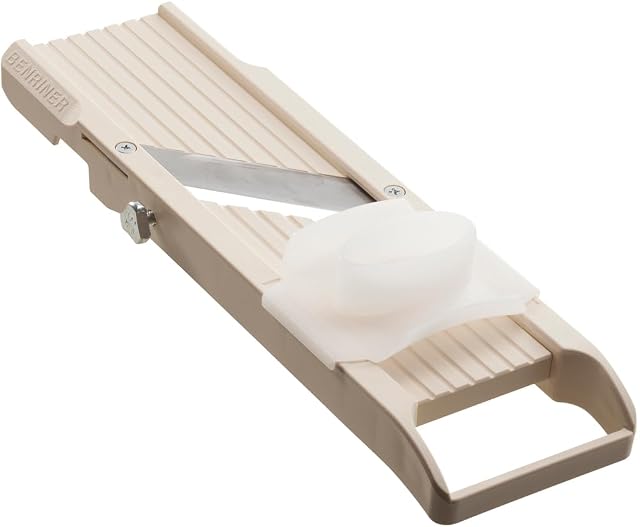
- “This handheld mandoline slicer is designed for home cooks, daily meal prep, salad making, and small kitchen use”
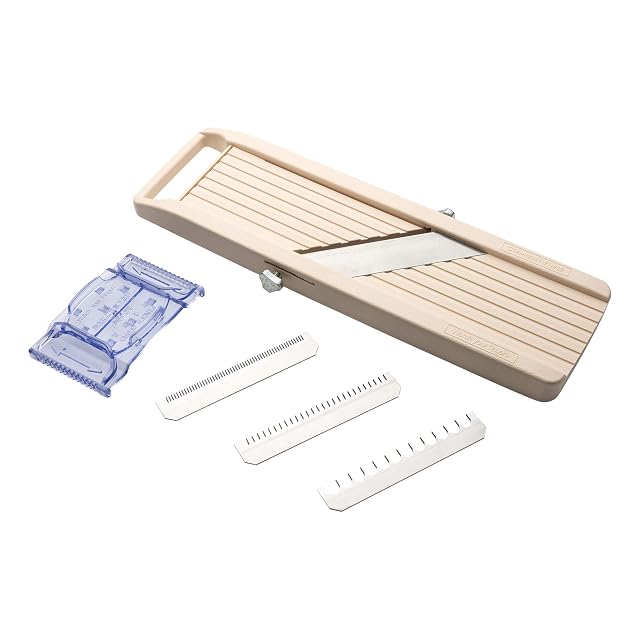
- “Built with a sharp stainless steel blade and sturdy structure, this slicer features 3 adjustable thickness settings (1mm (0.04 in), 2mm (0.08 in), 4mm (0.16 in)) for precise control, saving up to 70% time in boring pre[p] work. NOTE: It is not d[esigned for…]”
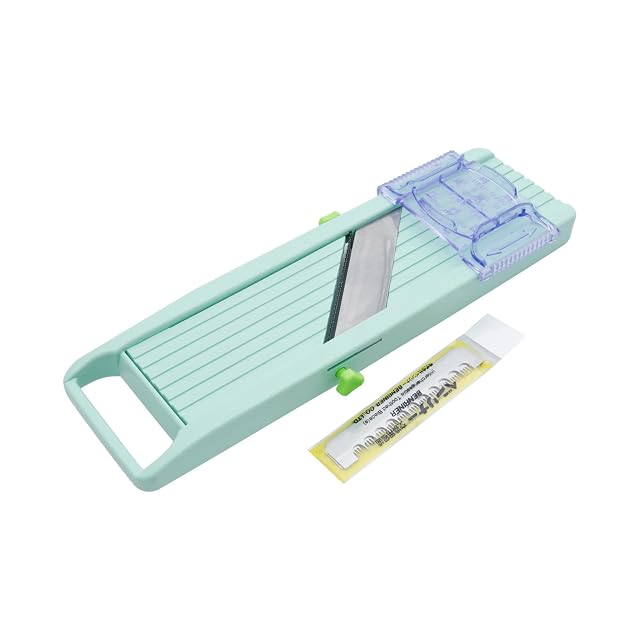
- “It includes a food holder for safe operation and a safety lock to secure the blade during storage and cleaning. Non-slip design supports direct slicing into bowls or plates”
- “Unlike bulky full-size mandolines or hard-to-clean food processors, this compact handheld model requires no assembly, saves massive storage space, and cleans quickly, clear water rinsing will do the job”
- “Fast slicing of firm vegetables and fruits including potatoes, onions, carrots, zucchini, cucumbers, apples, and kiwis”
The drawer is the second hazard, and only this listing knows it
There are two ways a mandoline cuts you.
At the board, on the last slice, when what is left is too small to hold. That is what a food holder is for, and every listing here has one.
In the drawer. A handheld mandoline put away with its blade exposed is a fixed razor edge lying among the spoons, and you find it with your fingertips while reaching for something else.
Ibergrif publishes “a safety lock to secure the blade during storage and cleaning”.
The cleaning half matters as much: washing a mandoline means putting a hand near a razor edge in soapy water, where you cannot see it.
Gramercy offers the nearest thing with a “removable blade guard”. Nothing else on this shelf mentions storage at all.
One, two and four millimeters
Published, which at least eight of the eighteen listings here do not manage.
- Fullstar — 1, 2, 3, 4 mm (0.16 in) (four clicks)
- OXO — 1, 2.5, 4 mm (0.16 in), on two models
- this — 1, 2, 4 mm (0.16 in)
- Benriner — a dial, 0.5 to 8 mm (0.02 to 0.31 in)
- Mueller Austria — a dial, 1 to 9 mm (0.04 to 0.35 in)
The rest publish none. What clicks give you is repeatability: the same setting gives the same slice, which is what a gratin needs.
Against the Fullstar, a dollar below it
Ibergrif $15.99 — three thicknesses, a food holder, and the safety lock.
Fullstar $14.98 — four thicknesses, a built-in julienne blade, published 420 stainless, a steel-tipped guard.
So Fullstar is the better slicer and Ibergrif has the only answer to the drawer. If it lives among your other utensils, pay the dollar.
The honest part, and the flourish
Honest: requires no assembly… clear water rinsing will do the job. On a tool that needs washing immediately after use with a blade in it, “no assembly” is a genuine safety feature — the fewer parts to take off and put back, the fewer times a hand goes near the edge.
And the page carries a NOTE stating what the slicer is not designed for, which most listings on this shelf leave you to find out.
The flourish: saving up to 70% time in boring pre[p] work. Faster than a knife? A processor? Another mandoline? The page does not say. Ignore it and read the millimeters.
What is not published
No blade steel grade, where Gramercy publishes 4CR15 and Fullstar 420 — essentially the same hardenable martensitic family, and the right one for a thin fixed edge.
No julienne, which Fullstar builds in and OXO Precision offers as a setting.
No slicing surface width — only Benriner publishes one (2.5 in), and it is what decides whether a large potato fits across the blade. No warranty.
Three hundred and twenty grams, mid-range among the handhelds here.
Availability
On sale at around $16 on the American Amazon store at the time of checking.
Prices and availability are what Keepa reported on the date this page was updated; both move.
Prices quoted in this text were read on 4 October 2026. The live price is at the top of the page.
The questions that come in
Why is a storage lock worth having?
Because there are two ways a mandoline cuts you and every other listing on this shelf only addresses one. The first is at the board, on the last slice, and that is what a food holder is for. The second is in the drawer: a handheld mandoline put away with its blade exposed is a fixed razor edge lying among the spoons, and you find it with your fingertips while feeling for something else. Ibergrif publishes "a safety lock to secure the blade during storage and cleaning" — and the cleaning half matters too, because washing a mandoline means putting a hand near the blade in soapy water. Gramercy offers the nearest alternative with a "removable blade guard". Nothing else here mentions storage at all.
How does it compare with the Fullstar?
A dollar apart and each has one thing the other lacks. Ibergrif at $15.99: three thicknesses (1, 2, 4 mm (0.16 in)), a food holder, and the safety lock nothing else here has. Fullstar at $14.98: four thicknesses (1, 2, 3, 4 mm (0.16 in)), a built-in julienne blade, published 420 stainless steel, and a steel-tipped hand guard rather than a plain one. So Fullstar gives you more cutting capability and a better guard; Ibergrif gives you the only answer to the drawer. If the tool lives in a drawer with your other utensils, the lock is worth the dollar. If it lives in a rack or a cupboard, Fullstar is the better slicer.
Should I trust the 70 per cent figure?
Treat it as a flourish. Ibergrif publishes that its three thickness settings give "precise control, saving up to 70% time in boring pre[p] work", with no comparison stated — 70 per cent faster than a knife, than a food processor, than another mandoline? Nothing on the page says. What is verifiable on the same page is better: the 1, 2 and 4 mm (0.16 in) settings, the safety lock, the food holder, no assembly, and that "clear water rinsing will do the job". The listing also carries something rarer than a percentage — a NOTE stating what the slicer is *not* designed for, which is the kind of limit most listings on this shelf leave you to discover. Read the page for those and ignore the 70 per cent.